Both are common rebar threading equipment, similar in appearance, but their threading principles differ significantly. This article will explain the differences between chaser-type rebar threading machines and rebar rolling machines.
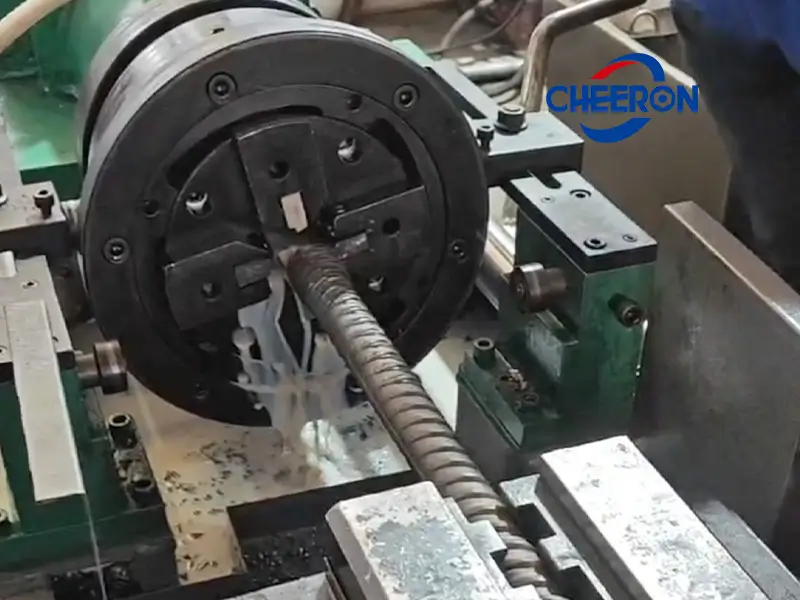
The image shows a CHEERON chaser-type threading machine. A Cheeron threading machine is a thread-cutting device primarily used to process rebar threads.
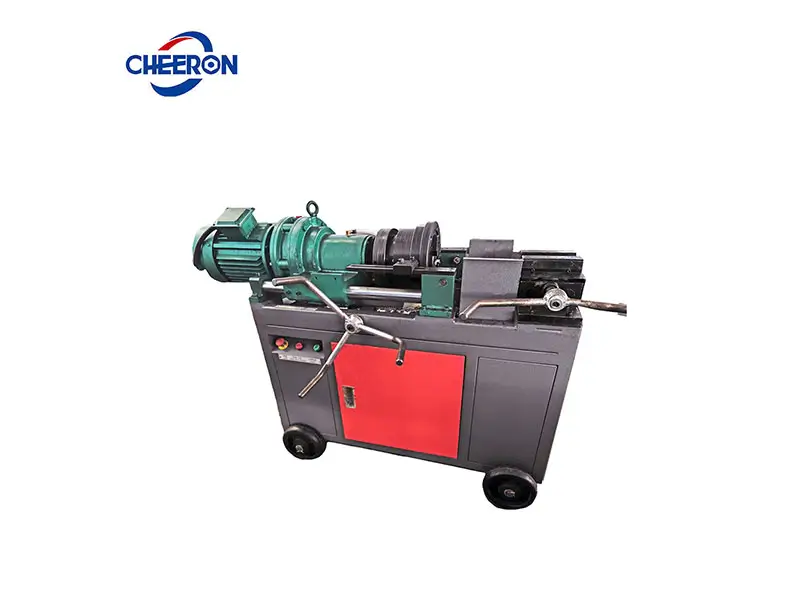
Compared to existing rebar threading equipment, the Cheeron rebar threading machine has advantages such as high technology content, multiple functions, strong power, convenient and labor-saving operation, low labor intensity, and high durability.
The image shows a CHEERON rebar thread rolling machine.
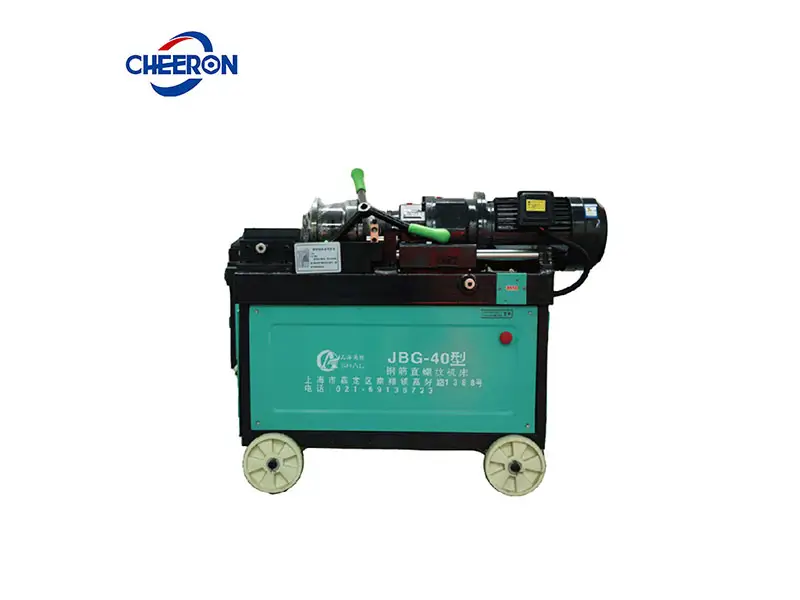
The rebar thread rolling machine can roll threads after the rebar has been stripped of ribs, resulting in extremely high thread precision and stable and reliable quality. The rolling machine is simple to operate and can process a wider range of rebar types.
Furthermore, both thread rolling machines and chaser-type thread threading machines process rebar threads. High-quality machines produce threads with full and clear profiles, making them ideal pre-processing equipment for rebar.
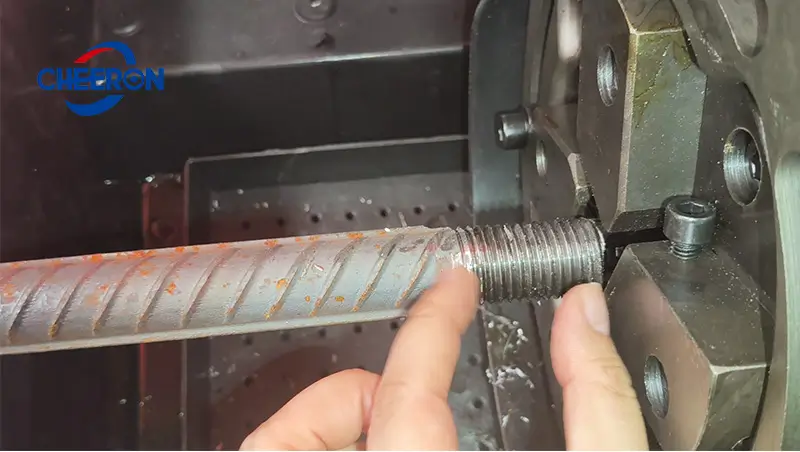
The two machines have similar overall structures, so there is no difference in their use. In both, the rebar with a flat end face is placed on the jaws and firmly secured to the machine, and the handle is turned to thread the rebar.
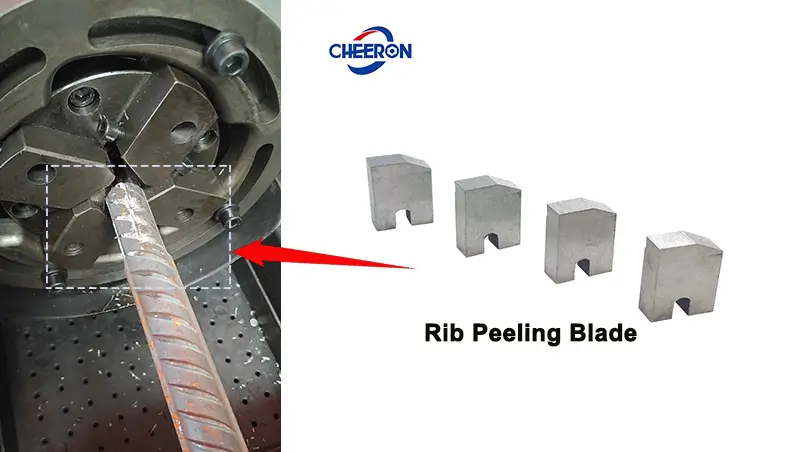
Thread rolling machines use thread rolling wheels to roll the threads. The blades are mainly used to remove ribs from the rebar.
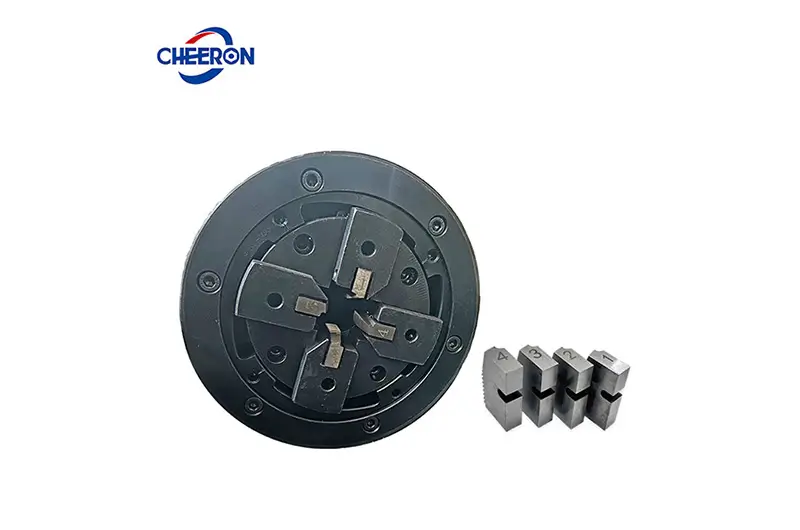
Threading machines directly cut the threads, and the chasers are toothed for easy thread cutting.
The core difference between thread rolling and thread cutting lies in their machining principles and thread quality:
The steelbar is forcefully extruded using three threaded rollers, causing the steelbar to flow plastically and form threads. No chips are produced; it is a chip-free machining process.
Threads are formed by cutting away excess rebar material using cutting tools such as chasers. Chips are produced.
A. Thread Strength
Thread rolling utilizes the flow lines of the metal, resulting in higher thread strength and fatigue resistance; while thread cutting cuts the material's flow lines, leading to relatively lower strength.
B. Precision and Surface Finish
Thread rolling offers high precision and a smooth surface, while cutting threading tends to result in lower precision and a rougher surface.
In short, Thread rolling is suitable for high-strength, high-precision, and large-volume rebar processing; cutting is suitable for occasional processing and repair, or thread processing after extrusion molding.
Due to the wider range of applications and greater adaptability, rebar thread rolling machines are more common.
Various thread rolling machine manufacturers are continuously increasing the variety of rebar thread rolling machines from multiple dimensions, such as power, functionality, and quality control, making rebar thread rolling faster and more efficient.
Cheeron offers several rebar thread rolling machines. We can understand the differences between different machines by looking at their specifications:
| Model | JBG-40 | GX-50 | GX-50s | GX-100 | HGS-55P |
| Power Supply | 380V | 380V | 380V | 380V | 380V |
| Rebar Diameter Range | 14-36mm | 12-50mm | 14-32mm | 14-40mm | 16-36mm |
| Thread Length | Right-hand thread:100mm Left-hand thread:80mm | ≤120mm | Right-hand thread:20-50mm Left-hand thread:20-50mm | Right-hand thread:20-50mm Left-hand thread:20-50mm | ≤50mm |
| Main Motor Power | 7.5KW | 5.5KW/7.5KW | 5.0KW | 7.5KW | 9.0KW |
| Spindle Speed | 1:17 | 48-82 rpm | 1:17 | 1:15 | 40-62 r/min |
| Blade Specification | 13*25*30 | 10*25*30 | 13*25*30 | ||
| Weight / KG | 290 | 290 | 290 | 400 | 290 |
Both good thread rolling and thread forming machines perform exceptionally well in rebar thread processing, producing clear, full threads that are almost indistinguishable to the naked eye.
However, in terms of connection strength, thread rolling machines are generally more advantageous. This is because rebar thread rolling machines, through a dual process of cutting and rolling, can both strengthen the ends of the rebar and complete the threading. Therefore, the threaded end and the rebar base material have almost the same strength, resulting in stronger and safer rebar joints.
As rebar thread rolling machines have become mainstream, more rebar equipment manufacturers can mass-produce them, reducing production costs and making them relatively inexpensive, ranging from a few hundred to a few thousand US dollars.
Thread threading machines, on the other hand, still use traditional processing methods, and their market share has significantly decreased. Many accessories and motors have become scarcer and more expensive, generally costing over $1000.
Different rebar connectors vary in size, pitch, and thread profile. See the rebar connector specifications for details. Rebar needs to be matched with the connector for a perfect installation.
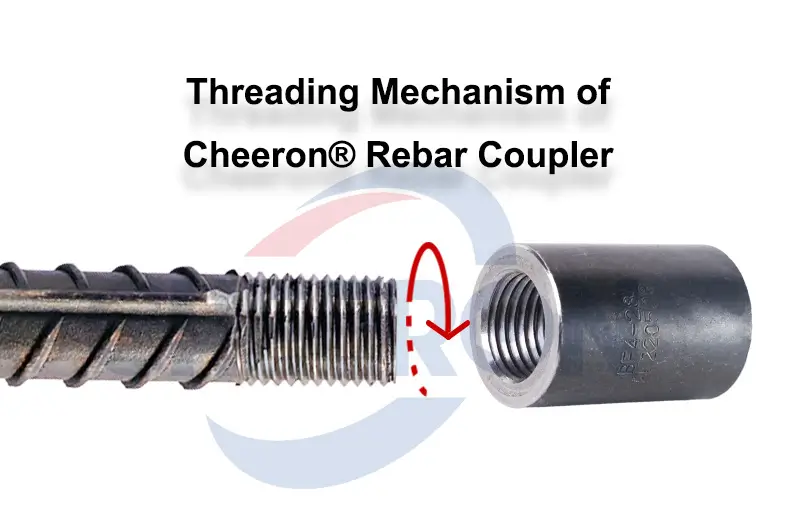
As a professional rebar connector manufacturer, Cheeron provides complete and reliable rebar connection solutions: from customized rebar connector production to rebar threading machine use and installation training, Cheeron ensures your projects progress steadily and efficiently.
Machines are different from ordinary commodities and may encounter various usage problems. This requires experienced equipment engineers to help solve problems and provide professional usage advice.
Cheeron, as a professional rebar threading machine manufacturer, has sold over 10,000 rebar threading machines. Our engineers have accumulated rich experience through practical application. Cheeron engineers will respond promptly and effectively to any usage issues.
If you have any questions about rebar threading machines, please contact us for more detailed answers.