Reinforcing bar connectors, also known as mechanical splices systems, play a vital role in modern reinforced concrete structures. While they are widely used in infrastructure and building projects, it's worth noting that there is currently no unified global design standard.
These standards typically focus more on performance requirements than specifying precise structural designs. This provides flexibility but also leads to inconsistencies in standards among different rebar coupler manufacturers.
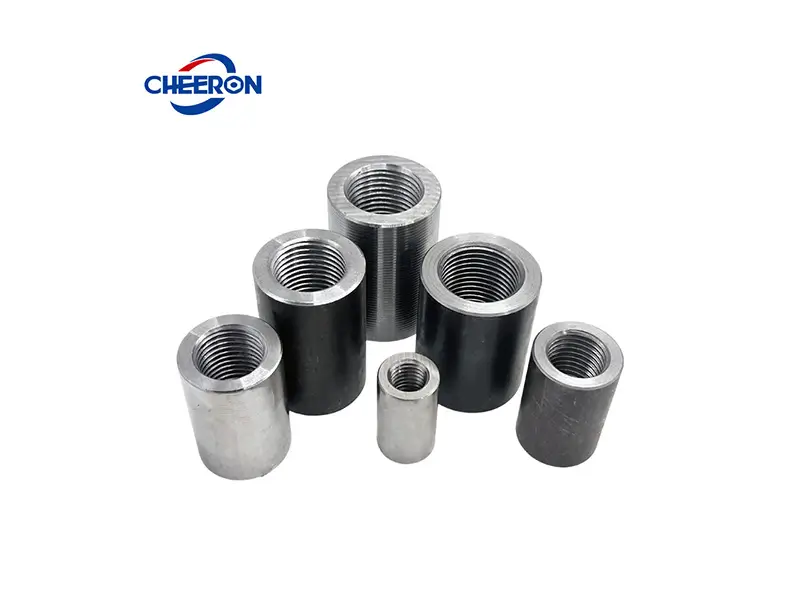
Although dimensions and specifications are not uniform, the special nature of rebar connectors—serving rebar—means they are inherently linked to the dimensions and performance of the rebar.
This article will approach the issue from the perspective of rebar, detailing the dimensions and design specifications of rebar connectors. These factors must be carefully evaluated before customizing rebar connectors to select the most suitable rebar connection system for each project.
Appropriate dimensions ensure the joint achieves strength equal to or greater than that of the parent rebar.
Diameter Design-Outer and Inner Dia , used to ensure strength and load transfer
Length, to ensure proper engagement
Internal Thread Design-Pitch,Thread Profile,Thread Accuracy
Material Selection
The dimensions of rebar connectors must match the diameter and grade of the rebar. The specifications of reinforcing bars on the market are currently quite complex. Taking American reinforcing bar specifications as an example:
In the American Standard (ASTM), the diameter of reinforcing bars is indicated by a "#" followed by a number, such as #3, #4, #5, etc. This numbering system is commonly referred to as the "Bar Size Number," which corresponds to the nominal diameter of the reinforcing bar, in inches.
| Size | DN (inches) | DN (millimeters) |
| #3 | 0.375 | 9.5 |
| #4 | 0.500 | 12.7 |
| #5 | 0.625 | 15.9 |
| #6 | 0.750 | 19.1 |
| #7 | 0.875 | 22.2 |
| #8 | 1.000 | 25.4 |
| #9 | 1.128 | 28.7 |
| #10 | 1.270 | 32.3 |
| #11 | 1.410 | 35.8 |
| #14 | 1.693 | 43.0 |
| #18 | 2.257 | 57.3 |
Primarily #3 and #4(9-12mm), typically used for stirrups, distribution bars, and other structural reinforcement.
Primarily #5-#14(15-43mm), used in main beams, columns, shear walls, and other major load-bearing components.
Reinforcing bars with a diameter of 50mm or more, such as #18 steel bars, are mostly used in high-rise buildings, large bridges, and other structures with particularly high load-bearing capacity requirements.
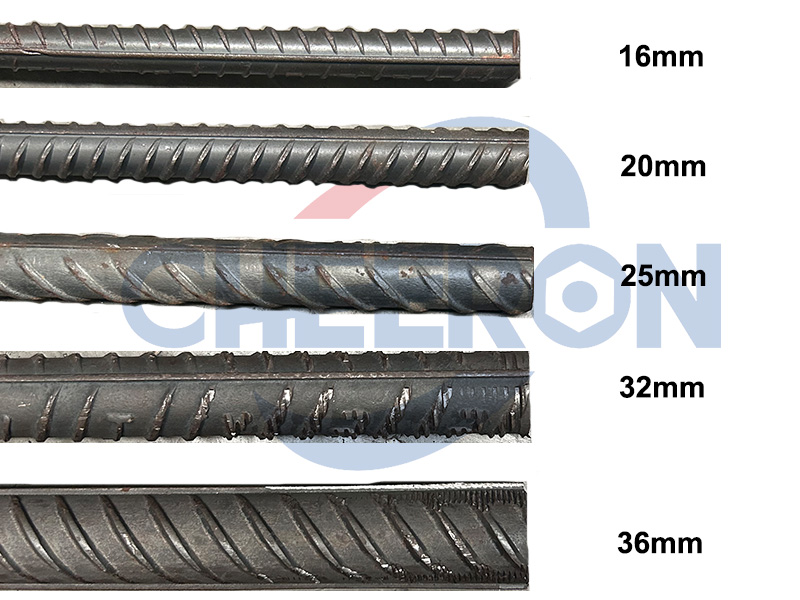
So, is knowing the diameter of the reinforcing bar enough? No, we also need to know its strength.
In the American Standard (ASTM), the strength grades of reinforcing bars are mainly divided into the following commonly used grades, primarily defined by yield strength.
Grade 60: Yield strength 60 ksi (approx. 420 MPa)
Grade 80: Yield strength 80 ksi (approx. 550 MPa)
Grade 100: Yield strength 100 ksi (approx. 690 MPa)
Grade 120: Yield strength 120 ksi (approx. 830 MPa)
Similar yield strengths allow for corresponding relationships to be established between different types of rebar:
The U.S. standard ASTM Grade 60 corresponds to India's TMT rebar (Fe500), China's HRB rebar (HRB400E), the UK's B500B, and Germany's DIN 488, among others.
Rebar connector design must meet the corresponding rebar connection yield strength requirements.
Internationally, rebar connectors are classified into two types-American Concrete Institute (ACI 318) standard: Type 1 rebar connectors and Type 2 rebar connectors
Type 1 rebar connectors must achieve at least 125% of the rebar's yield strength under tensile conditions.
Type 2 rebar connectors not only meet the 125% yield strength requirement of Type 1 connectors, but also require a connector strength of 100% of the rebar's ultimate tensile strength.
Regarding steel reinforcement connections—specifically rebar joined using mechanical couplers—tensile testing is required (What is rebar tensile testing?), as illustrated in the figure below.
Tensile testing checks whether the mechanical joint can reach the corresponding yield strength after the connector is connected to the matching rebar.
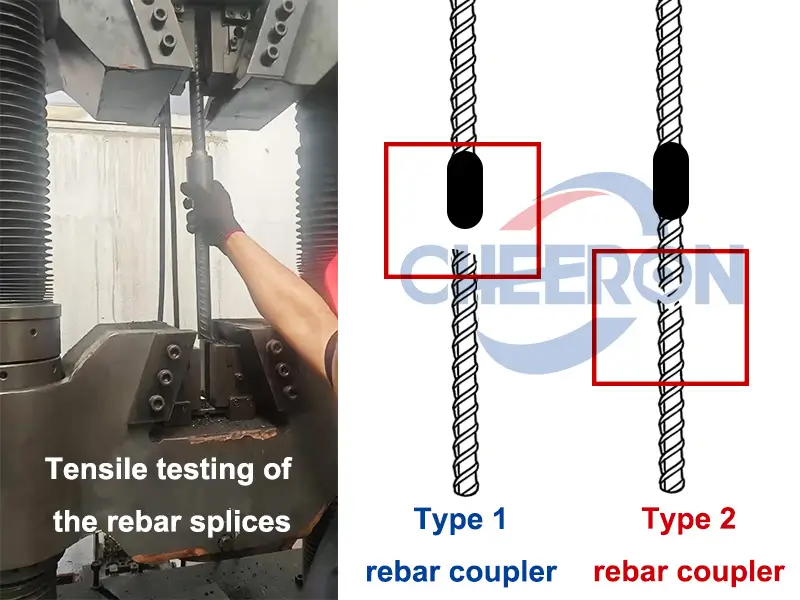
During this tensile test, Type 2 rebar couplers demonstrate a mode in which the rebar itself fractures, rather than the connection joint; Type 1 couplers, conversely, typically fail at the connection joint. These test results indicate that the tensile strength of Type 2 rebar couplers is equivalent to—or even exceeds—that of the parent rebar material.
This is a reference size table for Cheeron Type II thread rebar connectors:
| Size | Out Dia | Length | Inner Dia | Pitch | Thread Profile | Thread Accuracy |
| φ12 | 18 | 28 | 12.7 | 2 | 60°/75° | 6H |
| φ14 | 21 | 32 | 14.6 | 2 | 60°/75° | 6H |
| φ16 | 24 | 36 | 16.6 | 2.5 | 60°/75° | 6H |
| φ18 | 27 | 41 | 18.6 | 2.5 | 60°/75° | 6H |
| φ20 | 30 | 45 | 20.6 | 2.5 | 60°/75° | 6H |
| φ22 | 32.5 | 49 | 22.6 | 2.5 | 60°/75° | 6H |
| φ25 | 37 | 56 | 25.8 | 3 | 60°/75° | 6H |
| φ28 | 41.5 | 62 | 28.8 | 3 | 60°/75° | 6H |
| φ32 | 47.5 | 70 | 32.8 | 3 | 60°/75° | 6H |
| φ36 | 53 | 78 | 36.5 | 3 | 60°/75° | 6H |
| φ40 | 59 | 86 | 40.2 | 3 | 60°/75° | 6H |
| φ50 | 74 | 106 | 50.3 | 3 | 60°/75° | 6H |
Rebar couplers can be utilized with all currently rebar diameters; they can be designed and manufactured for sizes ranging from #4 to #18(φ12-φ50).
Given that both the length and yield strength of the rebar connection must be met, the size of the rebar sleeve can be customized.
Unsure which size rebar connector to choose? Contact us, and cheeron will customize the rebar couplers you need for your project.
The hardness and strength of the sleeve material must match the rebar grade.
Material selection is crucial for rebar connectors.
Cheeron rebar threaded connection sleeves typically use high-quality carbon structural steel or alloy structural steel to ensure their strength, toughness, and durability meet engineering requirements.
Common raw materials are carbon steel or alloy steel.
The most commonly used carbon structural steel is 45# steel.
Features:
Lower cost
moderate strength
easy to process
suitable for rebar connections in most construction projects
Alloy structural steel commonly used are 40Cr.
Features:
Strength and wear resistance are improved by adding elements such as chromium (Cr).
suitable for high-strength rebar (such as Grade 100 and 120) or special environments (such as low temperature and dynamic loads)
Using low-quality steel may lead to connection failure and pose safety hazards to the project.
Rebar connectors must undergo rigorous testing to ensure their safety and reliability. Typical tests include:
The raw materials for rebar connectors need to undergo hardness testing to meet relevant hardness requirements.
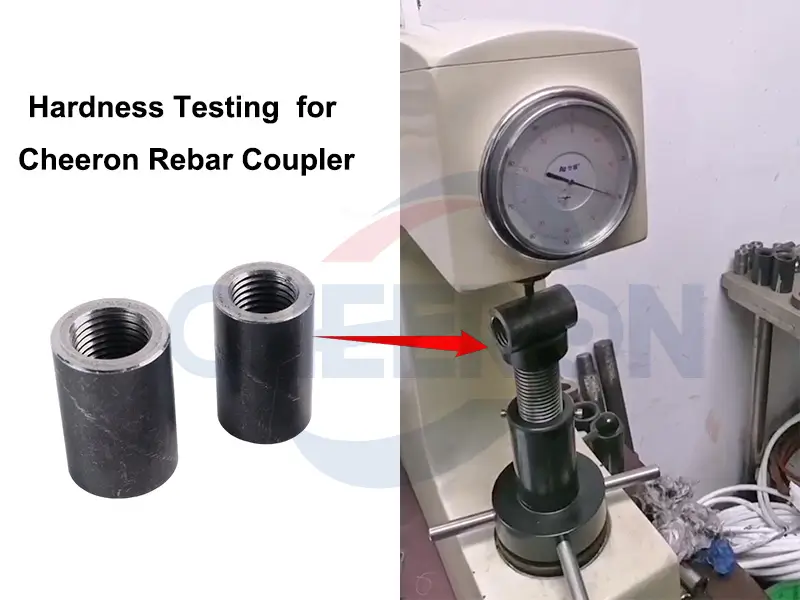
For specific testing details, please click: What tests are required for qualified rebar connectors?
For non-threaded rebar connectors, such as compression rebar connectors, bolt couplers, and one touch couplers, dimensional design and specification requirements also need to be considered from the perspective of the rebar.
Although there is a lack of unified global standards for rebar connector design, a combination of appropriate size selection,material selection, and rigorous testing can ensure structural integrity. Engineers must carefully evaluate these factors to select the most suitable rebar connection system for each project.