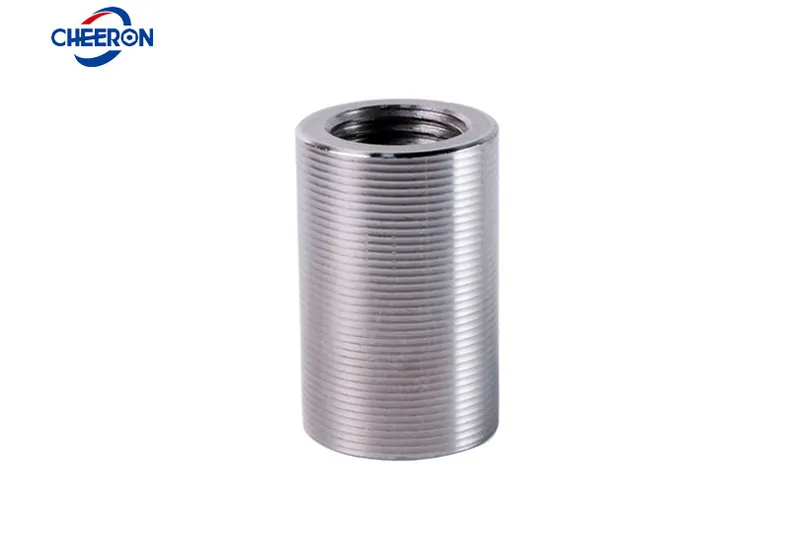
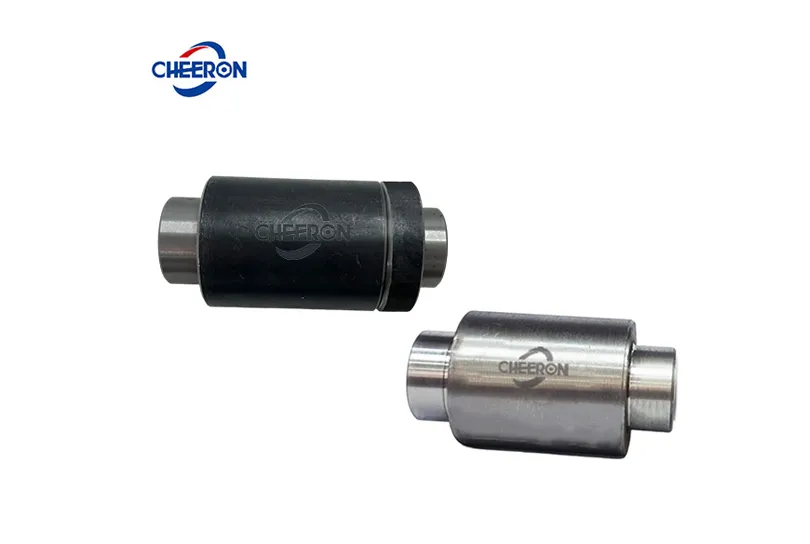
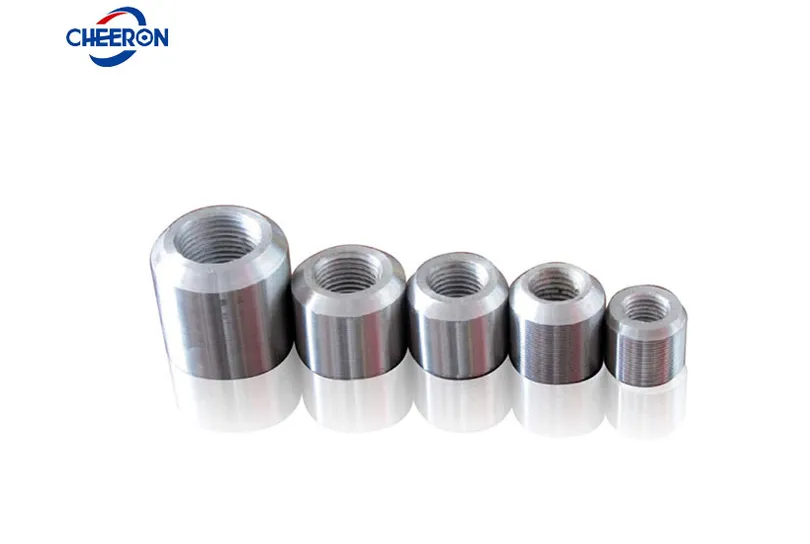
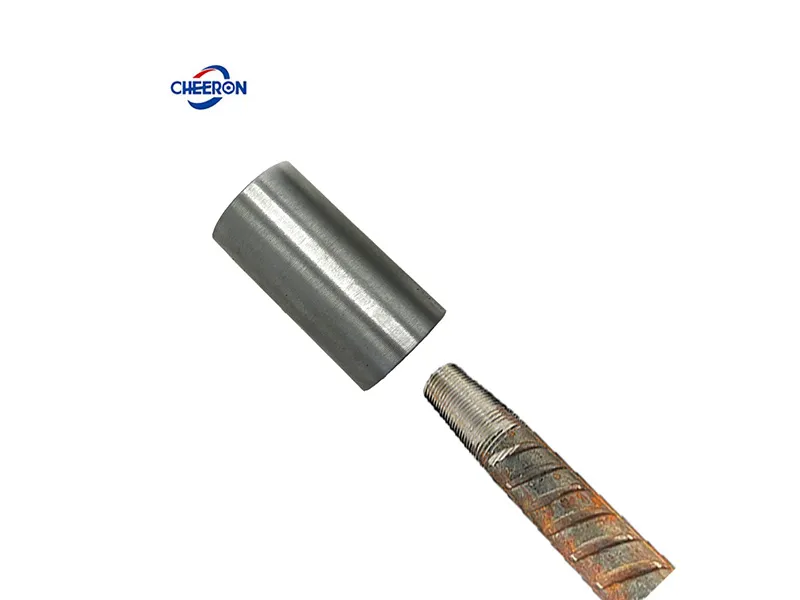
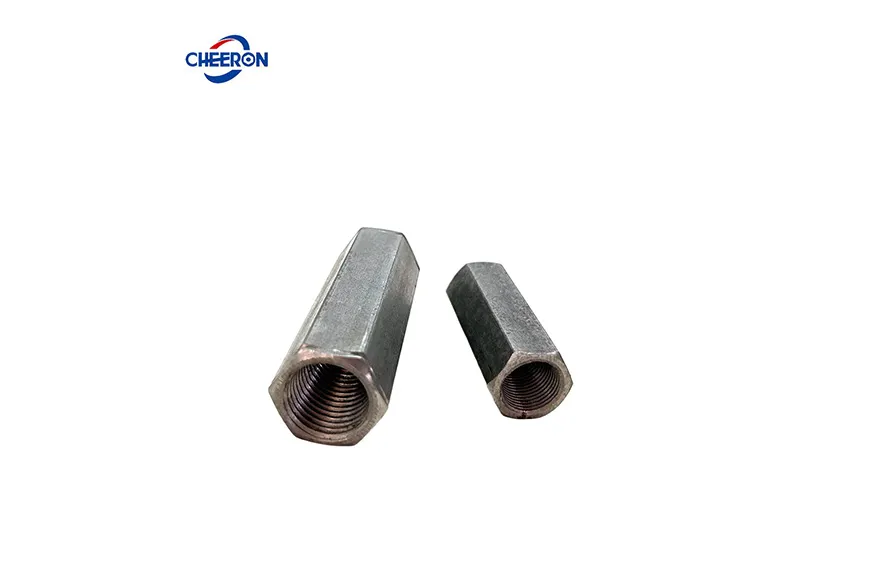
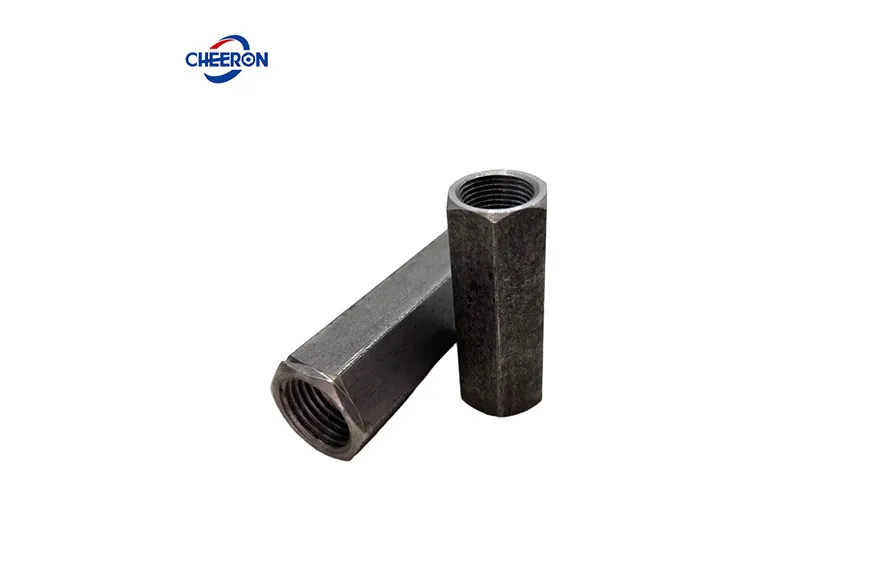
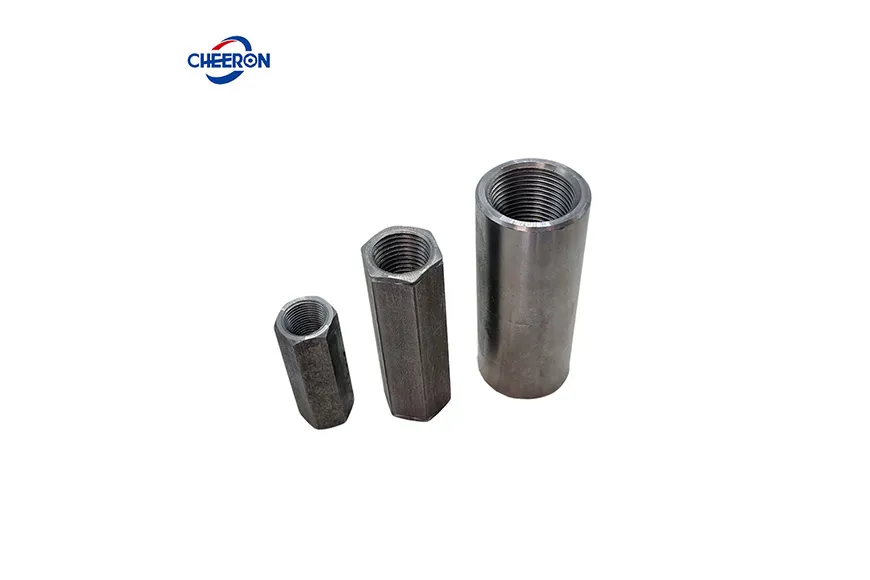
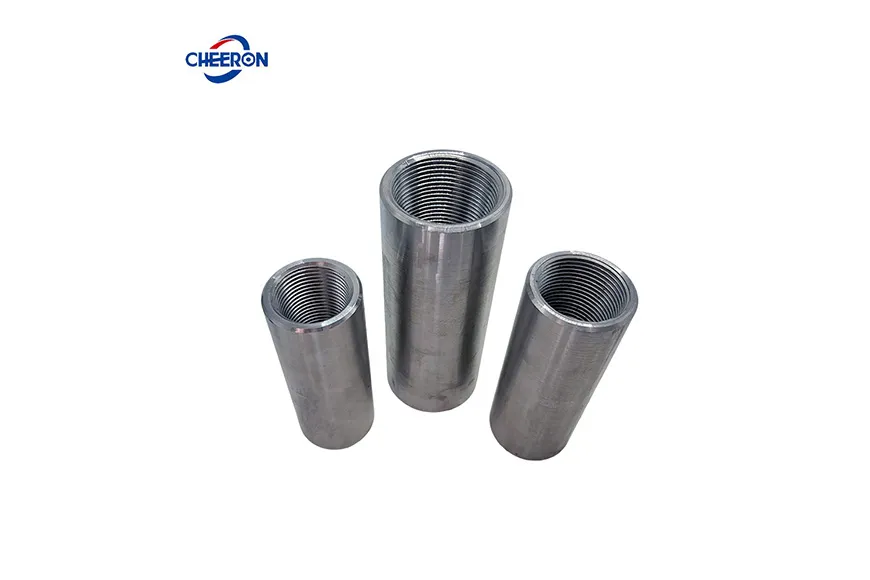
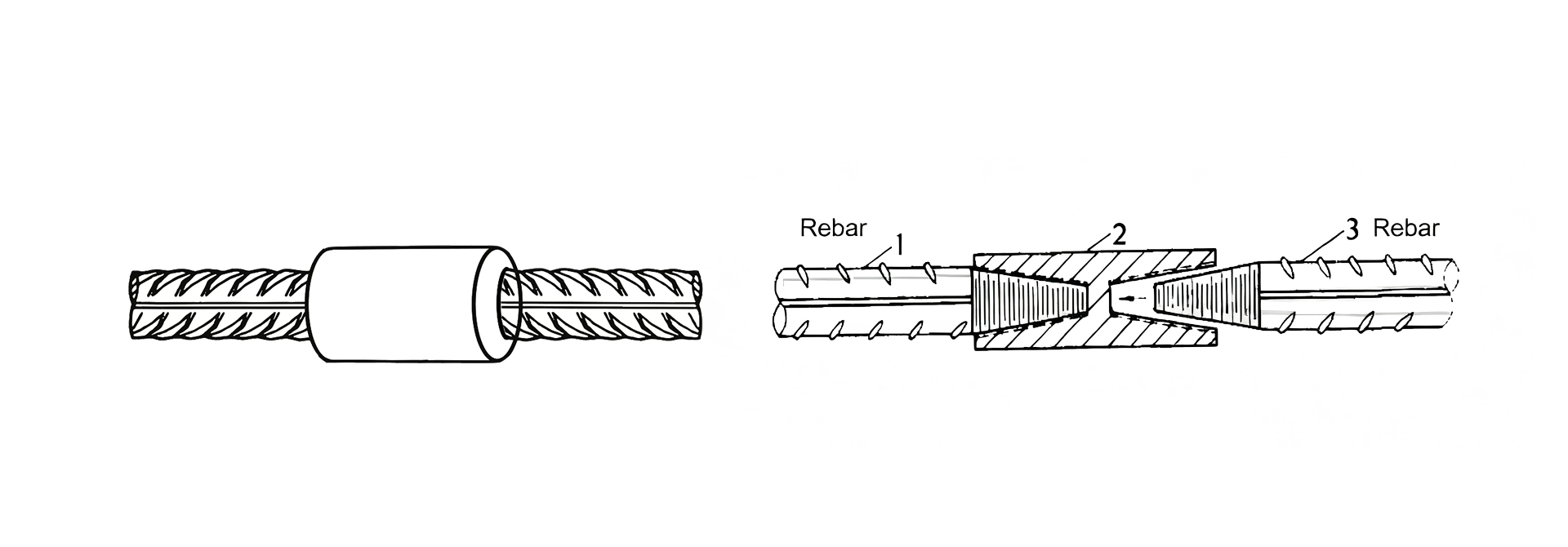
Taper threaded rebar coupler is one of the most traditional types of rebar connectors. It is supported by well-established international standards and boasts mature manufacturing processes, making it widely applicable to a broad range of construction projects.
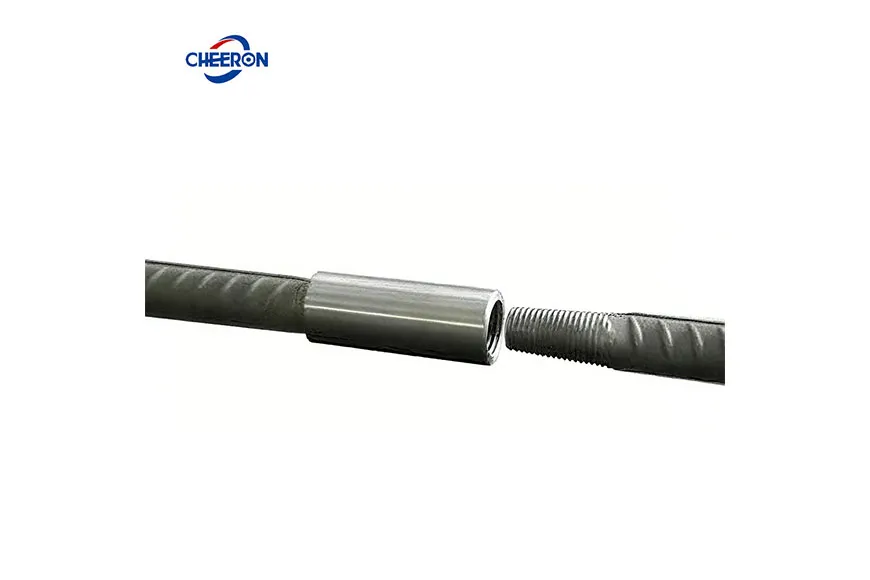
 | |||||
| Dia of Rebar | Outer Dia | Length | H1 | H2 | Thread |
| (mm) | (mm) | (mm) | (mm) | (mm) | (M*T) |
| Φ16 | 24 | 65 | 30 | 30 | 16*2.5 |
| Φ18 | 27 | 75 | 35 | 35 | 18*2.5 |
| Φ20 | 29 | 85 | 40 | 40 | 20*2.5 |
| Φ22 | 31 | 90 | 43 | 43 | 20*2.5 |
| Φ25 | 35 | 95 | 45 | 45 | 25*2.5 |
| Φ28 | 39 | 105 | 50 | 50 | 28*2.5 |
| Φ32 | 44 | 115 | 55 | 55 | 32*2.5 |
| Φ36 | 49 | 125 | 60 | 60 | 36*2.5 |
| Φ40 | 54 | 135 | 65 | 65 | 40*2.5(3) |
| Φ50 | 69 | 150 | 70 | 70 | 50*2.5(3) |
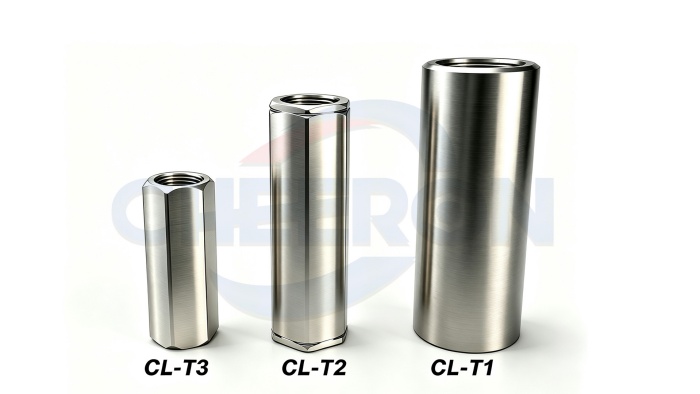
Taper thread coupler is fast connection speed and good alignment; Safe and reliable, easy to operate, and capable of withstanding both tensile and compressive forces.
Advantages of tapered threaded splices:
Thread ends can be prefabricated in factories. Only tightening is required on-site, typically completed with 4.5 turns, greatly shortening the construction schedule.
The tapered profile delivers excellent centering performance and effectively prevents cross-threading, offering great usability for field operations.
The taper threaded rebar coupler features a slender shape, ranking among the smallest couplers for the same rebar size. It allows reduced concrete cover thickness and resolves congestion issues in densely reinforced zones.
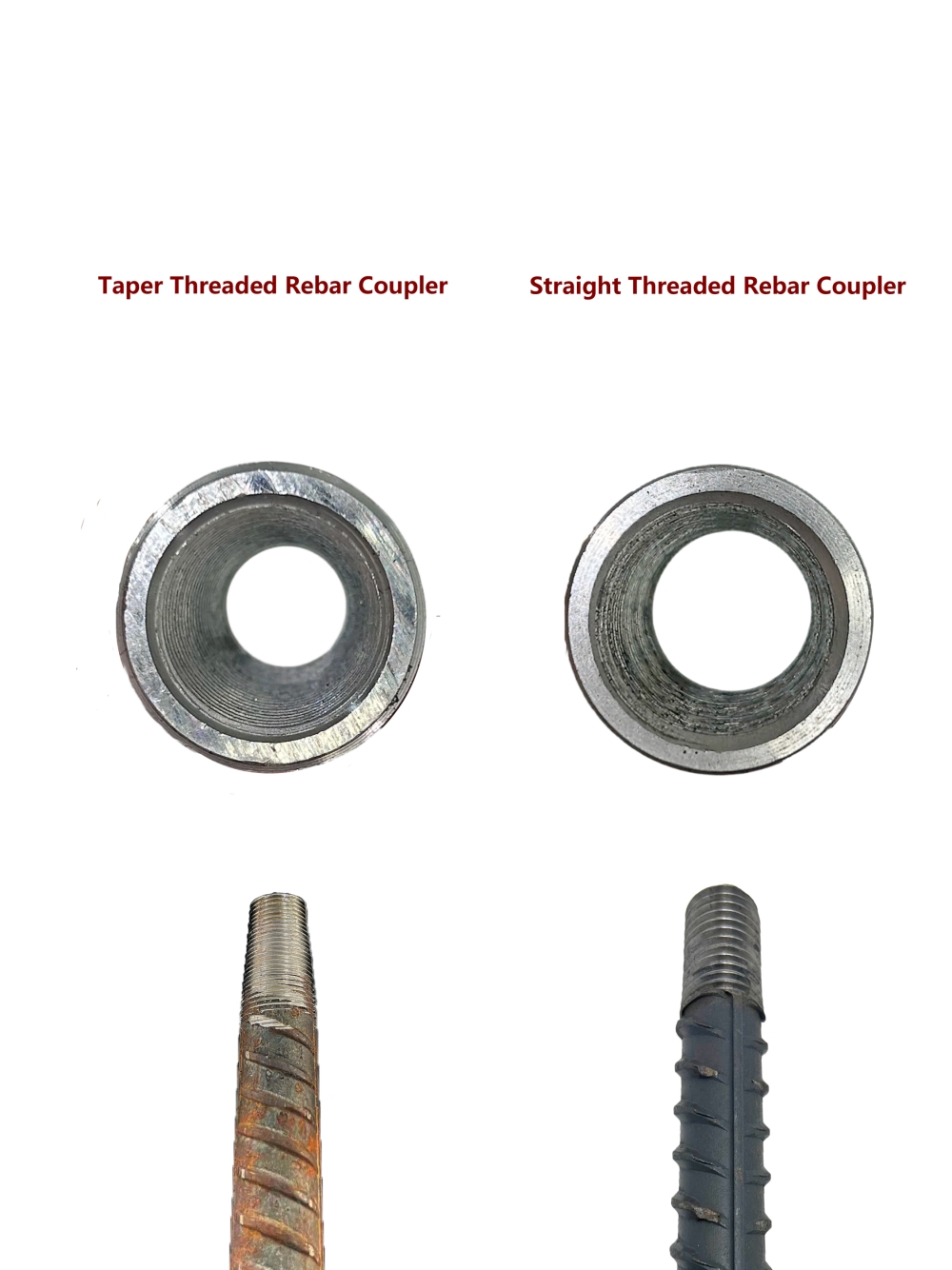
comparison of straight thread rebar coupler and tapered thread coupler:
Disadvantages of tapered threaded splices:
Due to the tapered design, the stress-bearing area of the thread is relatively small, and the minor diameter of the tapered thread weakens the cross-sectional area of the base material during machining, resulting in a lower load-bearing capacity.