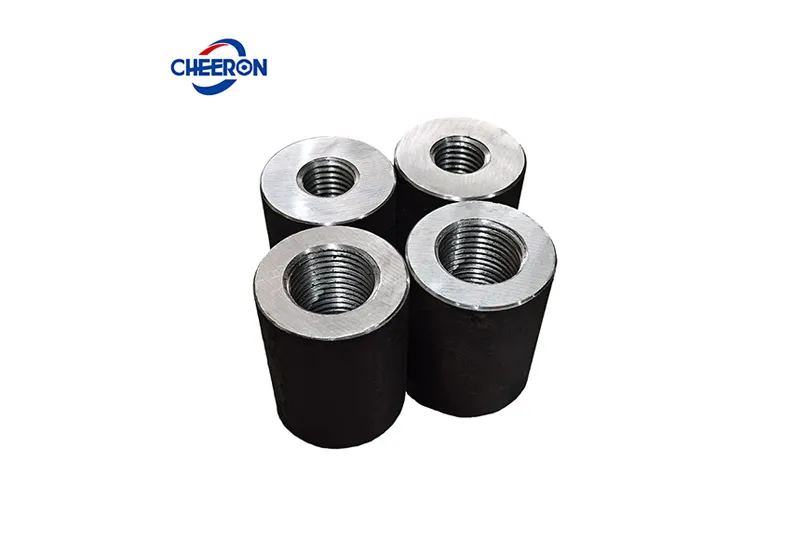
Threaded splices, as a primary type of mechanical reinforcing bar splice, utilize the interlocking force between the internal threads of the coupler and the external threads of the reinforcing bar to achieve a joint strength comparable to that of continuous reinforcing bars.
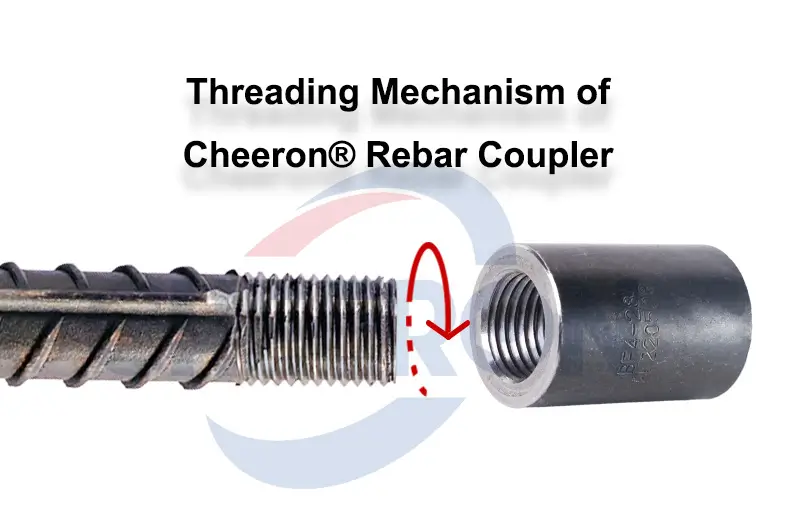
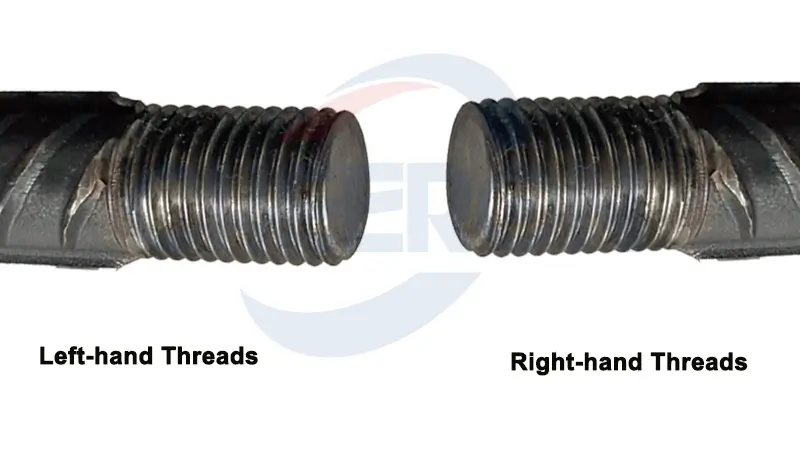
According to the rotation order of the threads, they are divided into right-hand threads and reverse threads.
Clockwise rotation is the tightening direction; counterclockwise rotation is the loosening direction. Most standard threads are right-hand threads.
Counterclockwise rotation is the tightening direction; clockwise rotation is the loosening direction. The thread is usually marked with "LH" (Left Hand) to distinguish them.
Depends on the construction conditions and machinery requirements.
Right-hand threads are generally used.
When the rebar cannot be rotated or needs to be prevented from loosening, reverse threads can simplify operation and improve reliability.
For example, using the CHEERON rebar positioning connector allows connecting two rebars by rotating in the same direction, but the two ends of the rebars have right-hand and reverse threads, respectively.
Therefore, it is essential to confirm the thread direction before machining the rebar threads to avoid connection failure.
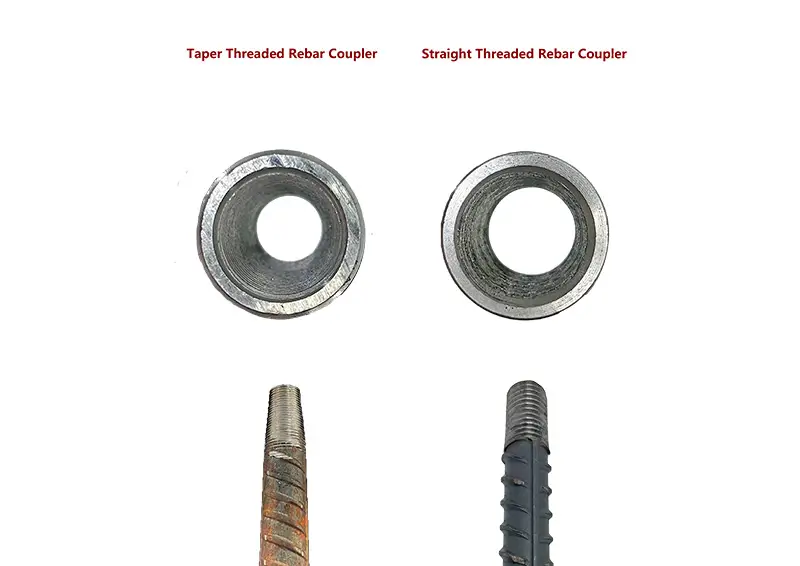
According to the shape of the thread, there are two types: straight threads and tapered threads.
Tapered threads have an inherent taper, and the thread profile is tapered. The major diameter of the thread gradually changes along the axial direction, exhibiting a "tightening as you tighten" characteristic.
Straight threads have no taper, and the thread profile is cylindrical. The major diameter of the thread remains consistent along the axial direction, making it easy to tighten directly to the end.
Depends on the rebar connector used
The main question is whether to use a tapered thread rebar connector or a straight thread rebar connector.
There are two types: cutting and rib rolling by the thread machining process.
Using cutting tools -chasers to remove excess material to form threads.
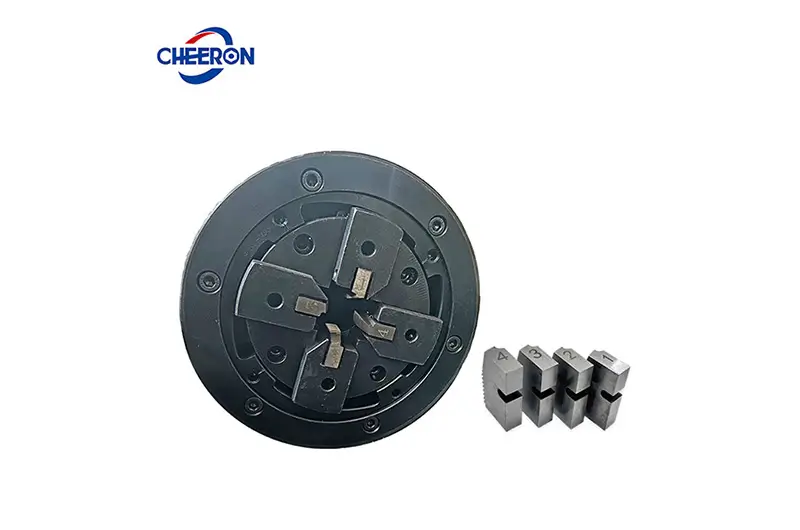
Removing the ribs on the surface of the rebar using blades, and then using thread rolling wheels to plastically flow the rebar to form threads.
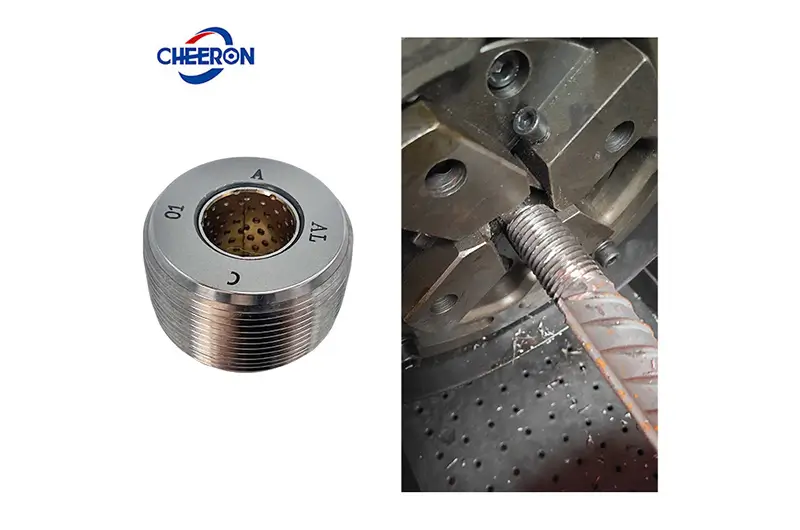
Different rebar threading processes result in two types of rebar threading machines:
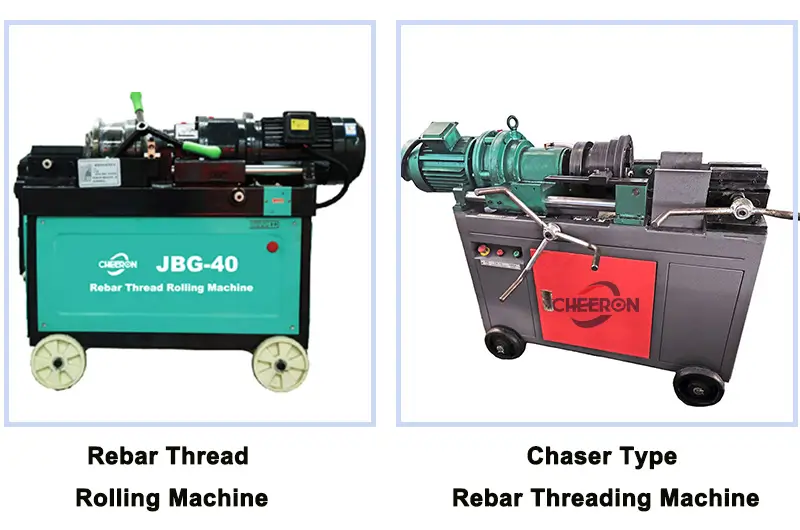
2. Cheeron Rebar Thread Rolling Machine
Learn about the differences between chaser-type rebar threading machines and rebar thread rolling machines.
Thread rolling involves plastic deformation: the strong pressure of the rolling wheel causes the rebar metal to "flow" into a thread shape, with almost no material cutting.
The hardness of the rebar increases during the rolling process, and the strength of the threaded portion is often no less than that of the base material.
Therefore, thread rolling is the choice for the vast majority of steel bar threading.
Preparation stage: The rebar should be cut flat with vertical ends. Only qualified rebar can be used on the CHEERON rebar threading machine.
Rib removal: The blades on the thread rolling machine first remove a portion of the transverse and longitudinal ribs from the rebar ends, making the ends smooth cylinders (uniform diameter is key).
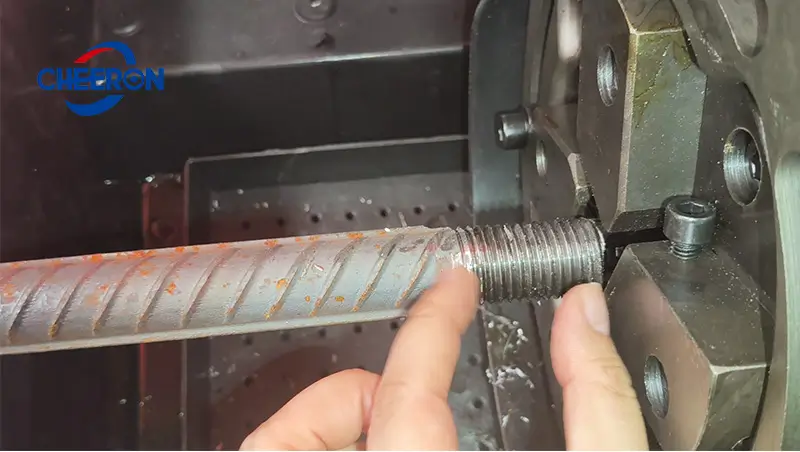
Thread rolling: Rollers (usually 3) rotate at high speed, simultaneously applying pressure to the rebar to form standard straight threads.
The Cheeron thread rolling machine operation process is shown in the following video:
Otherwise, the rebar thread length will be too long.
Otherwise, the rebar thread rolling effect will be poor, and the thread profile will be incomplete.
3. During the use of the thread rolling machine, when not in use or when changing the blades, the power should be turned off, or the stop button should be pressed to prevent accidents.
Quality inspection should check the appearance and thread size of each thread end. The thread surface should not be damaged or corroded.
The effective thread length should not be less than 1/2 of the length of the rebar coupler, with a deviation of 0~2 pitches.
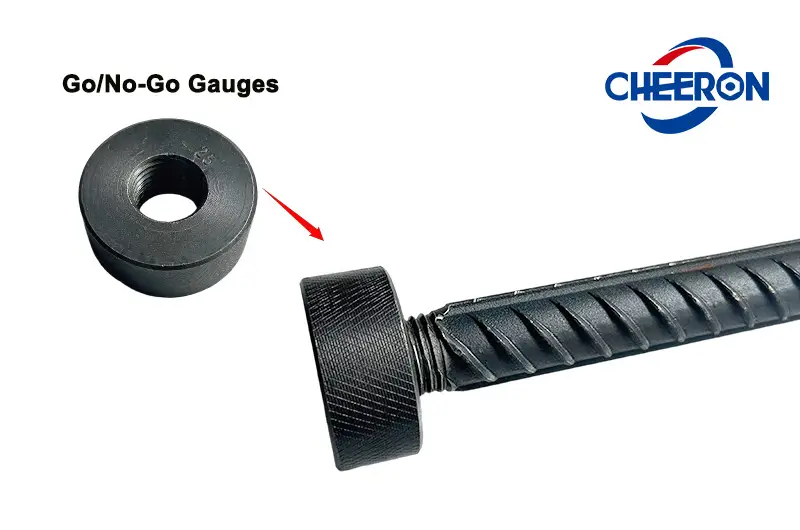
The go gauge should be able to be screwed into the entire effective length smoothly, and the no-go gauge should be screwed into a depth not exceeding three pitches.
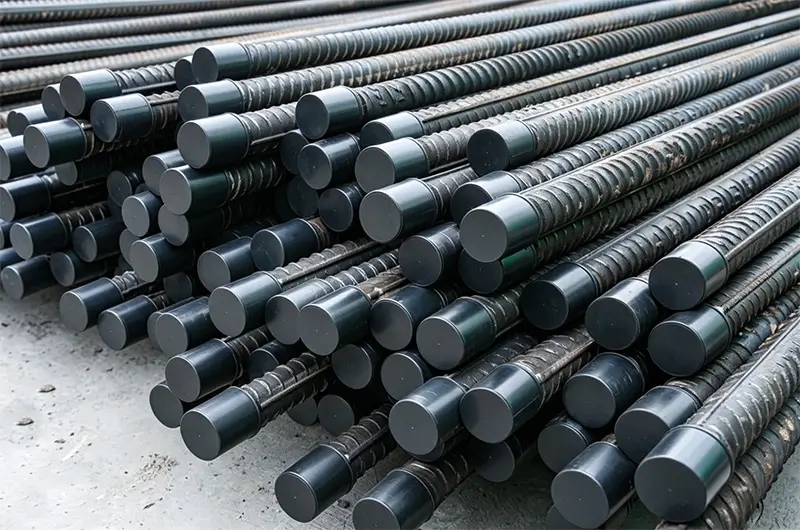
Failure to promptly install a protective cap after threading can lead to exposed corrosion, affecting the quality of the rebar joint.
There is no choice but to cut off the threaded portion of the rebar using a rebar cutter. Ensure the cut surface is smooth and flat, then re-thread it using a thread rolling machine.