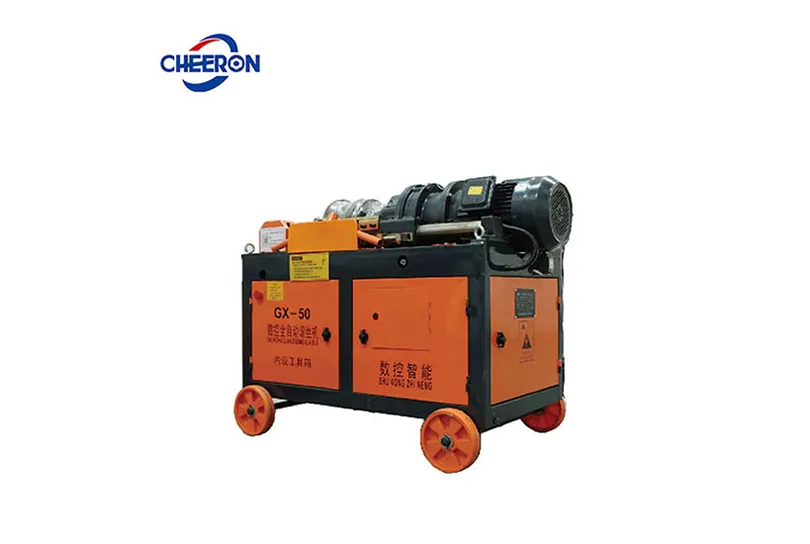
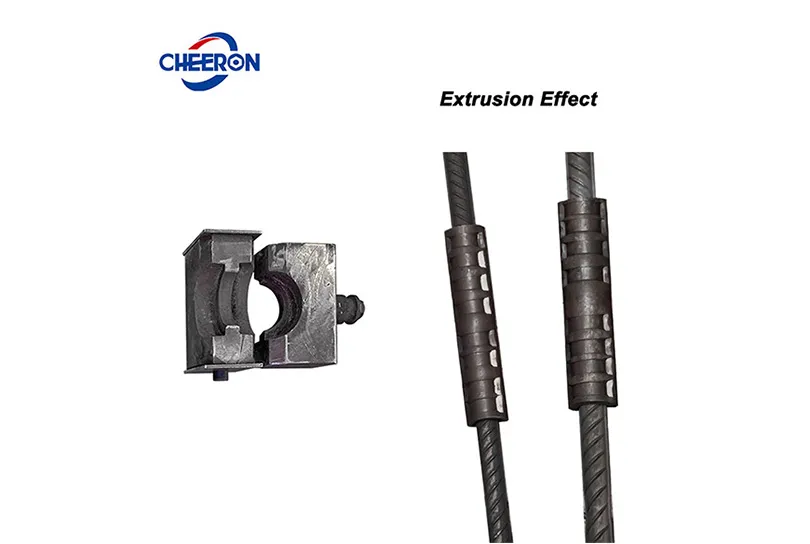
Upsetting threaded rebar is an important step in the mechanical splicing of bars. Rebar upset forging machine based on the principle of hydraulic cold upsetting to deform the ends of rebar, thereby increasing its size. The actual cross-sectional area of the upset for reinforcement steel end is larger than the original cross-sectional area. When used with the CHEERON rebar threading machine and upset forging rebar couplers, the mechanical splice for reinforcement strength is further enhanced.


| Model | TXDCJ-36K |
| Power Supply | 380V |
| Motor Frequency | 50Hz |
| Motor Power | 7.5 kW |
| Machining Range | 16-36mm Rebar |
| Compression Cylinder Diameter | 220mm |
| Upsetting Cylinder Diameter | 250mm |
| Hydraulic Oil | 46# Hydraulic Oil |
| Hydraulic Pump | 10MCY-1B |
| Weight | 1000 KG |
| Size | 135x90x175 cm |
Double-cylinder hydraulic upsetting. The Cheeron upsetting machine utilizes the principle of double-cylinder hydraulic cold upsetting to induce plastic deformation at the ends of threaded rebars, thereby increasing the diameter of the bar ends by 4-6mm.
Stronger mechanical splices for reinforcement. After upsetting by the upset forging machine, the strength of the steel bar substrate is significantly improved, thus increasing the tensile strength of the mechanical joint.
Simple operation and easy to move. This machine uses simple button operation and can be used after simple training. It is equipped with casters for easy movement and better operation.
The upsetting machine can upset threaded rebar from 16-36 mm.
It needs to be used with cheeron rebar threading machine to process the threads
An upset forging coupler is used to complete the threaded mechanical splicing

Upsetting is an "plus" process, using cheeron rebar upsetting machine to forge the reinforcing bar, increasing the size of its ends.
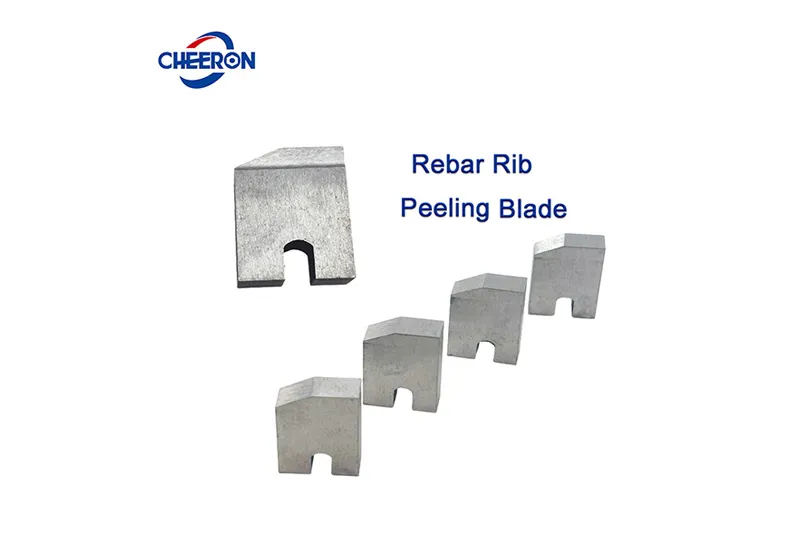
Rib stripping is a "minus" process, using cheeron thread rolling machine to remove the transverse and longitudinal ribs from the reinforcing bar, resulting in a smooth cylinder at the ends.

A rebar forging machine operates on the principle of cold upsetting (cold heading), a precision metal forming process performed at room temperature. By applying extremely high hydraulic or mechanical pressure through a powerful ram, the rebar cold forging machine plastically deforms the end of the rebar, forcing the steel to flow into a specially designed die. This significantly enlarges the diameter (typically by 4–6 mm) while simultaneously compacting the grain structure, substantially increasing the density and strength of the forged "upset" end — often making it stronger than the original rebar itself. The resulting enlarged and strengthened end is then parallel-threaded and connected using high-performance mechanical couplers, achieving a full-strength, reliable, and durable connection that meets or exceeds the tensile strength of the parent rebar material, making it an ideal solution for critical structural reinforcement in modern construction.
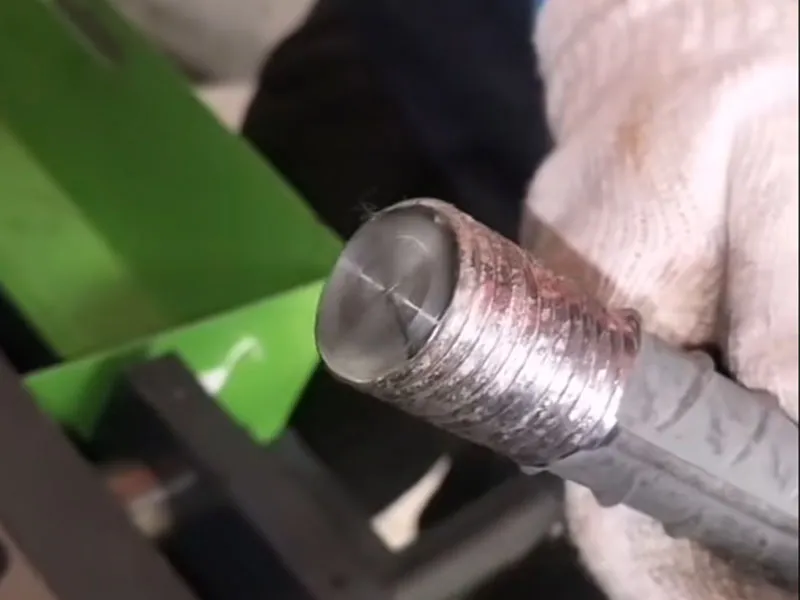
The net cross-sectional area of the upset steel bar after thread cutting is still larger than the original cross-sectional area of the steel bar.
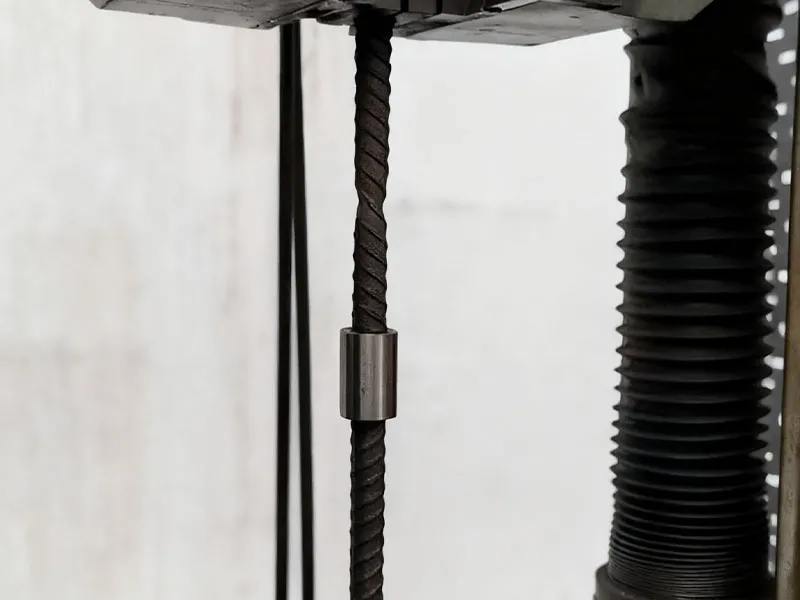
Rebar upsetting machine is all the threaded joints after upsetting fracture at the base metal in the tensile test.
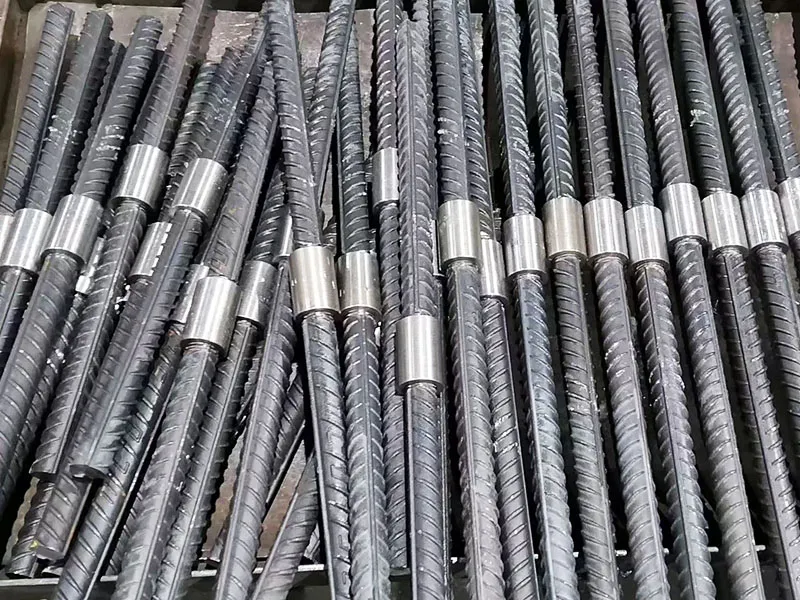
Rebar forging machine enables high production efficiency.