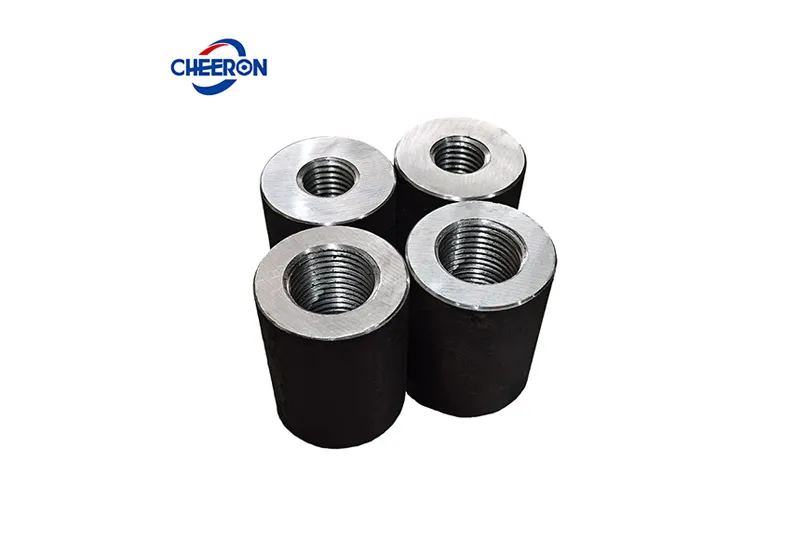
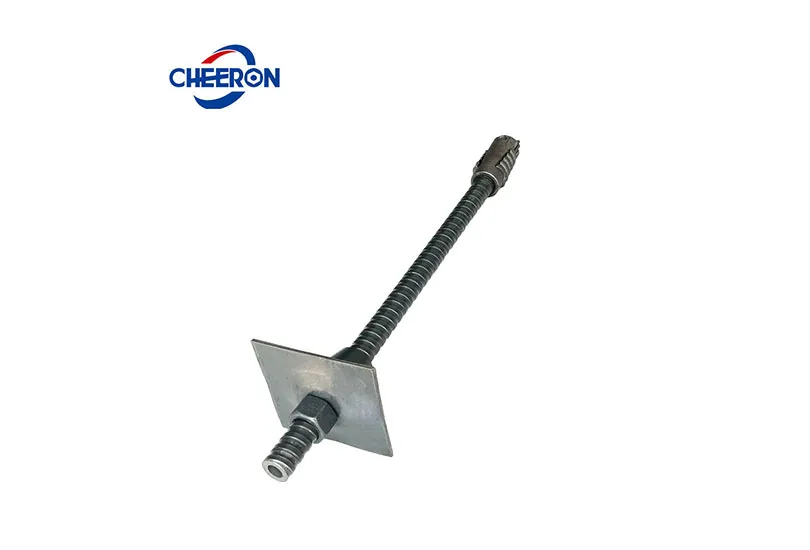
Rebar splices affect the structural safety of the entire building. Compared to welding and lap joints, mechanical splices are used in critical load-bearing locations to support the continuity of reinforced concrete structures. By understanding the manufacturing process of rebar connectors, we can better comprehend why such small mechanical rebar joints can shoulder such a heavy responsibility.
This article will comprehensively explain the manufacturing process and equipment of Cheeron mechanical splice couplers: cutting, chamfering, rib stripping, tapping, marking, and packaging.
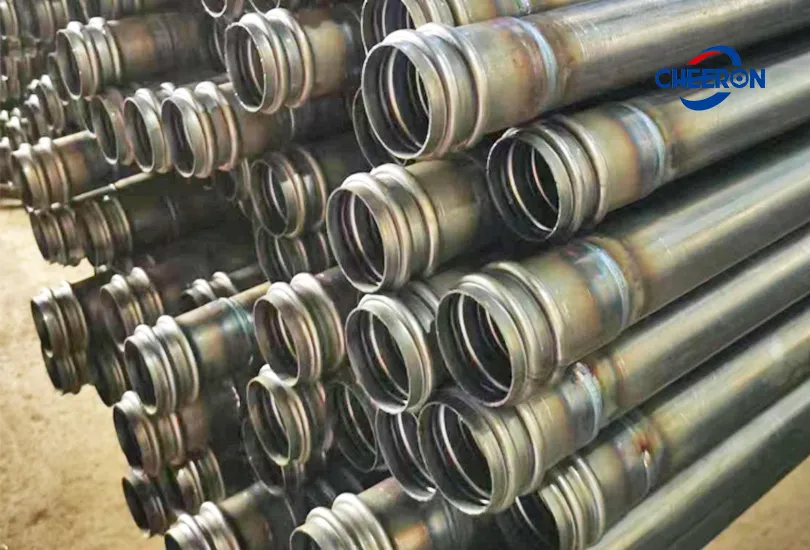
Cheeron rebar couplers first select high-quality 45# carbon steel or 40Cr alloy steel (seamless steel pipes or round steel bars).
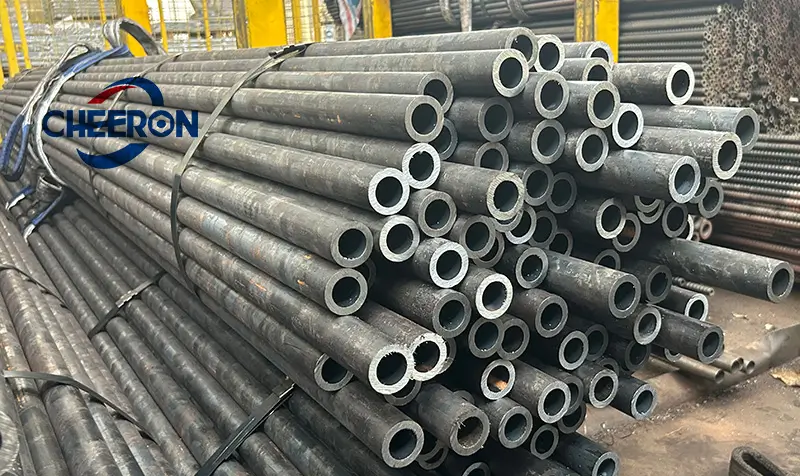
As a manufacturer of rebar connectors, Cheeron has gradually come to understand the importance of raw material supply during its continuous growth. We are no longer just a downstream product manufacturer of seamless steel pipes, but also a manufacturer of seamless steel pipes.
Controlling quality from the source ensures that the strength and hardness of our products meet international standards, building an unbreakable safety barrier for construction projects.
Currently, threaded rebar connectors remain the mainstream in the global rebar connector market. Therefore, taking threaded connectors as an example, Cheeron threaded rebar connectors require 5-6 processes before final delivery:
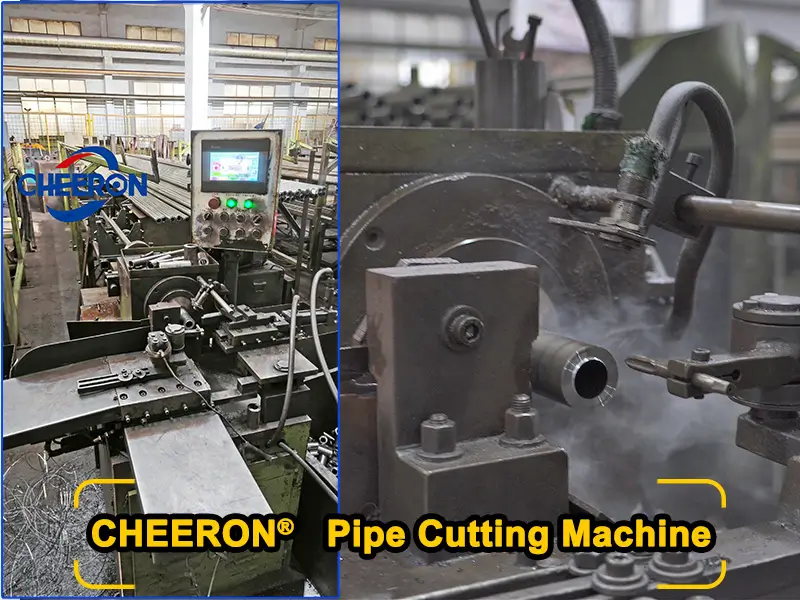
Cutting-Cheeron Pipe Cutter
Chamfering-Cheeron External Turning Machine
Peeling-Cheeron Rebar Coupler Peeling Machine<Optional>
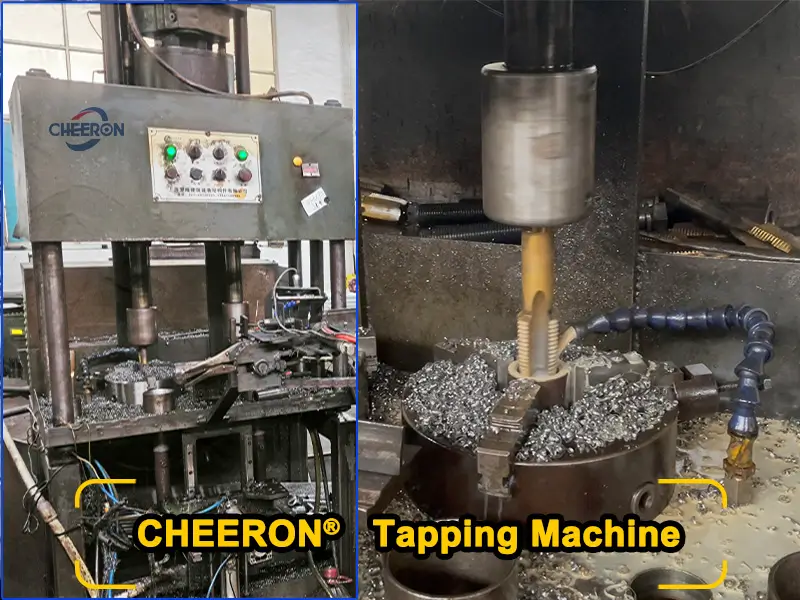
Threading-Cheeron Tapping Machine
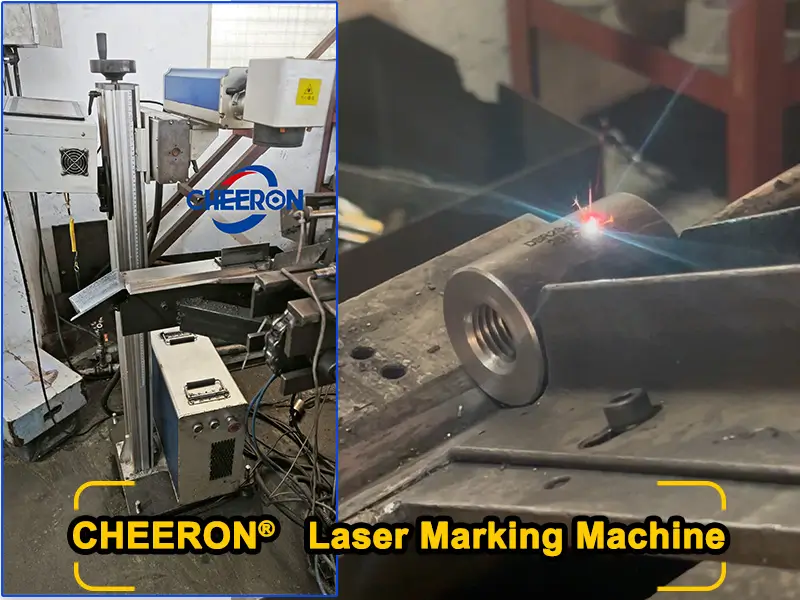
Marking-Cheeron Laser Marking Machine
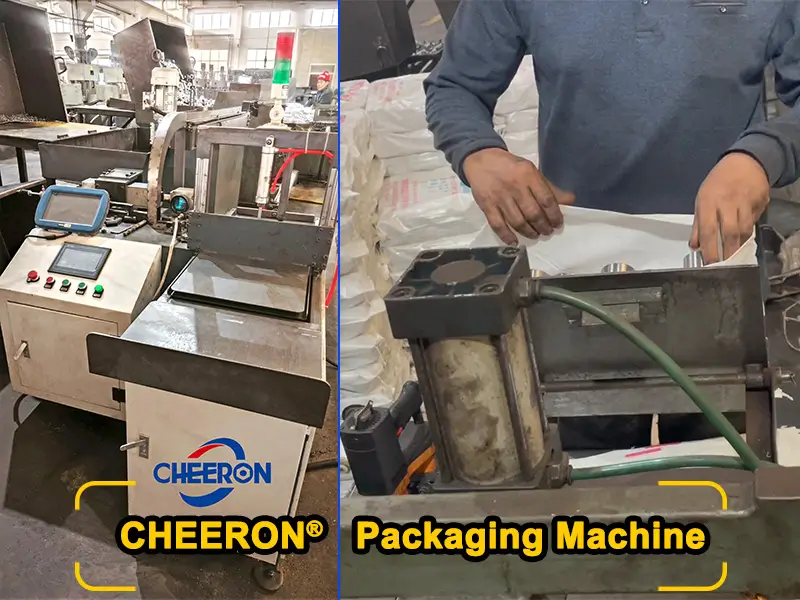
Packaging- Cheeron Automatic Bagging Machine
cheeron cutting machine cuts the steel bar into sections. The length strictly adheres to specifications. This step is like cutting hair; a crooked cut will cause problems later! We use cutting equipment, controlling the error within 0.5mm, ensuring high efficiency and accuracy.
Precision turning: A Cheeron CNC lathe performs rough turning of the outer diameter, finish turning of the inner hole, and chamfering of the inner and outer corners.
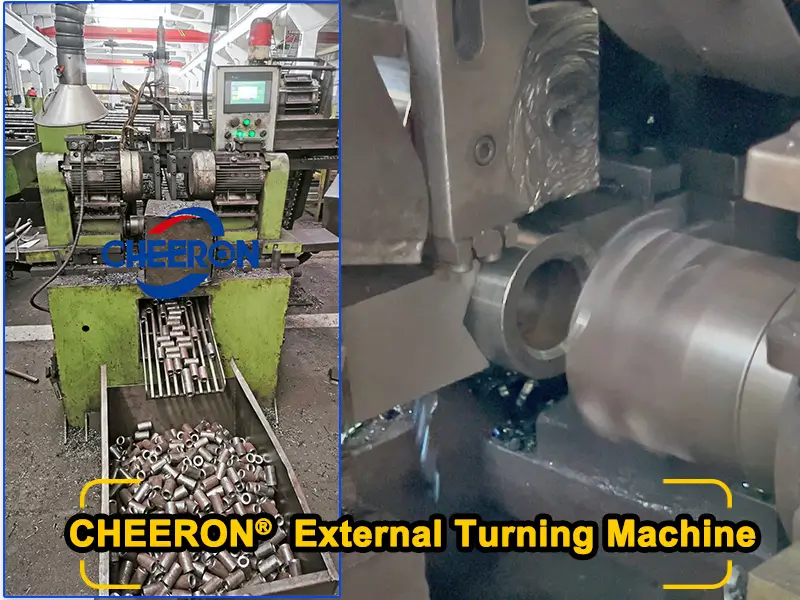
A small allowance is left for the inner hole to facilitate thread tapping later. The entire process is like a sculptor polishing, shaping the rough material bit by bit – the finished surface is smooth and flat, with zero burrs!
The raw material for the rebar connector is seamless steel pipe. During the rolling process, the surface of the seamless steel pipe comes into contact with air, forming a dense black oxide layer.
Note that this is not rust; only reddish-brown rust indicates corrosion.
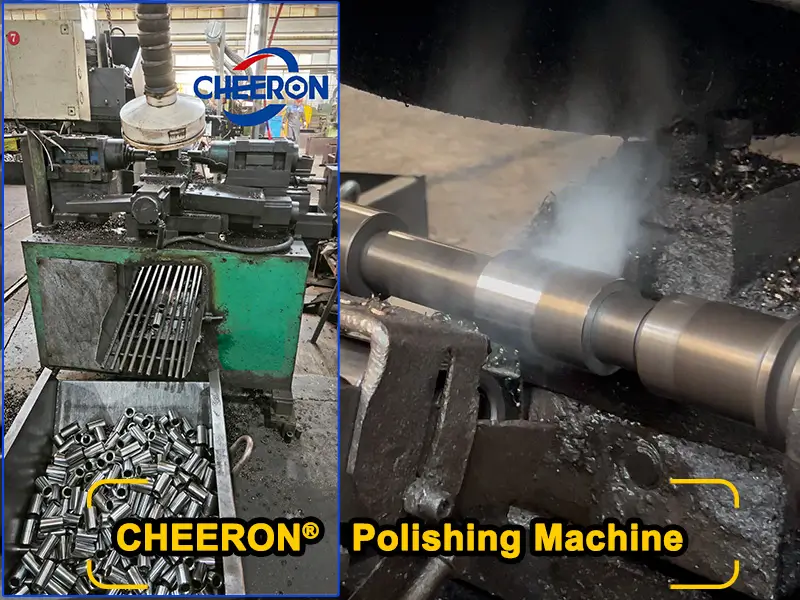
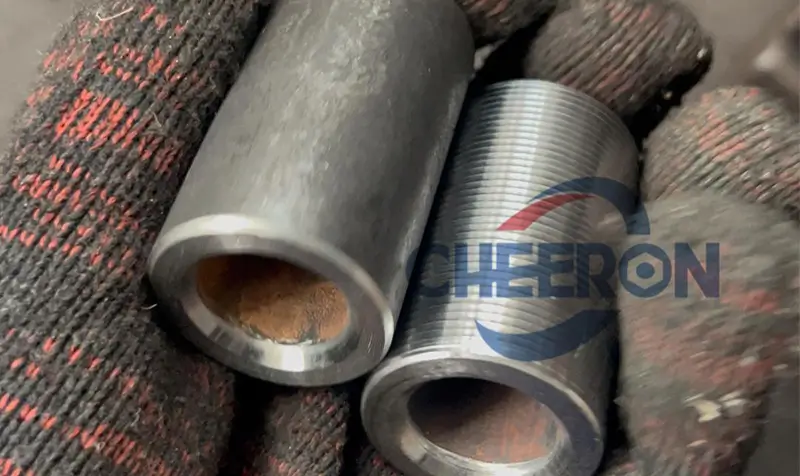
The rebar connector will be very shiny after peeling.
This makes the rebar connectors readily visible. This allows construction managers to quickly and efficiently identify the location of the rebar connectors and visually assess the installation effect.
The rebar connectors after peeling are much more aesthetically pleasing.
Most building materials are black, but the rib-peeling rebar connectors are brighter and more unique, enhancing the appearance of the building project.
Cheeron Threading Machine: A specialized tapping machine is used to process the internal threads of the steel pipe. Cheeron manufactures straight thread sleeves, ensuring the thread precision perfectly matches the rebar end.
The pitch error is controlled to within ±0.02mm to prevent the rebar coupler from loosening! This step determines the "grip" of the rebar sleeve and is extremely important.
Cheeron Laser Printer: Each rebar connector is engraved with specifications, a logo, and a batch number, making the rebar connectors easy to trace and preventing confusion during use.
Because laser printing is used, it is less prone to wear and provides a permanently clear image. Compared to steel stamping, laser printing is a non-contact thermal process that does not damage the internal metal continuity of the product and does not affect the structural strength of the rebar connector.
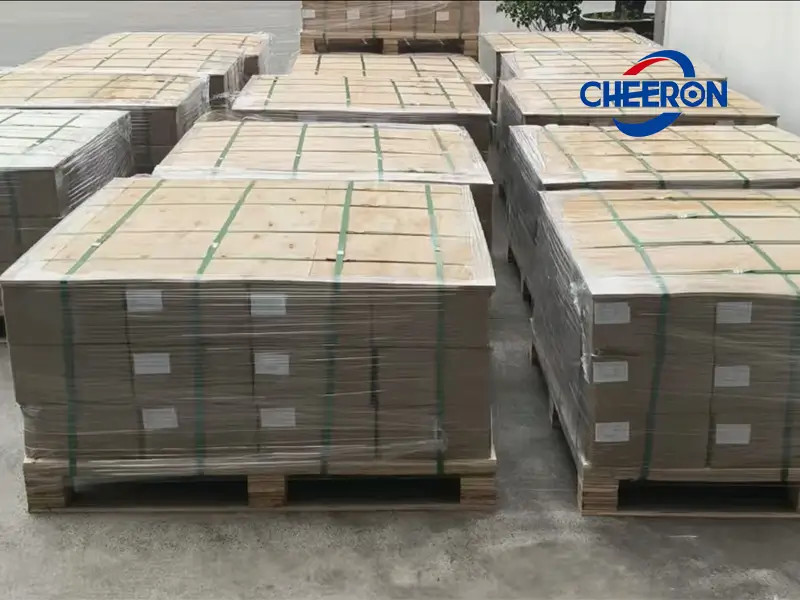
Although rebar connectors are small, they are very heavy. Cheeron offers two packaging options:
Cheeron's automatic bagging machine directly bags the rebars after they are arranged.
Advantages: Faster, simpler, space-saving, and easier to move and handle.
Boxed packaging involves neatly arranging the rebar connectors in a box. Note that although the rebar connectors are small, they are very heavy, so the box's load-bearing capacity must be considered.
Advantages of Boxed Packaging
Compared to bagged packaging, boxed packaging offers better pressure resistance, effectively protecting the threads and thread precision.
Of course, before packaging all rebar connectors, we conduct random product inspections, including dimensional checks, thread checks, tensile strength tests, hardness tests, etc. For details, please click the article: What tests are needed for rebar connectors?.
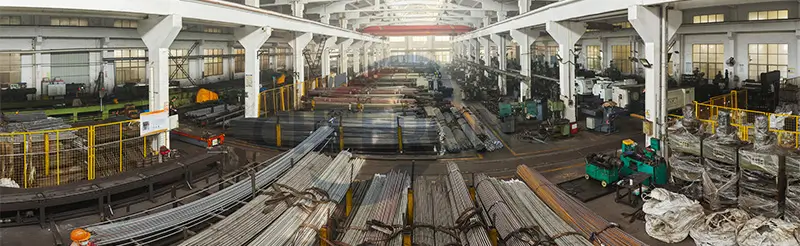
The entire process takes approximately 1-3 days to ship Cheeron rebar connectors (depending on batch size). Cheeron factory uses CNC and automation systems with strict process requirements, ensuring a balance between rebar connector quality and production capacity.
Have you used straight thread sleeves on your construction sites? Which specification do you prefer? Or do you want to know more about rebar connector processing equipment? Contact us for more detailed answers!