Selection Scheme for Mechanical Rebar Splices in High-Rise Residential Buildings Based on Azerbaijan's Geological Conditions
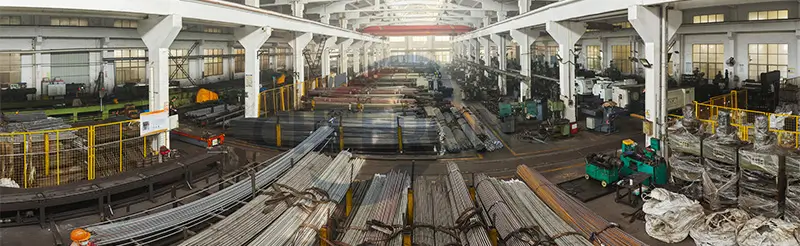
CHEERON is a manufacturer and installation service provider with over 20 years of experience in mechanical rebar splicing. We operate our own seamless steel pipe production lines and boast an annual output of 50 million couplers, making us the largest player in this sector across the five provinces of East China. Our core products include seamless steel pipes (with a daily output of 60 tons), rebar couplers (150,000 units daily), and other essential metal construction materials for civil engineering, such as hollow anchor bars and sonic logging pipes. We serve as annual strategic suppliers for major entities like POWERCHINA, CSCEC, ENERGY CHINA, and CREC; At the same time, Cheeron also supplies products to numerous projects around the world through its trading partners.
Our manufacturing philosophy strictly adheres to high international standards for seismic safety. All products are designed based on the ultimate tensile strength of the rebar to ensure that, under extreme stress, the failure mode is "rebar fracture" (where the rebar breaks while the coupler remains intact). We have comprehensive domestic certifications (ISO, fatigue testing, type testing, and construction enterprise qualifications), and we are currently aligning with specific international certification requirements.
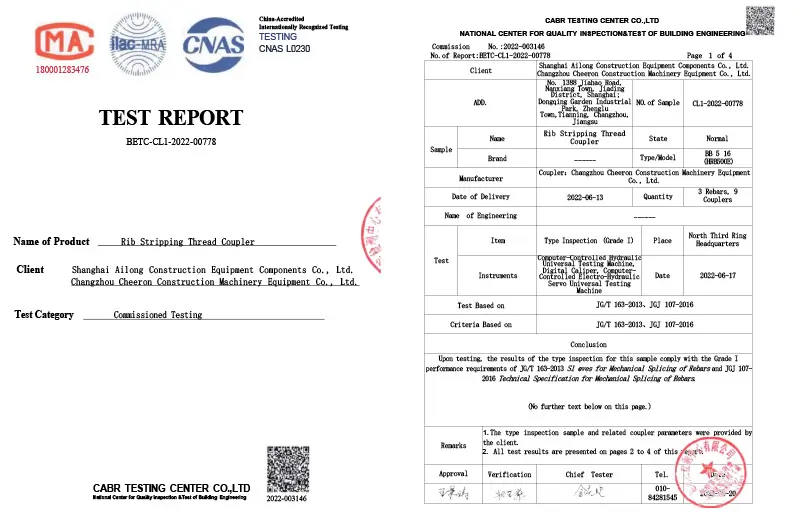
Cheeron can provide samples for independent laboratory testing, such as localized type testing at the customer's location or third-party inspection, to verify that it fully complies with the requirements of Type II rebar coupler.
Online research reveals that Azerbaijan is situated within the highly active Caucasus-Alpine orogenic belt; its unique engineering-geological and seismotectonic
characteristics are key factors determining the structural safety of high-rise cast-in-place buildings. Click to learn about our project
This requires the rebar joints to possess extremely high rigidity and tensile strength; under no circumstances must slippage occur during minor structural deformation.
Dynamic fatigue resistance is critical due to continuous micro-vibrations inherent to the region's geological strata.
If rebar connectors lack sufficient ductility in the elastic-plastic stage, the joints may undergo brittle fracture, leading to the instantaneous collapse of the building. Therefore, the joints must meet the requirements for Type II (high ductility, equal strength) joints under international standards.
Taking into account the requirements arising from the aforementioned geological characteristics—specifically regarding differential settlement, low-frequency vibration, and high ductility under strong earthquakes—a multi-dimensional quantitative assessment of the three connection methods is conducted:
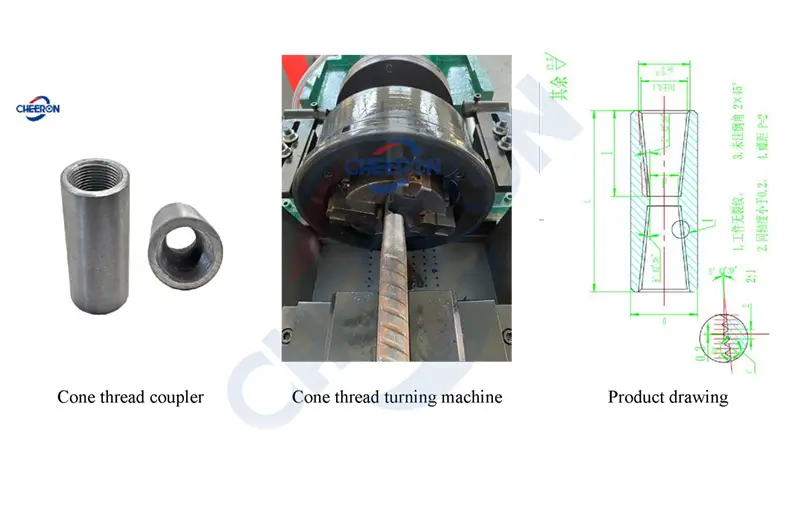
Using Cheeron Tapered thread connection connects two rebars:
Required Connector Types and Equipment:
Cheeron tapered thread connection
Cheeron threading rolling machine
Resistance to differential settlement: Poor. Due to the abrupt change in cross-section, stress concentration tends to occur at the root of the tapered threads under the combined shear forces induced by secondary stresses, leading to brittle fracture.
Seismic High-Ductility Performance: Non-compliant. Under high-strain, cyclic tension-compression loading associated with severe earthquakes (Intensity 8–9), tapered threads are prone to "micro-loosening," making them highly susceptible to slippage or disconnection.
Fatigue resistance (low-frequency micro-vibration): Low. The tapered fit carries a risk of loosening under prolonged, low-amplitude vibration.
On-site installation efficiency: High. Requires few turns to screw in after alignment;skilled workers take approximately 30–45 seconds per unit.
Combined material and equipment costs: Moderate. The sleeve is of moderate size. High precision is required for the threads, resulting in relatively high production costs.
Ease of quality inspection: Difficult to assess intuitively. On-site supervisors struggle to distinguish between a connection that is "properly tightened" and one where the taper has seized prematurely (creating a "false tight" condition).
Adaptability to abnormal operating conditions: Limited. It is difficult to handle situations where the rebar cannot rotate.
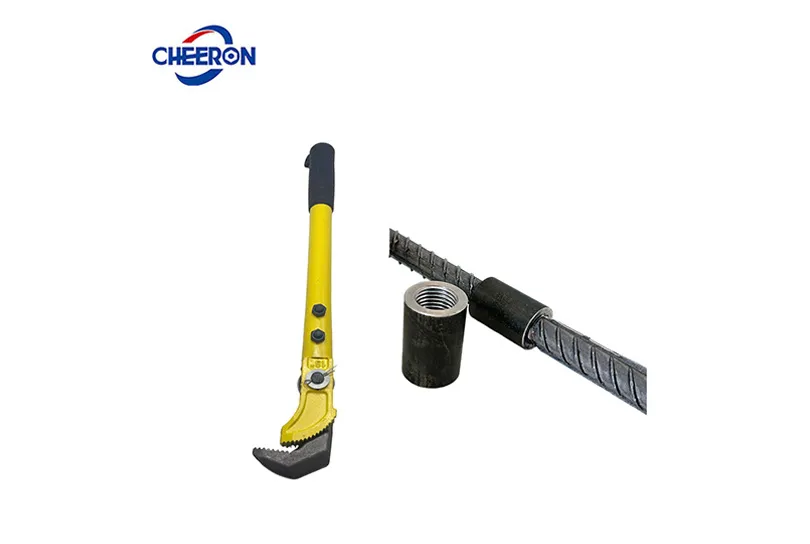
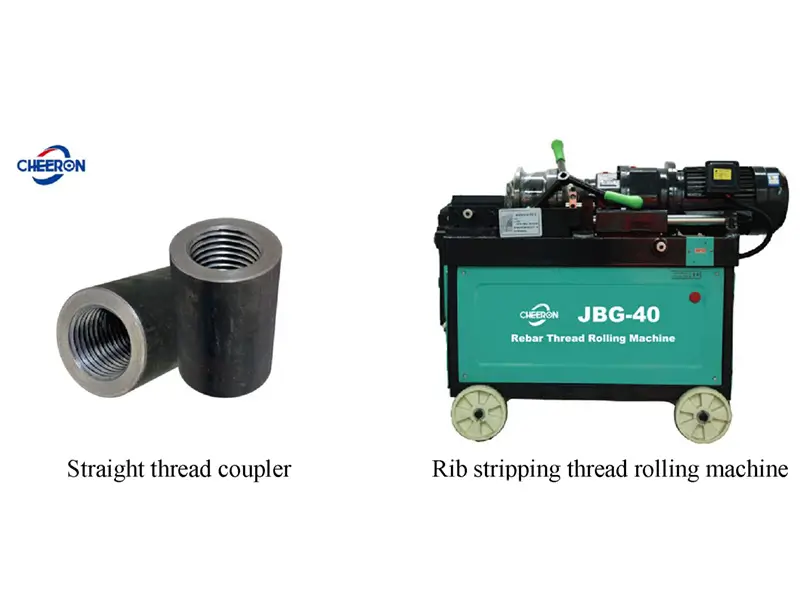
Using cheeron Parallel Threaded Coupler connects two rebars:
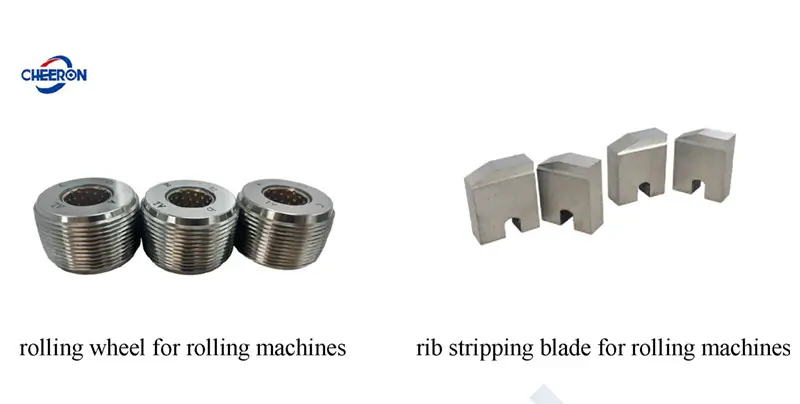
Required Connector Types and Equipment:
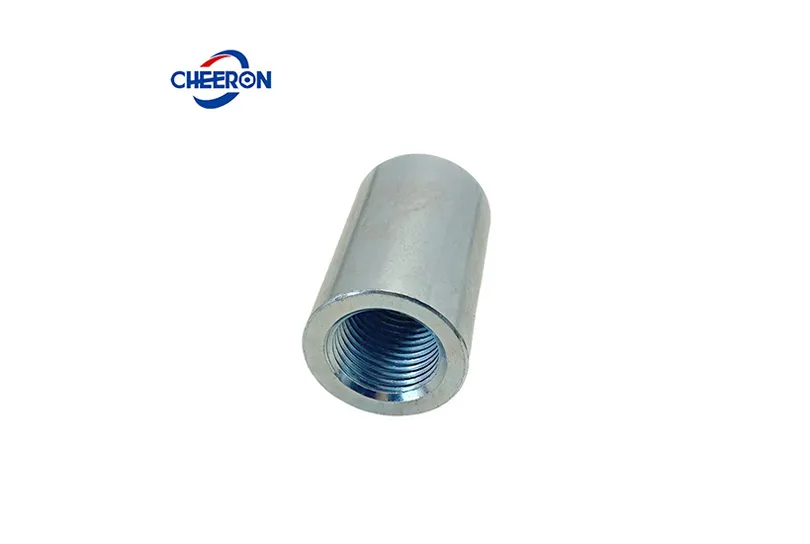
Cheeron parallel thread connection
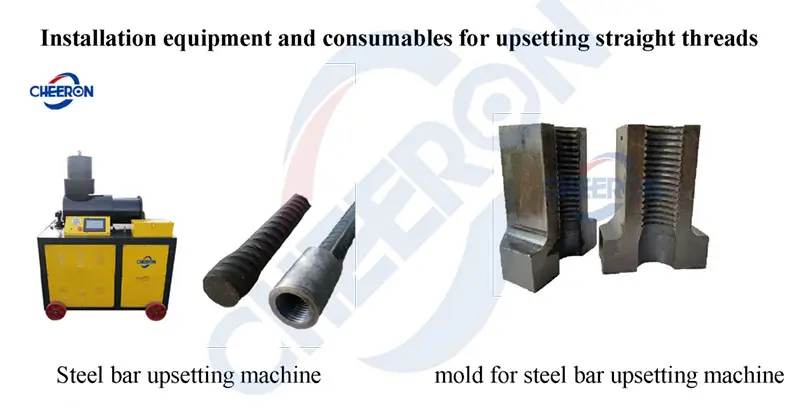
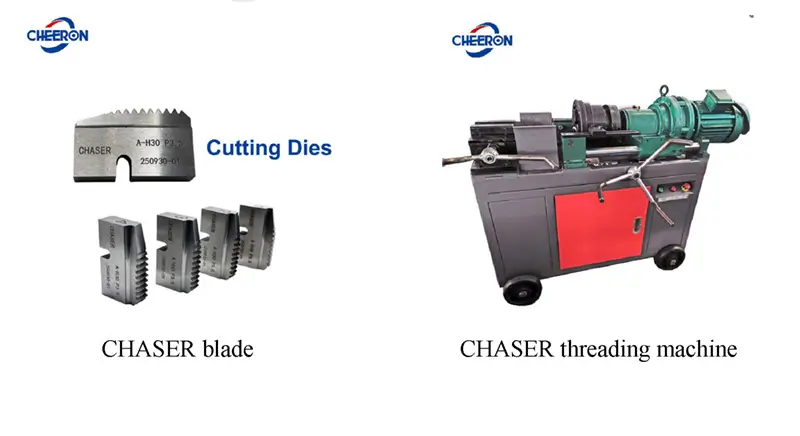
Resistance to differential settlement: Good. Full-thread, constant-diameter load transfer ensures joint stiffness comparable to that of the base material, effectively transmitting additional internal forces caused by foundation settlement.
Seismic and High-Ductility Performance: Excellent. Produced using a rib-stripping and rolling process, the threading undergoes work hardening, resulting in high tensile strength. It exhibits exceptional ductility under large-amplitude cyclic deformation, fully meeting the standards for Type 2 joints in high-seismic zones. Learn more about rebar threading.
Fatigue resistance (low-frequency micro-vibration): High. The threads fit tightly with high tightening torque, making it resistant to fatigue failure under prolonged low-frequency vibration.
On-site installation efficiency: Extremely high. Assembly is performed entirely on-site using only a pipe wrench for tightening; skilled workers can complete one unit in 30–60 seconds. This makes it ideal for meeting tight deadlines, particularly given the short window of optimal construction weather in Azerbaijan.
Overall material and equipment costs: Lowest. The steel consumption for the couplers is minimal, and the comprehensive unit price is the lowest, making it the most cost-effective choice for developers.
Ease of quality inspection: Highly intuitive. Inspections can be performed visually by counting the exposed threads or via spot checks using a torque wrench; this allows for the fastest acceptance by government quality inspection bureaus.
Adaptability to challenging conditions: Proven solutions are available. When rebar cannot be rotated (e.g., during cage splicing), options such as couplers with left- and right-hand threads, reducing couplers, or weldable couplers can be used.
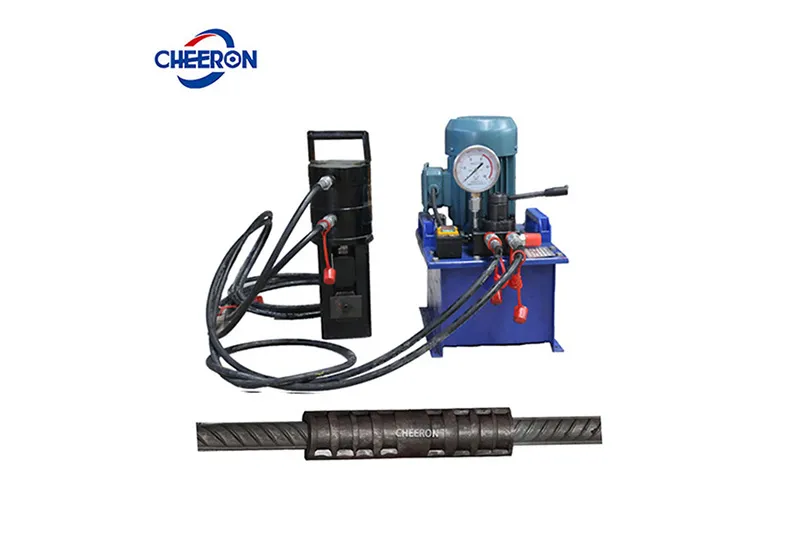
Using CHEERON Cold-extrusion coupler connects two rebars:
Required Connector Types and Equipment:
Cheeron Cold-extrusion coupler
Cheeron Cold-extrusion machine and Cold-extrusion dies
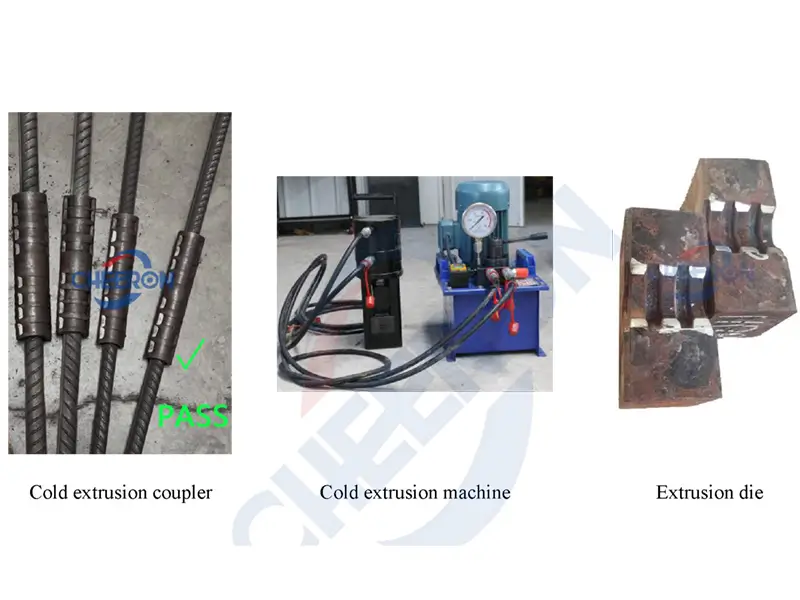
Resistance to differential settlement: Exceptionally high. The sleeve is exceptionally thick and long, ensuring that the stiffness at the joint even exceeds that of the base material, thereby providing superior resistance to stress and deformation caused by settlement.
Seismic and high-ductility performance: Excellent. It relies on purely physical mechanical interlocking, causing zero damage to the base rebar. It offers exceptional energy absorption capabilities during strong earthquakes and demonstrates superior stability under the impact of extreme seismic waves.
Fatigue resistance (low-frequency micro-vibration): Extremely high. Featuring a seamless, fully interlocking structure, it ranks first among the three options in terms of fatigue and vibration resistance.
On-site installation efficiency: Low. It requires repeated crimping (8–12 times) using heavy-duty hydraulic pliers, taking 3–5 minutes per end and demanding significant physical effort.
Combined material and equipment costs: Extremely high. The sleeves are massive and the pipe walls exceptionally thick, resulting in high steel consumption;maintenance costs for high-pressure hydraulic equipment are also high.
Ease of quality inspection: Cumbersome. It requires using a vernier caliper to measure the axial elongation and indentation depth of each sleeve after swaging.
Adaptability to challenging working conditions: Exceptional. Regardless of whether the rebar is fixed or capable of rotation, the swaging tool applies pressure directly from the outside, making it ideal for emergency repairs or hard-to-reach areas in foundations.
Mechanical Splices Methods | Option A Tapered thread connection | Option B Straight-thread connection | Option C Cold-extrusion connection |
Seismic Resistance Compatibility | Does not meet the requirements for high- intensity seismic zones of 8-9 | Meets international type 2 rebar coupler standards; | Compatible, far exceeding seismic requirements |
| Geological Settlement Resistance | Prone to failure | Compatible | Completely resists seismic events |
| Installation Efficiency | 30-45s/pcs | 30-60s/pcs | 3-5min/pcs |
| Overall Cost | Moderate, high cost due to potential maintenance risks | Lowest cost, best cost-performance ratio | Highest cost, expensive equipment and related components. |
Quality Inspection Difficulty | Prone to "false tightening," hidden risks difficult to eliminate | Convenient and accurate quality inspection | Cumbersome testing process |
Quality Inspection Difficulty | Thread gaps are easily corroded | Galvanizing and epoxy coatings can be added for strong corrosion resistance | No threads, fully enclosed interlocking, even stronger corrosion resistance. |
Given the complex environmental conditions in the Baku region of Azerbaijan—characterized by high-intensity seismic activity, soft soil, and highly saline groundwater—and to balance your company’s commercial priorities as a real estate developer regarding construction schedules, costs, and quality reputation, we recommend completely abandoning tapered threads in favor of an optimal "straight-thread primary, cold-extrusion secondary" combination strategy.
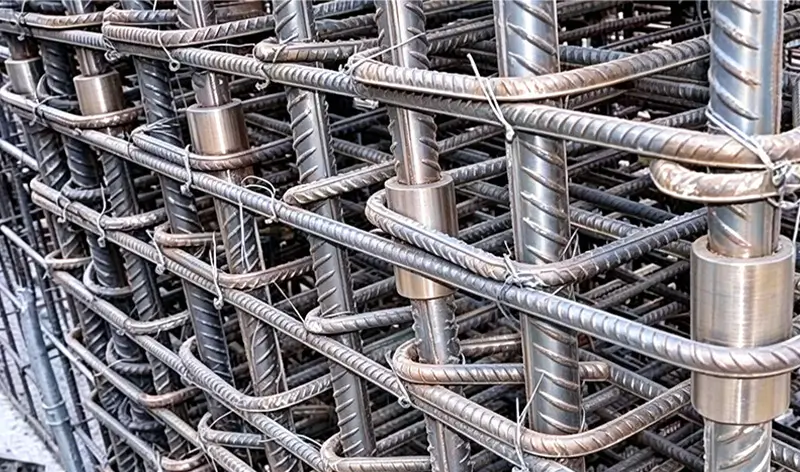
Applicable locations:
Structural frame beams, main frame columns, and concealed columns within shear walls (with rebar diameters ranging from 20 mm to 32 mm) in high-rise residential buildings of 16–18 stories.
Reason:
Superior Seismic Performance: The manufacturing process is perfectly compatible with the ASTM A615 rebar commonly used; the joints offer excellent seismic ductility and are fully compliant with standards.
Balancing efficiency and cost-effectiveness:
With an on-site installation speed of just 30 seconds per unit, your rebar tying and formwork teams can execute rapid, continuous workflows. This ensures high efficiency and rapid turnover—at the lowest cost—within the challenging construction windows, characterized by strong winds, dust, and volatile weather.
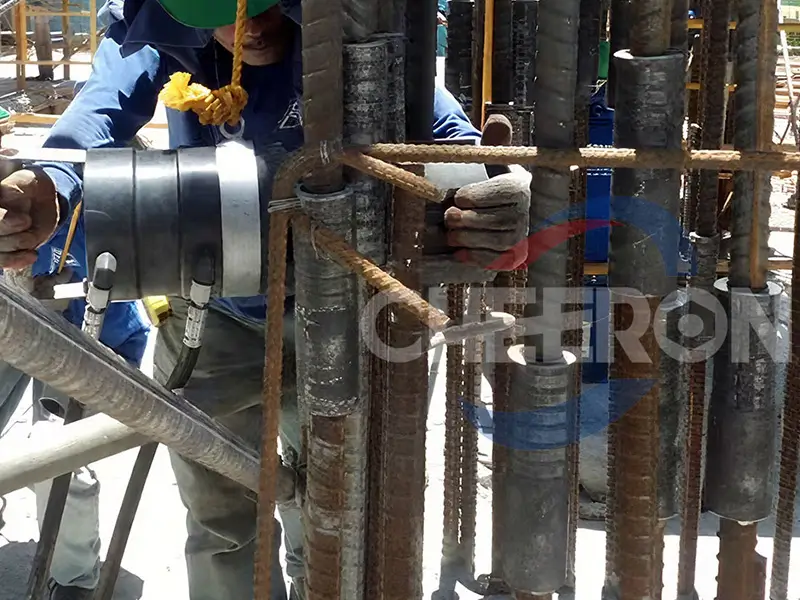
Applicable locations:
ultra-thick foundation rafts (mat foundations) for high-rise buildings, massive basement pile caps, and the bases of large primary load-bearing columns on the lower levels (floors 1–3).
Rationale:
The foundation and base structures bear the maximum torsional stress resulting from the settlement of soft soil, while also being highly susceptible to low-frequency seismic micro-tremors and corrosion from the Caspian Sea's saline groundwater. Cold-extruded sleeves—characterized by the absence of threaded clearances, zero damage to the base material, and corrosion-resistant wall thickness—provide an absolute and highly rigid line of defense for the skyscraper's foundation.
Rationale:
Tapered threaded connections exhibit poor seismic cyclic performance and are prone to "false tightening" during on-site installation—posing a safety risk; consequently, they fail to meet the seismic requirements for the region's Zone 8–9 intensity rating and struggle to pass the rigorous inspections conducted by local authorities and supervisory bodies.
Ongoing Commercial and Technical Support:
Our company has long supplied high-standard mechanical rebar connectors to the Caucasus and Central Asia regions.
We can provide your company with:
High-strength straight-threaded couplers (standard, reducing coupler, and potional thread coupler ) compliant with relevant specifications such as ASTM A615/A706, GOST 34278-2024, and BS 8597.
Comprehensive technical training on internationally certified on-site processing equipment (rib-peeling and thread-rolling machines) and cutting tools.
Based on our current production capacity, we can deliver up to 100,000 couplers within 12 days for long-term cooperation. It takes approximately 18 days to reach Azerbaijan via the Trans-Caspian China-Europe Railway, while multimodal sea transport is estimated to take 45 days; for road transport, the journey from Khorgos, Xinjiang (China) across Kazakhstan directly to Baku is estimated to take 22 days.
As we operate our own seamless steel pipe production lines, we can provide custom-made couplers in any specification or type.
Becoming a long-term client of our company entitles you to technical guidance regarding issues that may arise during the mechanical splicing of rebar.
We respond to customer service inquiries within 48 hours and, when necessary, can dispatch professional technical personnel to the site to provide guidance.
Given the long construction cycles in the real estate sector, we offer the option to place bulk orders with staggered, partial deliveries.
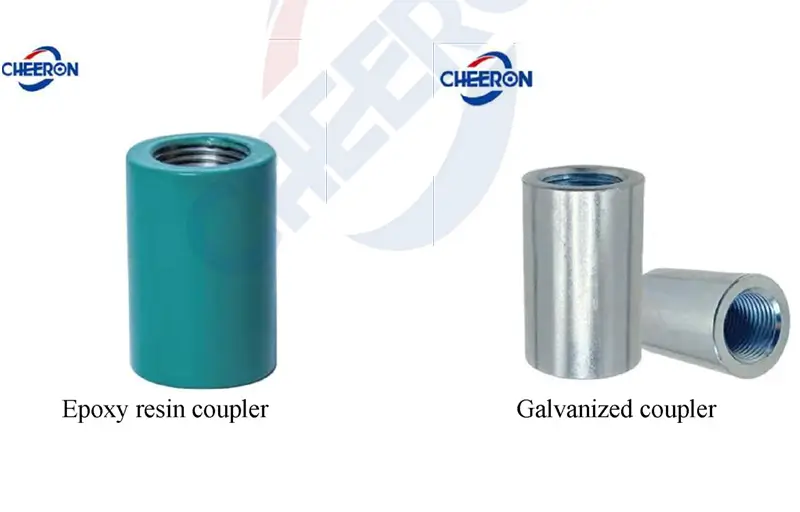
Specialized anti-corrosion and anti-rust coating solutions—such as galvanizing couplers and epoxy coating couplers—are available for high-salinity groundwater environments.
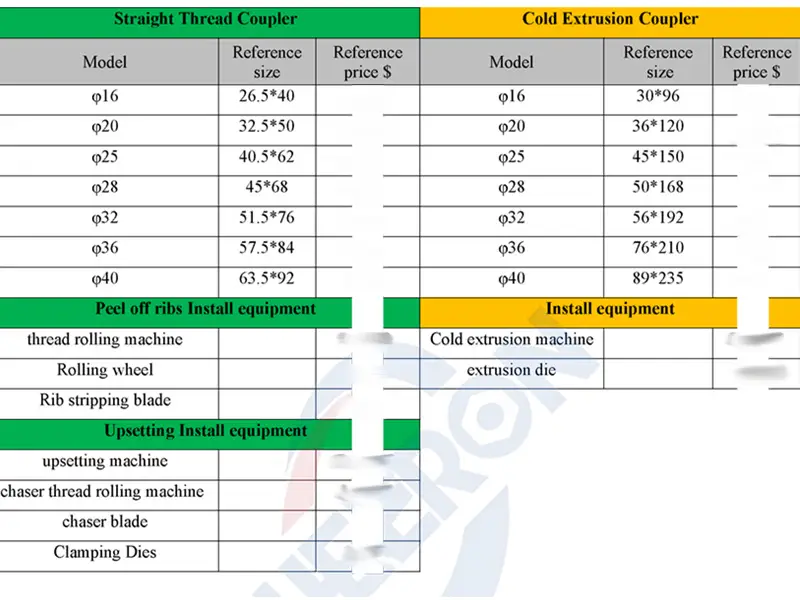
Regarding the price comparison (for reference) between straight-thread andcold-extrusion products and equipment: since tapered-thread products have already been phased out of the market, we are not including them in this comparison. If you are interested, please feel free to contact us for more detailed answers.
The information above has been compiled based on our production and installation experience as well as consultations with our partner clients; we welcome anycorrections or suggestions. Thank You!