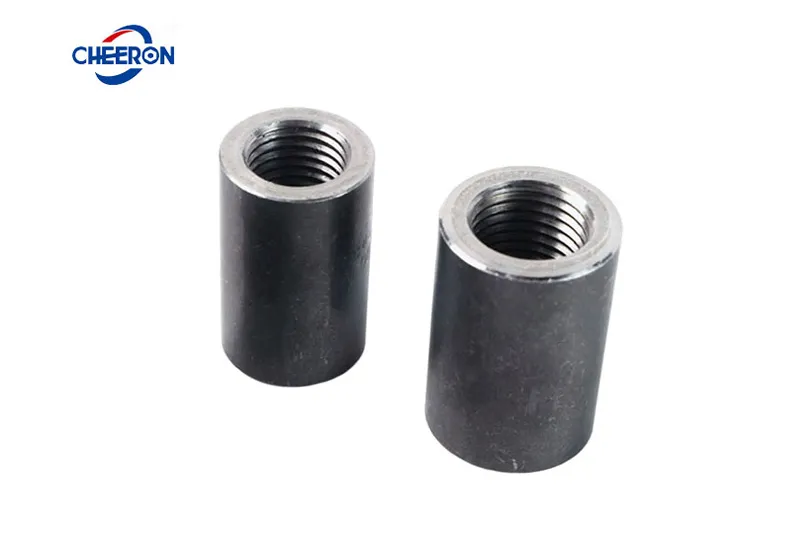
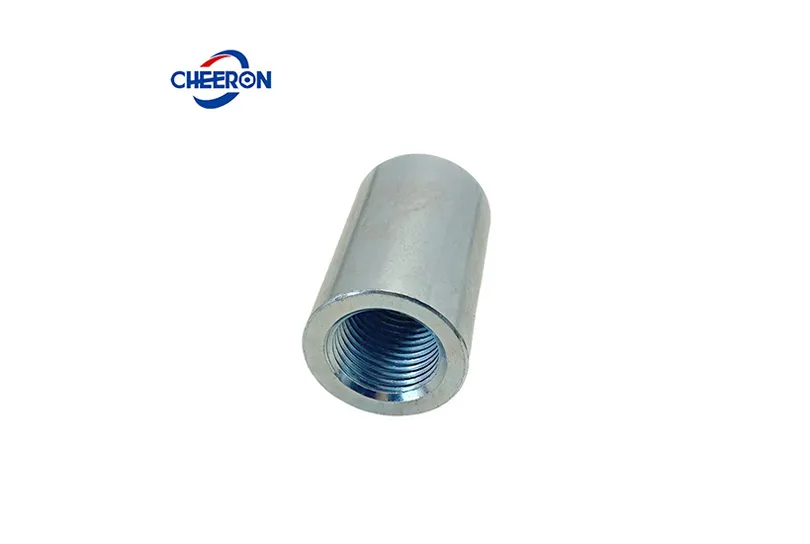
In construction, there can be no flaws; every minute detail can affect the safety of a project. Cheeron understands this deeply, as do everyone who contributes to the project's success.
Therefore, as a manufacturer of rebar couplers, we take responsibility for every connector we produce. Cheeron conducts testing on rebar couplers before it leaves the factory. We understand that only rebar connectors that pass these tests can be used in various construction projects, ensuring the safety and performance of the rebar joints.
Qualified rebar connectors must pass multiple tests, including dimensional inspection, thread accuracy, hardness and tensile strength tests, as well as other checks such as third-party testing. These comprehensive assessments ensure structural safety, durability, and compliance with engineering standards.
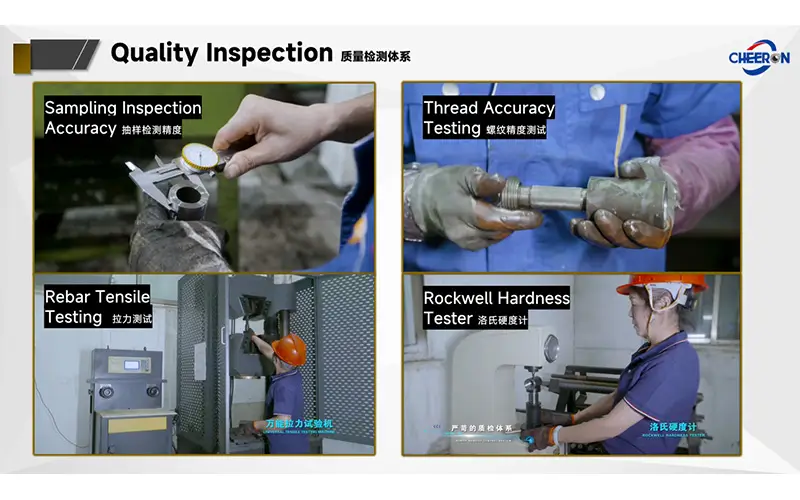
Dimensional accuracy is fundamental to reliable rebar splices. Cheeron typically conducts random sampling inspections to verify that length, inner diameter, outer diameter, and thread depth conform to design specifications. Any deviation can affect connection strength and installation compatibility.
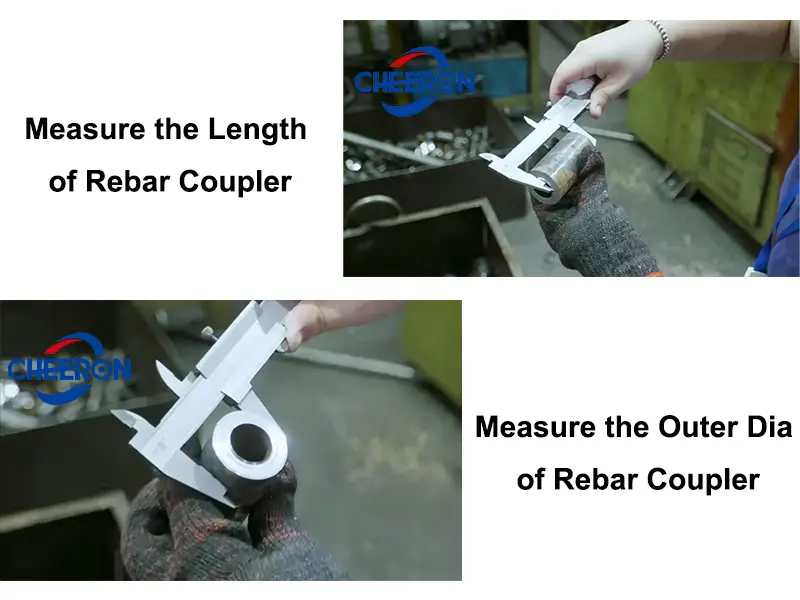
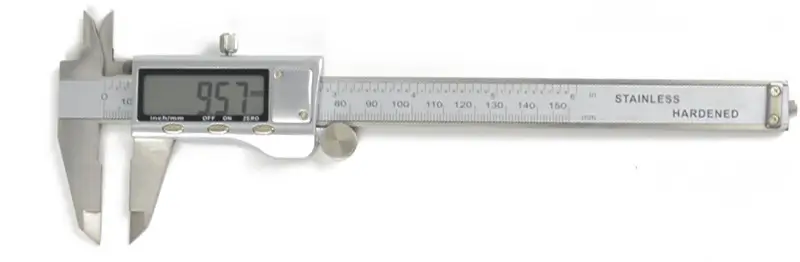
Measurements are performed using digital calipers or specialized measuring instruments with an accuracy of at least 0.1 mm.
1. Micrometer
2. Caliper
Cheeon assigns quality control personnel to conduct sampling inspections of the outer diameter, inner wall diameter, and length of the rebar sleeves using measuring tools.
NOTICE: Click to learn about the dimensions and specifications of rebar couplers.
In the engineering industry, the thread quality of rebar connectors directly affects the mechanical performance of the connectors. Poor thread precision can lead to loose connections or failure under high loads(For Rebar Couplers with Threaded Connections).
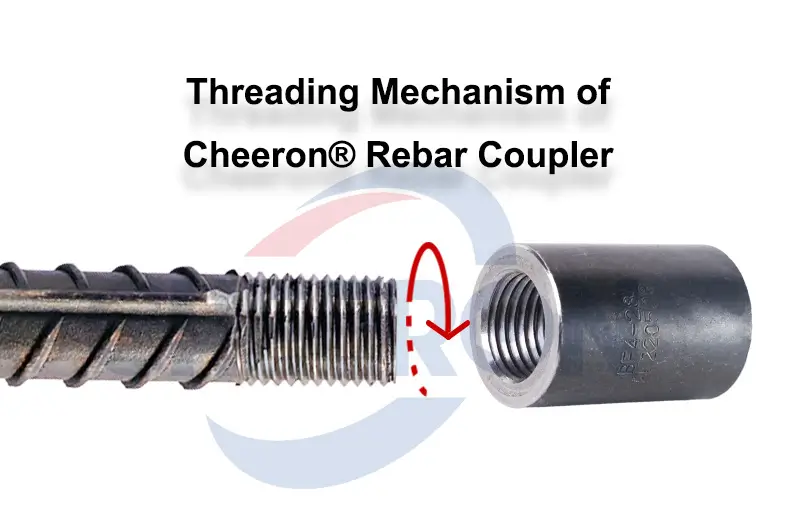
When machining straight threads for rebar connectors, Cheeron uses go/no-go gauges to check the quality.
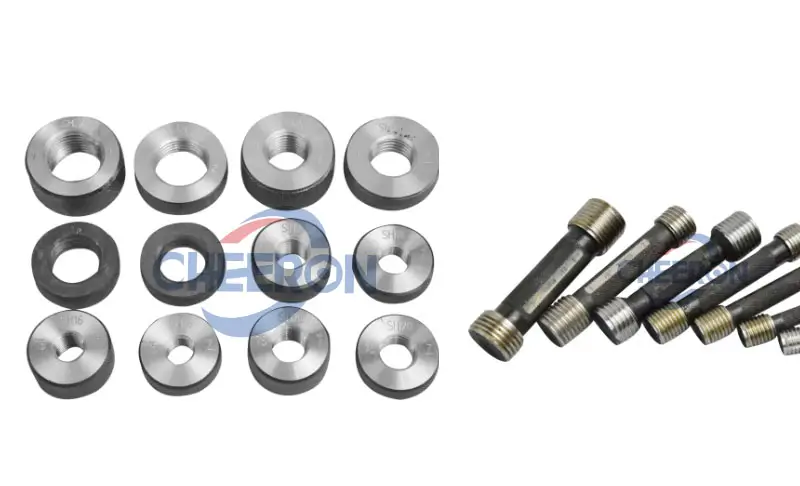
Go/no-go gauges, these seemingly simple tools, are the "gatekeepers" ensuring the quality of the threads on the connector joints during rebar connector production. This test ensures that the threads of the rebar coupler are smooth and correctly aligned during use.
Example: A rebar connector with a hole diameter marked "10mm" (tolerance range Φ10.0~10.2mm): The diameter of the GO gauge is designed to be 10.000mm (minimum hole diameter). If the GO gauge can be inserted into the hole, it means the hole is not smaller than the lower limit; the diameter of the NO-GO gauge is designed to be 10.2mm (maximum hole diameter). If the NO-GO gauge cannot be inserted, it means the hole does not exceed the upper limit.
1. Thread plug gauge: A tool for inspecting internal threads.
Standards for the internal threads of a qualified rebar coupler:
The GO thread plug gauge should engage smoothly with the working internal thread of the connector.
The allowable insertion length of the NO-GO thread plug gauge should not exceed 3 thread pitches.
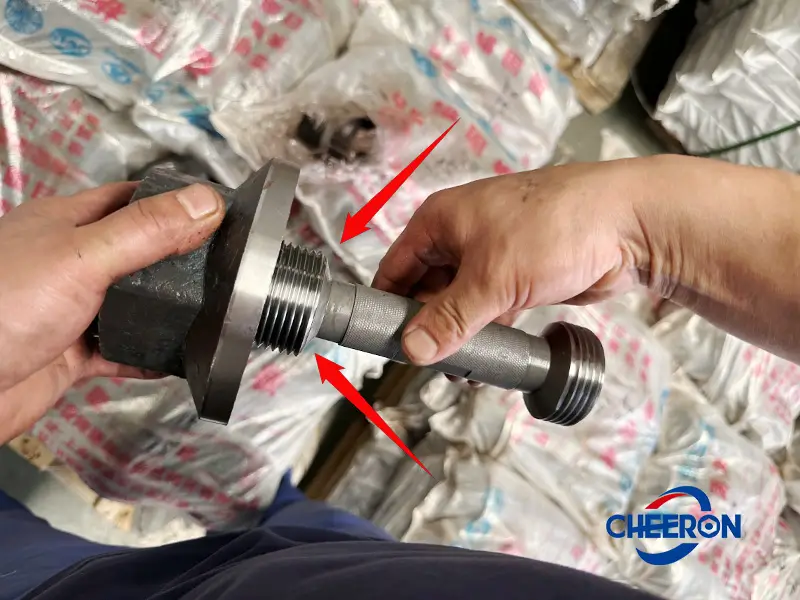
2. Ring gauge: A tool for inspecting external threads.
Standards for the external threads of qualified rebars or rebar splices:
The GO gauge can rotate freely at any position on the thread, while the NO-GO gauge can only be screwed in 1-2 seconds before stopping.
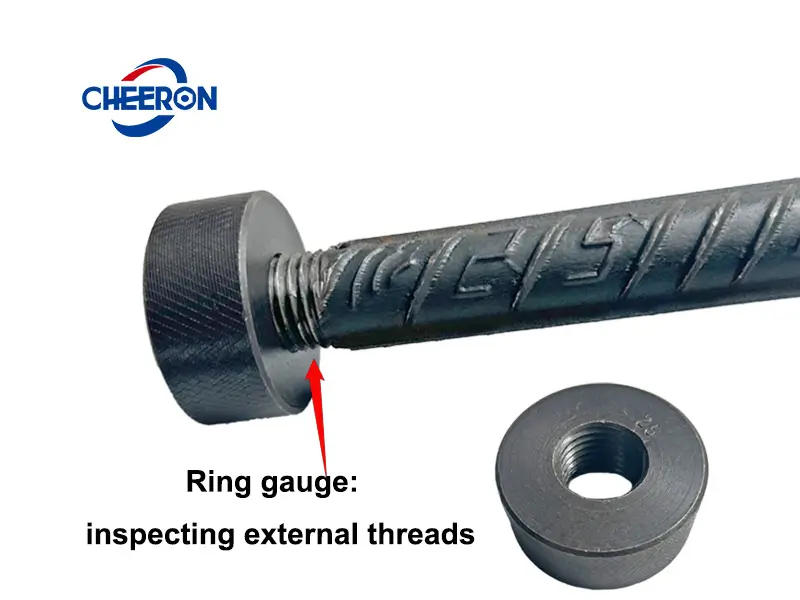
In short, if the GO gauge "passes" and the NO-GO gauge "does not pass," the hole diameter is qualified; otherwise, it is unqualified.
The tensile test is one of the most critical assessments of rebar sleeves. It tests whether the connector connection can withstand a strength equal to or greater than that of the rebar itself. A qualified connector should ensure that failure occurs at the rebar, not at the connection point.
This is a one touch rebar coupler pull-out test; you can see the rebar break while the sleeve remains undamaged.
Many people question the strength of rebar connectors; a pull-out test can reveal this. Because they connect two rebars through threaded interlocking, they possess higher strength.
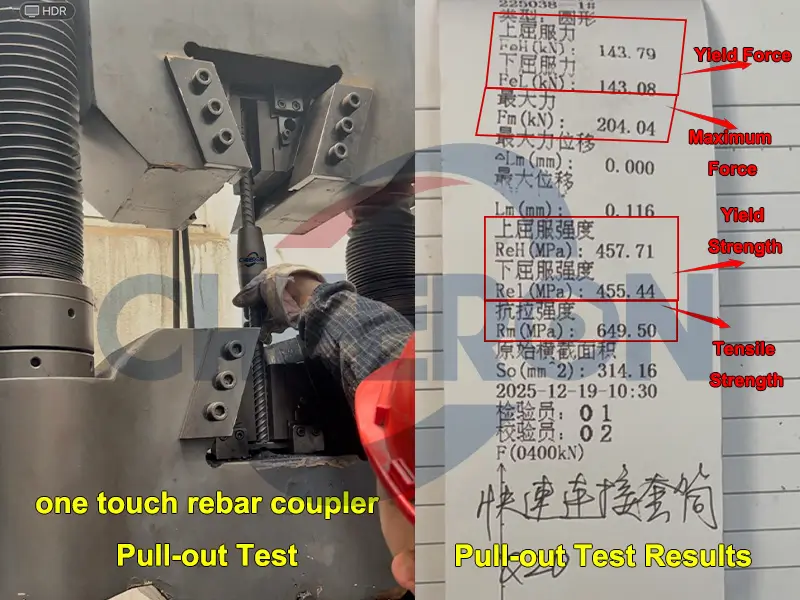
Main Test Indicators:
Yield Force
Maximum Force
Yield Strength
Tensile Strength
In the Cheeron production line, Rockwell hardness testing is part of the quality control process to ensure that the hardness of the rebar couplers and steel pipes meets specifications.
Hardness is a crucial indicator of the mechanical properties of rebar couplers. Hardness testing ensures that the couplers have sufficient strength while preventing embrittlement. Appropriate hardness ensures the durability of the couplers during installation and their service life.
The Rockwell hardness test is a commonly used method for measuring material hardness. It determines the hardness value by measuring the depth to which an indenter penetrates the surface of a sample under a specified load. A Rockwell hardness tester is an instrument designed based on the Rockwell hardness test principle for measuring material hardness.
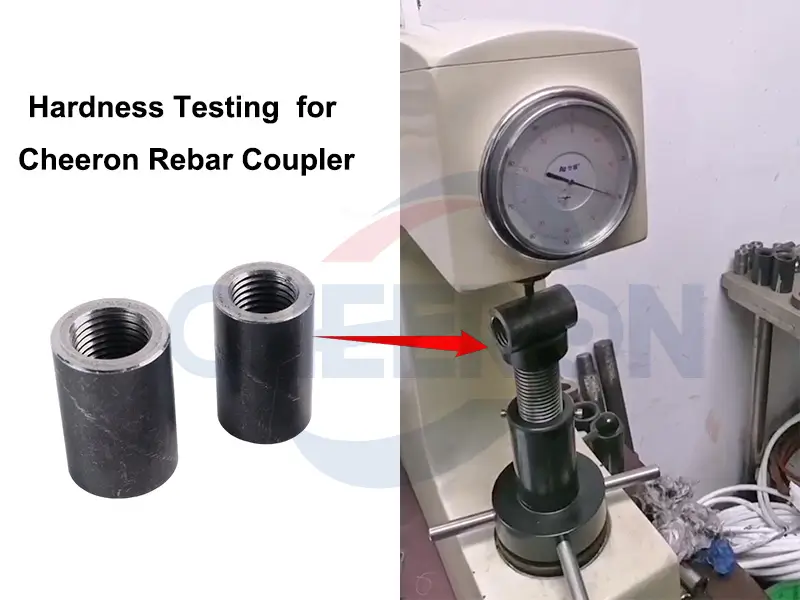
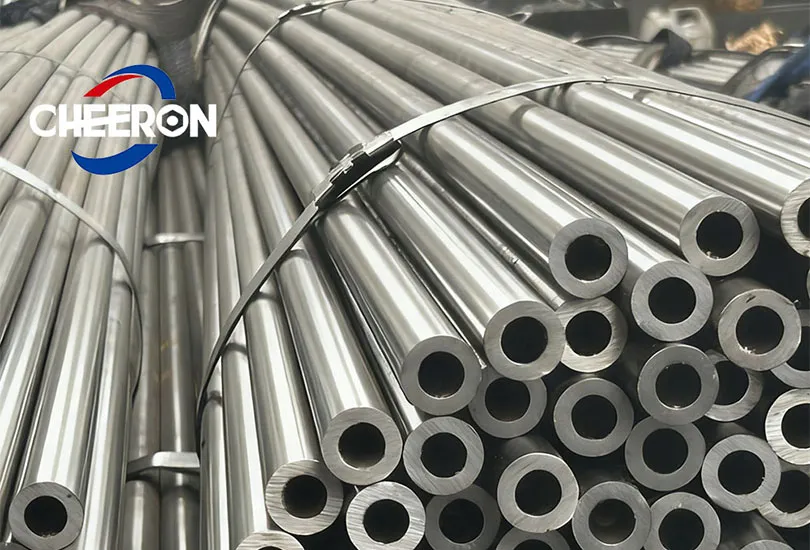
Seamless steel pipes, as raw materials for rebar couplers, require prior evaluation of material properties.
Ensuring the quality and performance of mechanical couplers.
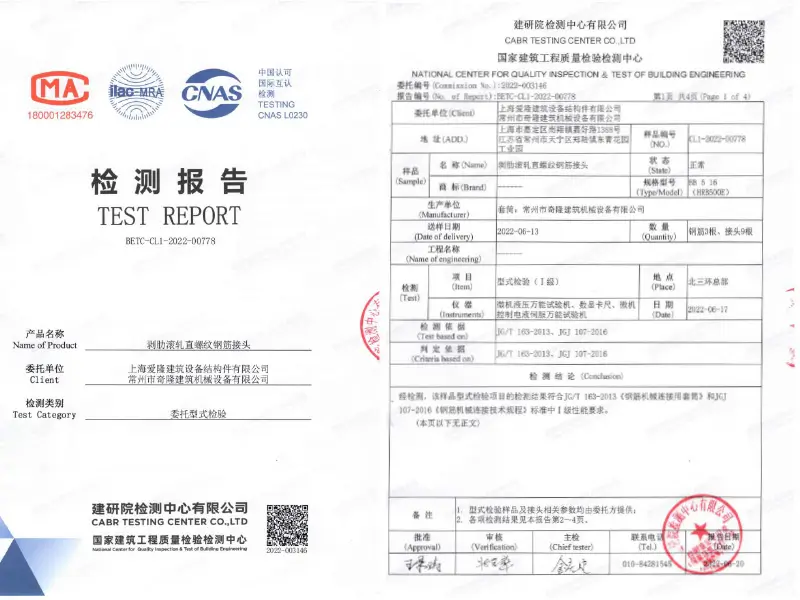
In addition to these tests, the cheeron also commissions third-party testing institutions (with international accreditation) to test the rebar connectors and issue test reports.
These professional laboratory tests mainly include:
Material composition analysis,
fatigue and cyclic testing,
corrosion resistance testing, etc.
1. Dimensional sampling inspection
2. Thread testing
3. Hardness testing
4. Tensile testing
5. Third-party testing
The above are the tests conducted by the connector manufacturer Cheeron on rebar connectors before shipment. Cheeron adheres to the principle that connectors are only shipped after they have passed inspection, providing reliable rebar connectors for major projects worldwide.