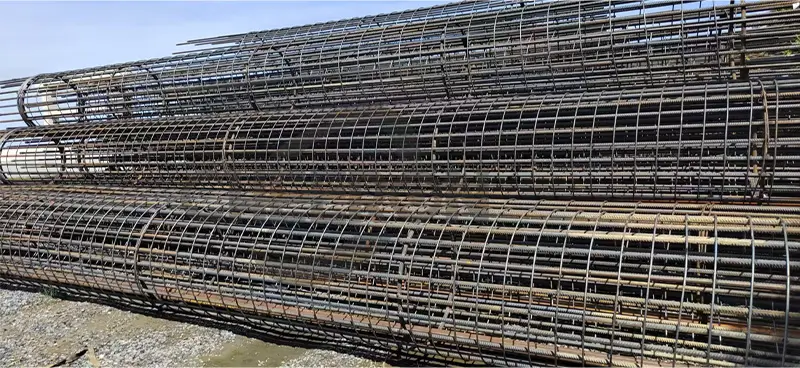
A single reinforcing bar is generally only 10–20 meters long at most. Since buildings, bridges, and other large-scale structures can span hundreds of meters, it is essential to connect these rebars end-to-end (rebar splices) to form continuous reinforcement cages.
Undoubtedly, rebar splices are a crucial element in ensuring the continuity of reinforcing steel in building construction, directly affecting the overall strength, durability, and safety of a building.
This article provides an in-depth analysis of the importance of rebar splices and construction precautions from the perspective of rebar continuity.
Rebar splicing is a structural method used to reliably connect two or more rebars when the rebar length is insufficient or construction requirements necessitate it.
Simply put, a rebar splice connects two rebars into a single, continuous, load-bearing rebar.
Therefore, without high-quality rebar splices, even the thickest rebar cannot exert its full load-bearing capacity.
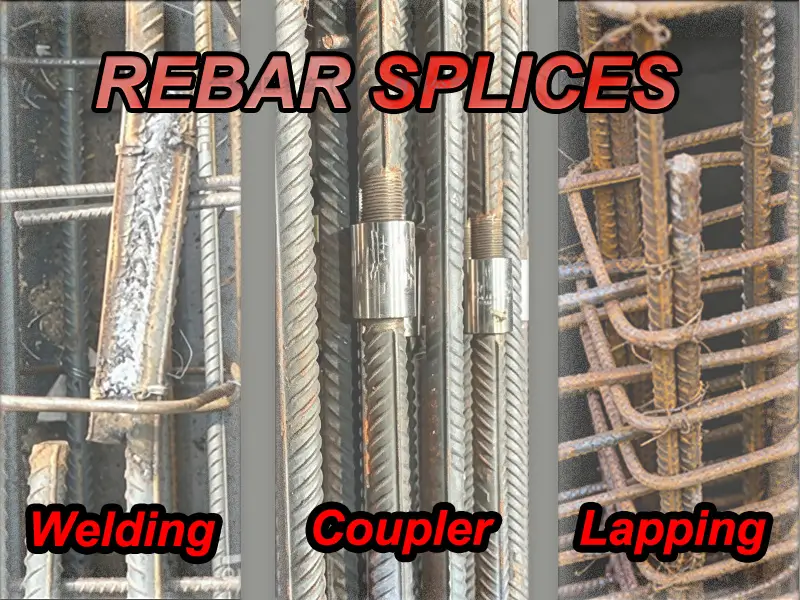
Common types of rebar splices include lap splices, welded splices, and mechanical connections. Among the three types of rebar splices, mechanical connections offer the best performance.
Two rebars to be connected overlap to a certain length and are bound together with steel wire to connect them, relying on the bond force of the concrete to transfer force between the rebars.
Welding comes in many forms, but the main method involves fusion welding the ends of two rebars together.
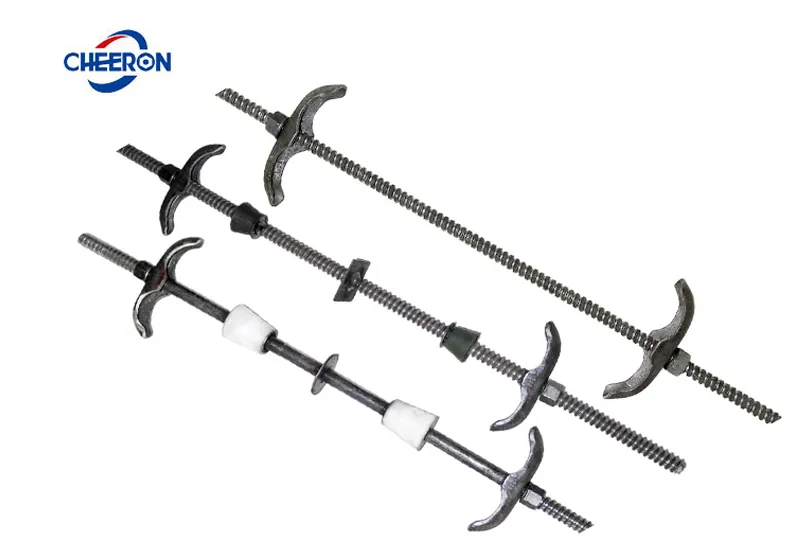
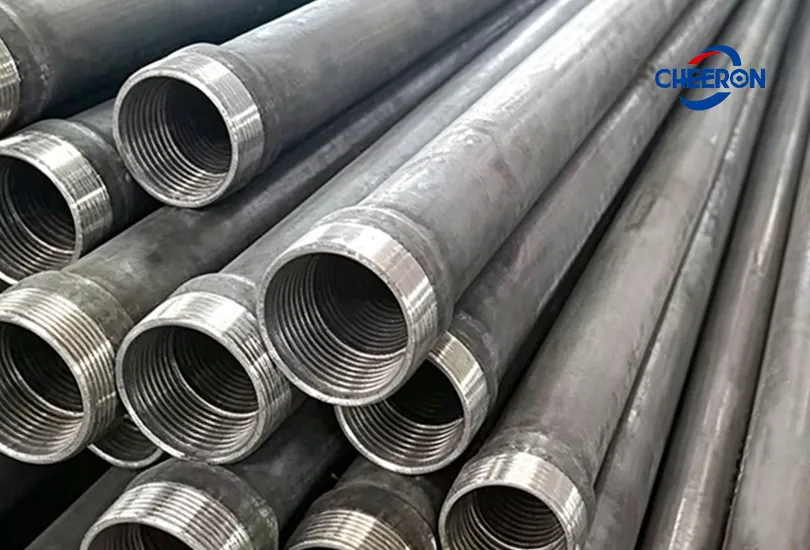
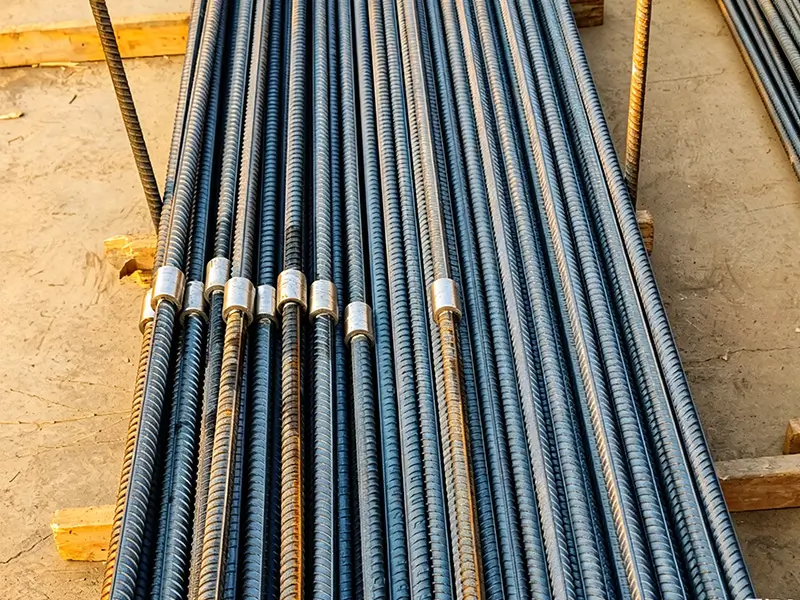
There are many types and various connection methods - such as crimp connectors, threaded couplers, and bolt connectors...
Many rebar workers have questions like these:
Why must rebar ties have a certain overlap length? Can't it be shorter?
Why do rebar connectors need to be tightened? Can they be slightly loose?
And, isn't it true that the structure will still be very sturdy after all, since it's all filled with concrete?
These thoughts point to two issues:
Even when rebar joints are not perfectly firm, the placement of concrete can still maintain the structural continuity of the building's overall components, indicating that the project remains very safe.
Answer: No, because the tensile stress borne by the steel reinforcement is much greater than that of the concrete.
The tensile stress in the reinforcement at its yield strength is much greater than the tensile stress in the concrete when cracking occurs. That is, for the rebar to reach its tensile yield strength, the concrete section must have already cracked. This constitutes a basic assumption in the design of the ultimate load-carrying capacity of reinforced concrete elements.
The tensile stress borne by steel bars is far greater than that of concrete. Therefore, it cannot be simply understood that concrete can withstand the inadequacy of steel bar joints.
A shorter lap length and incorrect torque will significantly reduce the effective transfer of tensile stress at the rebar splice, thereby compromising the continuity of reinforcement in the building project.
Answer: Important, because the continuity of reinforcing steel affects the continuity of building components.
Since the ultimate tensile bearing capacity of a building depends primarily on the reinforcement, the continuity and anchorage of the reinforcing steel (what is reinforcing steel anchorage?) are crucial factors for the continuity of building components.
In seismic design, rebar joints are weak points in the structure, with strength lower than the entire rebar.
The load-bearing capacity of buildings primarily relies on the steel reinforcement skeleton to transfer forces. If the connections at rebar joints are not secure, stress concentration can easily occur, leading to cracks or even local structural failure.
In large-scale projects such as high-rise buildings, bridges, and tunnels, the tensile and compressive performance of rebar joints directly determines the overall stability of the structure.
Compared to a single, continuous rebar, any form of rebar connection will weaken its load-bearing capacity. Therefore, the basic principle of rebar splice is:
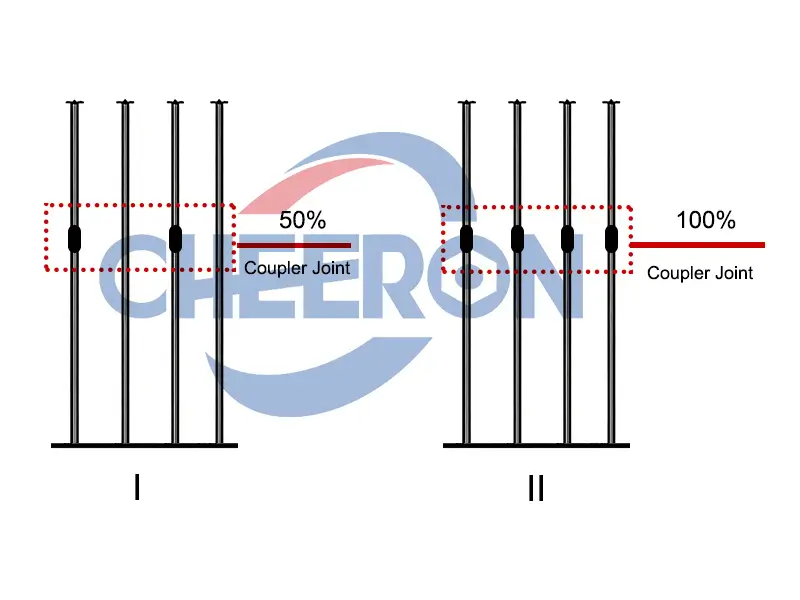
It is necessary to avoid concentrating all joints in the same cross-section. Ideally, Splices should be staggered to prevent simultaneous breakage during an earthquake.
For example, if a joint is placed every other rebar in a column, the joint rate is 50%, while if all joints are located in the same position, the joint rate is 100%. See the diagram below.
such as the stirrup-reinforced zones at column ends and beam ends.
Understand the problems for installing rebar connectors.
Earthquake zones: High-ductility mechanical joints are required to absorb energy;
Marine or corrosive environments: Enhanced corrosion-resistant couplers are required to ensure long-term durability.
Rapid construction projects: Prioritize rapid connection technologies such as straight threaded sleeves.
Rebar splices, representing weak points in the continuity of reinforcing bars, are crucial to the long-term structural integrity of buildings. Paying close attention to the construction of rebar joints—including binding, welding, and mechanical connections—is essential to truly solidify the foundation of project quality and ensure the structural safety of reinforced concrete components.