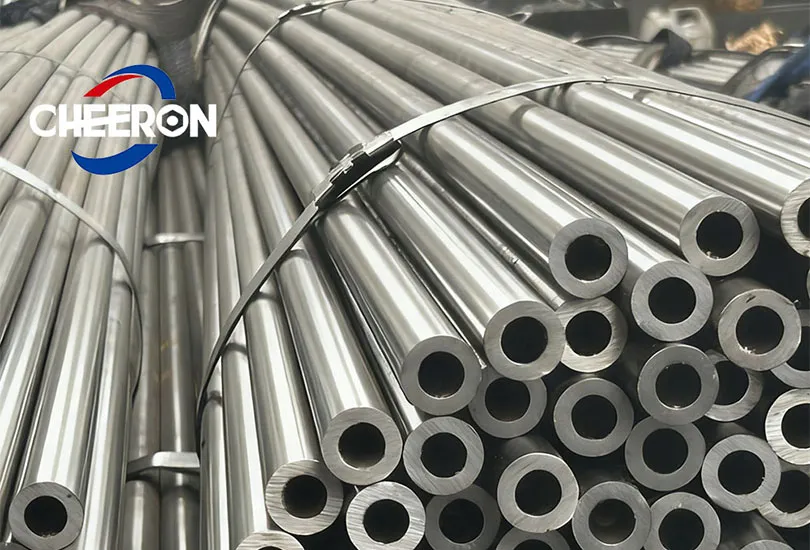
In reinforced concrete structures, selecting the right rebar anchorage method is critical to ensuring structural integrity, effective load transfer, and long-term durability.
This article provides a detailed comparison of the pros and cons of straight anchorage, hooked anchorage and mechanical anchorage-headed bar, while also outlining key selection factors and practical problems to help contractors make informed decisions.
Rebar anchorage refers to the crucial construction process where reinforcing bars extend into supports (beams, columns, walls, foundations, etc.) or concrete members, effectively transferring the stress on the reinforcing bars to the concrete through bonding and mechanical anchoring.
This prevents the reinforcing bars from being pulled out or slipping, ensuring the overall structural stress coordination.
Using Cheeron headed bars as an example, the stress analysis of reinforcement anchorage is illustrated below:
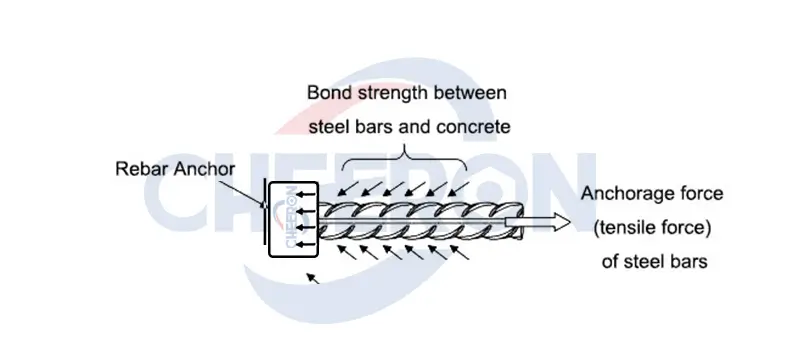
The tensile stress borne by the steel reinforcement is much greater than that of the concrete. Therefore, the steel reinforcement must pass through its surface to transfer the force to the surrounding concrete, preventing it from being directly pulled out.
The purpose of reinforcing bar anchorages is to ensure that when the steelbar is subjected to stress reaching its yield strength or even undergoing tensile deformation and breakage, the embedded steel reinforcement will not slip out.
Common Reinforcing bars anchorage methods include
Straight anchorage
Bent anchorage
Mechanical anchorage-headed bar
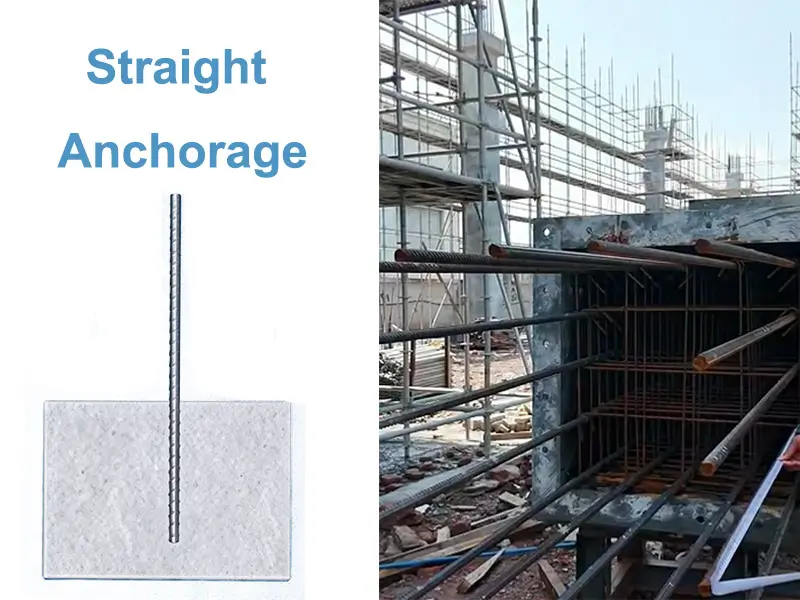
This is the simplest method of rebar anchorage. The rebar extends directly into the support without bending or adding an anchor head.
When there is sufficient anchorage space, this is the simplest and most economical method. The anchorage length can be calculated according to the standard formula (e.g., American ACI 318).
Simple construction
Suitable for various types of rebar
Requires a long anchorage length
High requirements for the surface processing of the rebar
1. Straight anchorage for locations with adequate support size and relatively low reinforcement stress, such as slab bars anchored into beams or secondary beams into primary beams.
2. Suitable for small-diameter rebar and weaker rebar.
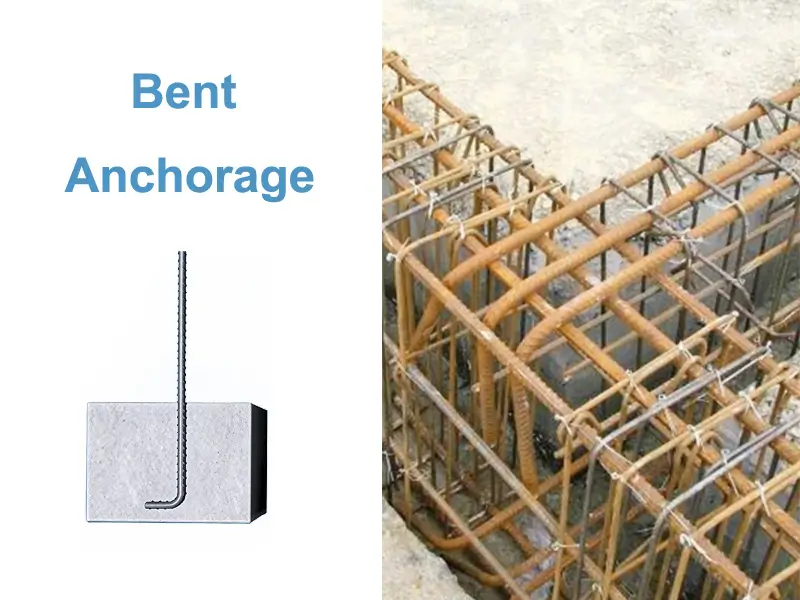
A bent anchor is formed by bending the end of the reinforcing bar. This type of anchor transfers force through a combination of a straight section and a bent section. The bent section utilizes mechanical interlocking to enhance the anchorage effect.
The overall anchorage length is shorter than a straight anchor, but the straight section length cannot be arbitrarily shortened.
Bent anchors require bending of the reinforcing bar, making construction more difficult.
High-quality concrete is required in the anchorage zone.
Excessively long bent sections can lead to congestion of the reinforcing bars at the joint.
They are very suitable for use in confined spaces and beam-end anchorages. For example, they can be used when beam-column joints are too narrow and the straight anchorage length is insufficient.
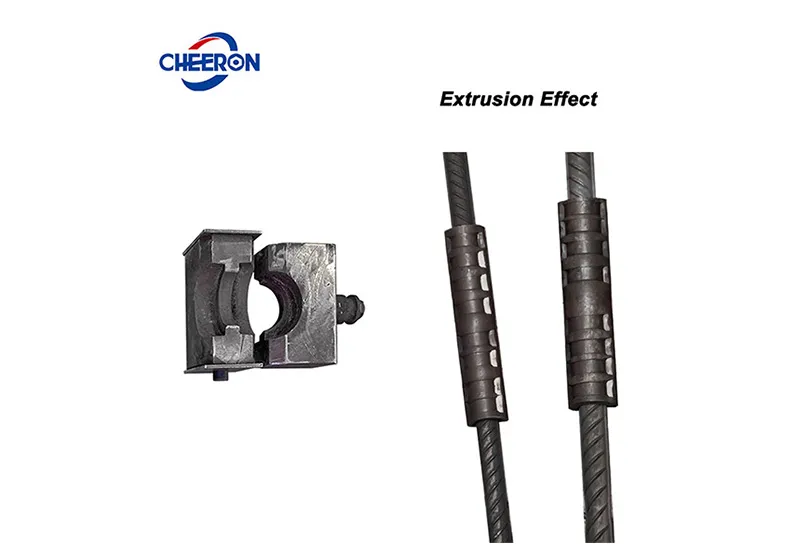
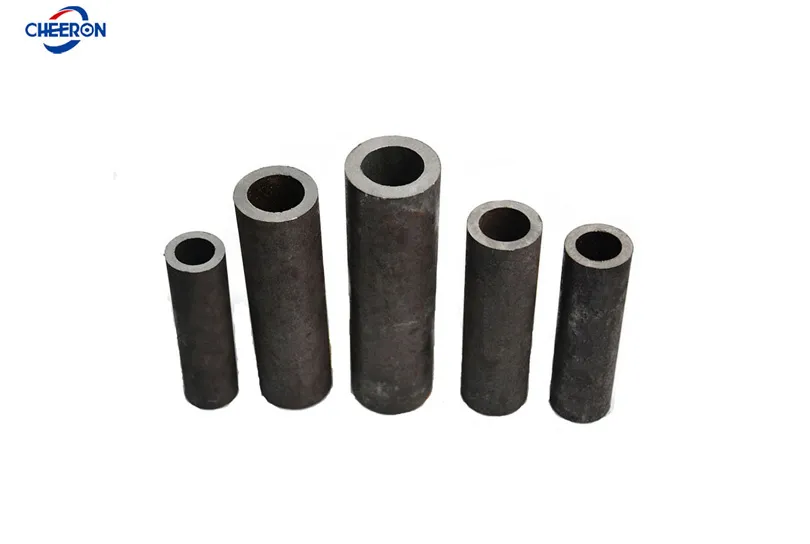
Mechanical rebar anchoring systems are a new type of rebar anchoring method. Uniquely shaped anchoring terminals are added to the ends of the rebar, forming headed bars.
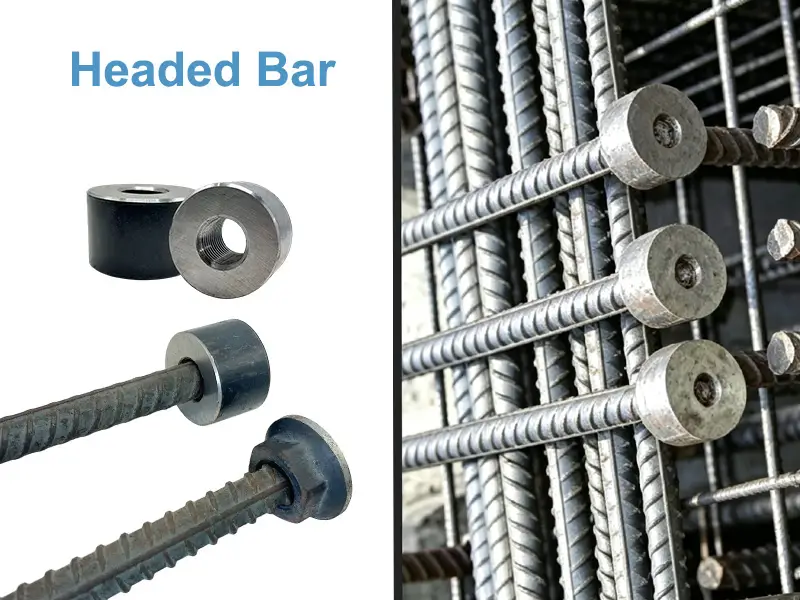
1. Anchor Head - Primarily used in concrete structures.
Tools are needed to tighten the anchor head and the pre-threaded rebar.
2. Weldable Connector - Primarily used in steel structures.
The rebar connector needs to be pre-welded to the steel plate or column before being threaded onto the rebar.
High anchoring strength
Short required anchoring length
Easy construction; only requires tightening the anchor head and the rebar
Wide applicability
Reduces rebar congestion in core areas
Comparison of Straight anchorage, Hooked anchorage and Mechanical anchorage-Headed bar
Rebar Anchorage Methods | Anchorage Length | Steel Reinforcement Usage | Advantage | Scope of Application |
Straight Anchorage | long | More | Simple construction, suitable for various types of reinforcing bars | Only applicable to areas with ample space and low stress on reinforcing bars. |
| Bent Anchorage | shorter than a straight anchor | Common | Overall anchorage length is shorter than straight anchorage | Suitable for confined spaces and beam end anchorages. |
Headed Bar Mechanical Anchoring | short | Less | Saves time, reduces congestion, and lowers material usage | Suitable for large-diameter reinforcing bars, areas with limited joint space, and where ordinary anchorages cannot meet stress requirements. |
In practical engineering, the right anchorage head type and anchorage method should be selected based on factors such as the stress condition of the component and anchorage requirements.
Choosing the wrong method can lead to cracking, reduced load-bearing capacity, or even structural failure.
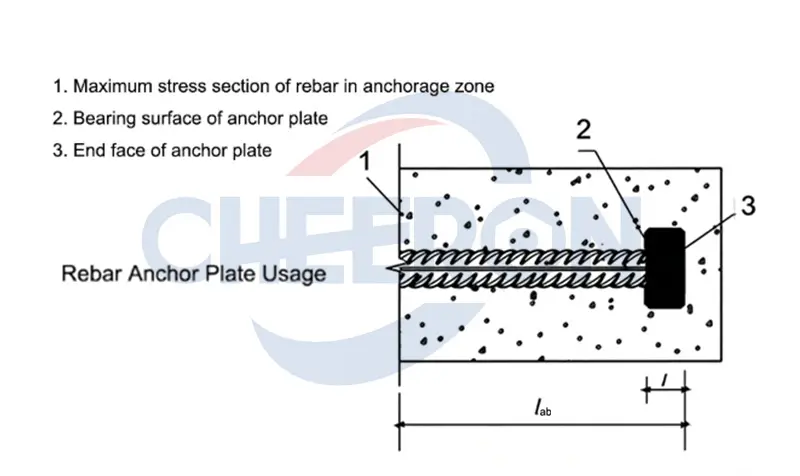
The effective embedment length of the reinforcing bar within the joint is the anchorage length.
The anchorage length directly affects the load-bearing capacity of the reinforcing bar and must be strictly constructed according to the design to ensure the bond between the reinforcing bar and the concrete, preventing slippage or detachment.
Space constraints may prevent the use of long straight anchorages, requiring the selection of hook-shaped or headed reinforcing bars.
High-tension areas (beams, columns, slabs) typically require longer anchorage lengths or mechanical anchorages.
Higher concrete strength grades allow for shorter anchorage lengths.
Larger or higher-grade reinforcing bars require more robust anchorage solutions, primarily headed reinforcing bars.
Coastal, chemically corrosive, or freeze-thaw environments require corrosion-resistant anchors with additional protection, such as epoxy resin coating for the headed bars.
Choosing a suitable rebar anchorage method requires striking a balance between safety, economy, construction feasibility, and specific site conditions.
Problem: The length of the reinforcement extending into the support does not meet the specifications and design requirements, making it prone to pull-out under stress.
Rectification: Readjust the reinforcement position and supplement the anchorage length; if the support size is insufficient, use bent anchorage or mechanical anchorage as a substitute.
Problem: Issues such as the angle of the hook for seismic stirrups and the excessively short straight section of the hook for non-seismic stirrups.
Rectification: Cut substandard hooks, reprocess and re-tie them, and strictly control the bending angle and straight section length according to specifications.
Problem: Anchor reinforcement shifts or tilts during concrete pouring, resulting in excessive protective layer thickness.
Rectification: Use positioning stirrups and spacers to fix the reinforcement; assign dedicated personnel to monitor the pouring process and promptly correct the reinforcement position.
Problem: The anchor connector is not firmly welded, the weld length is insufficient, and there is a risk of detachment.
Rectification: The connector must be re-welded and pass inspection before it can be used.