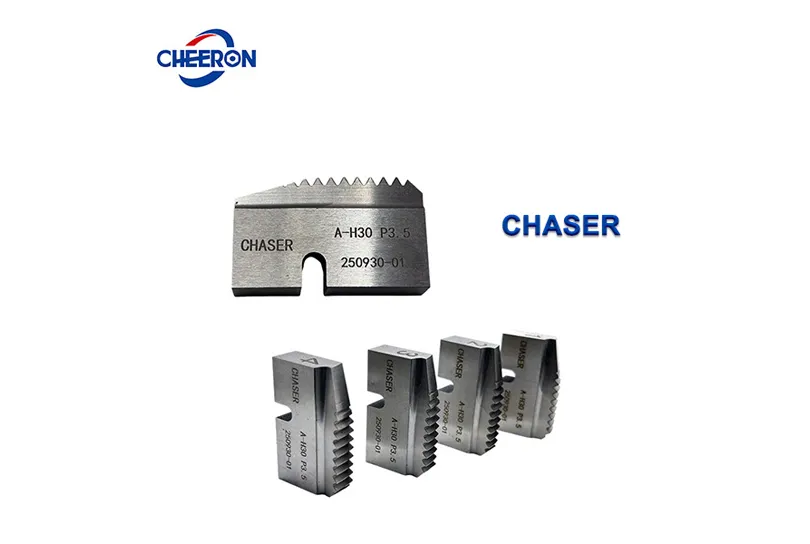
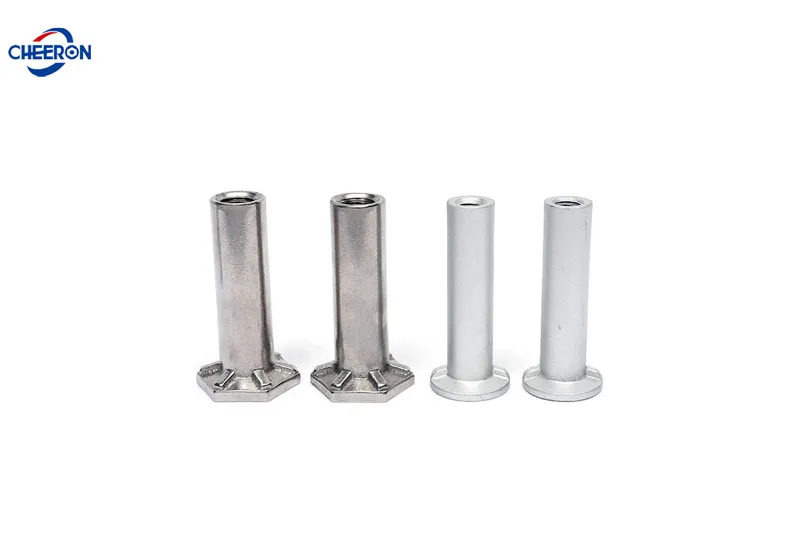
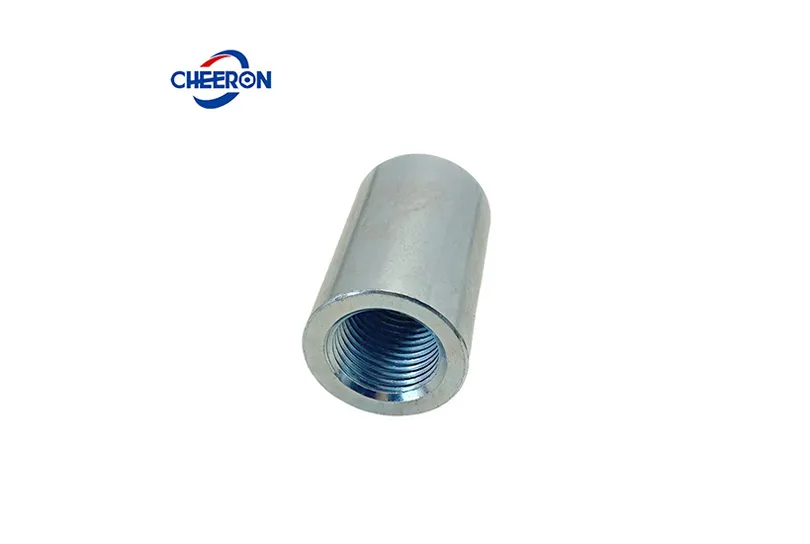
In modern construction engineering, reinforced concrete structures are widely used, and the quality of the rebar splices often determines the success or failure of the entire project.
Common types of rebar splices include lap splices, welded splices, and mechanical connections. Among the three types of rebar splices, mechanical connections offer the best performance.
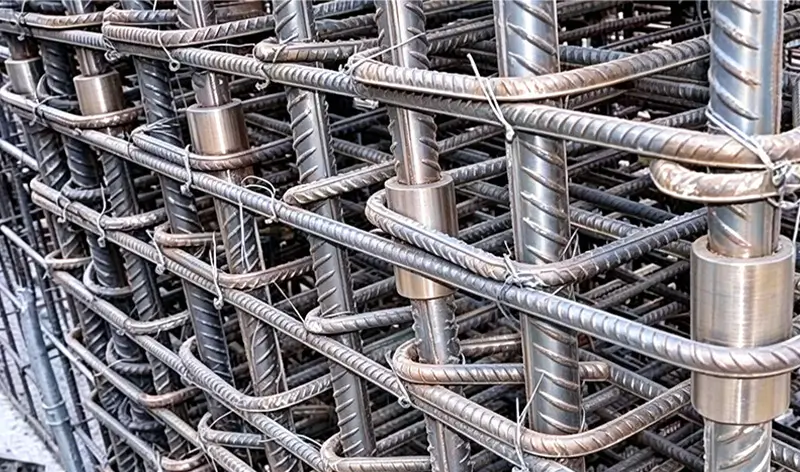
The image shows mechanical rebar splices. Mechanical splices refer to the connection of two reinforcing bars using a rebar connector, and are the preferred method in modern construction.
There are many types of connectors. Overall, CHEERON mechanical connectors feature high connection strength, high construction efficiency, and wide applicability, meeting the needs of various projects.
The rebar connection shown in the video is a straight-thread connector connection, a type of mechanical connection. This requires threading the ends of the rebar for use with a threaded rebar connector. This is the most common connection method in ordinary concrete structures.
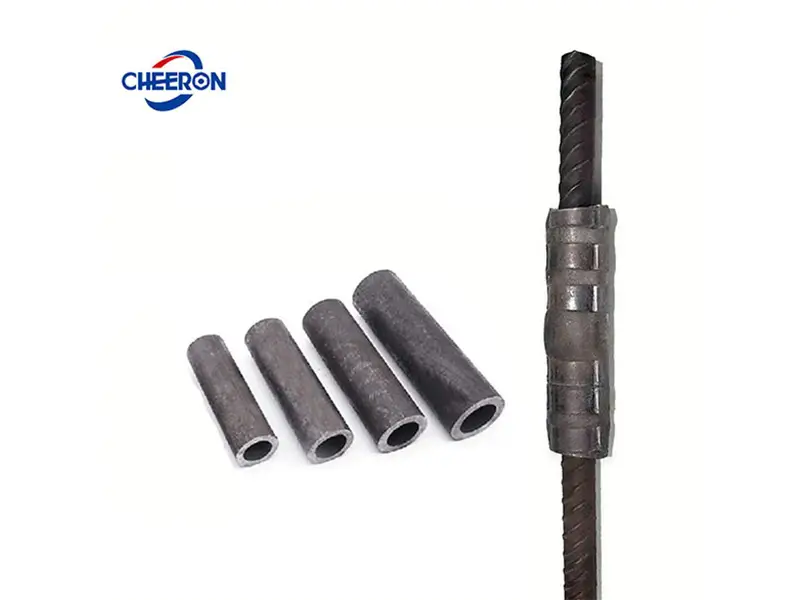
The rebar connection shown in the image is a cold-extruded connector connection, a type of mechanical connection. After inserting rebars into both ends of the connector, an extrusion machine is used to extrude the connector, thus fixing and connecting the rebars inside.
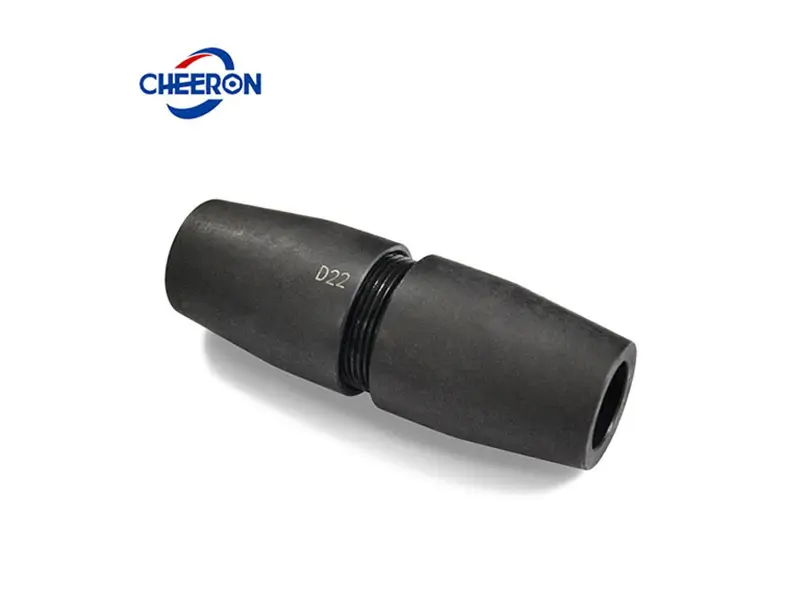
The rebar connection shown in the video is a one-touch sleeve connection, a type of mechanical connection. By placing a special self-locking device inside the rebar connector, the rebar is fixed the moment it is inserted.
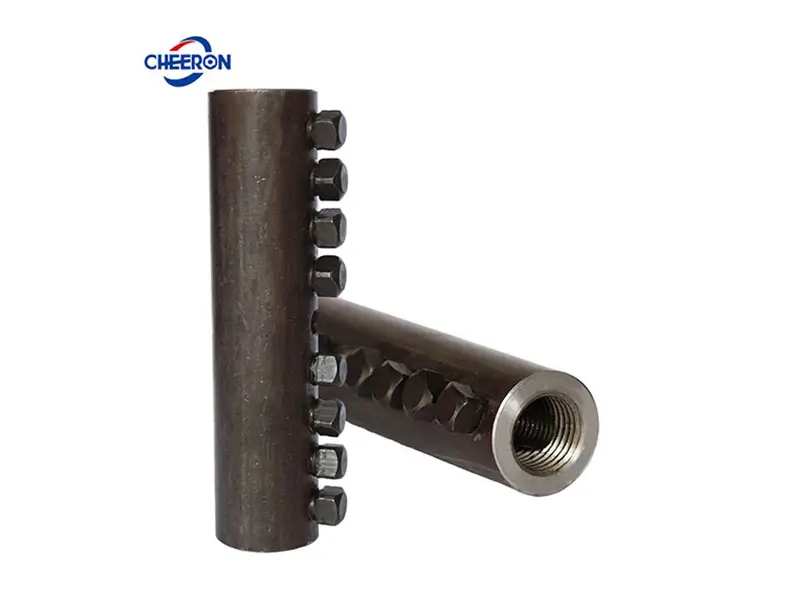
The image shows a bolted rebar connector, a mechanical connection. Workers typically insert the rebar into both ends of the sleeve and tighten the screws using appropriate tools. When tightened to a certain extent, the screw head will break off.
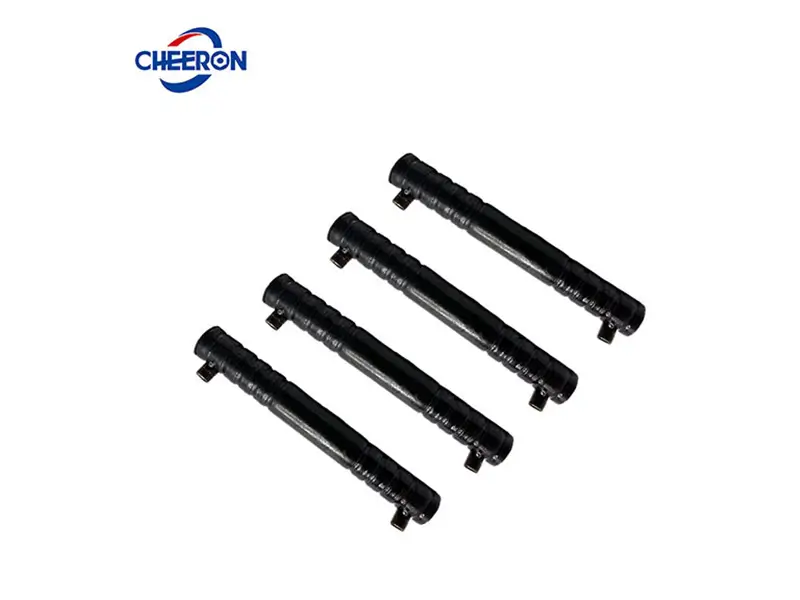
The image shows a grout connector, a mechanical connection (though there is some debate). This connector uses grout to connect the rebar. The connector has two grouting ports, commonly used in precast components.
Click to learn more-How to choose the right rebar connector?
1. Avoid the problems of high-temperature oxidation and stress concentration associated with welding connections.
2.It compensates for the insufficient load-bearing capacity of lap joints,resulting in superior overall connection performance.
3.It has wide applicability.
providing corresponding connection solutions for various engineering and construction situations.
4. it boasts high strength.
Compared to lap joints and welding, rebar couplers have strict strength standards and specifications, making them suitable not only for small-diameter rebar projects but also ensuring joint strength for large-diameter rebar projects, generally meeting the strength requirements of US Type II rebar joints.
5.it accelerates construction efficiency.
Welding and lap joints are affected by external environmental factors, while mechanical connections mostly allow for prefabrication of connecting rebars in rebar processing plants. Combined with specialized automated equipment, rebar connection efficiency is better and faster.
These connectors are mostly used in engineering scenarios where welding connections are limited, such as large-diameter rebar, seismic structures, and low-temperature environments. They offer stable quality and are less affected by external factors, representing an inevitable trend in industrialized construction.
If the tightening torque value is not strictly controlled during construction, the joint may not be properly tightened, leading to force transmission failure.
The price is slightly high, especially for small projects with a budget.
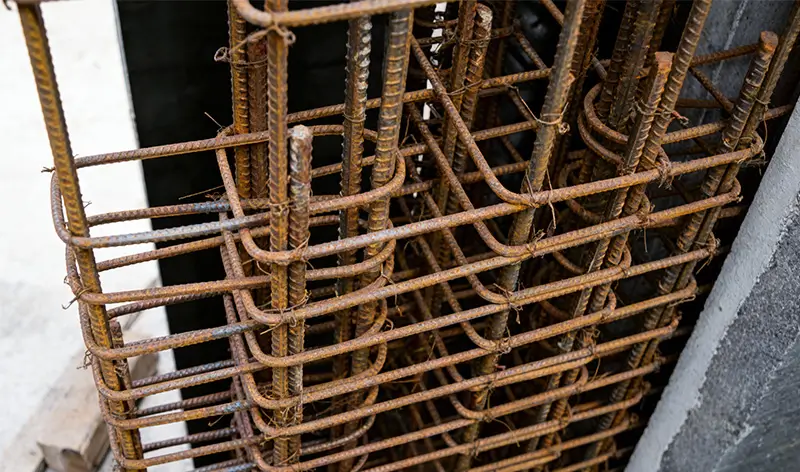
The rebar connection in the image is a lap splice.
A lap splice refers to two rebars being tied together with binding wire, and then concrete is poured to form the connection.
The lap splice form varies depending on the seismic resistance level and structural requirements of the structure.
For projects with lower seismic requirements and non-seismic requirements, lap splice (I) can be used, i.e., 100% lap within a single cross-section. This type of lap splice is often used for vertical rebar lap splices in columns and shear walls.
For projects with high seismic resistance requirements, staggered lap splices of adjacent rebars are required, similar to Figure 2.
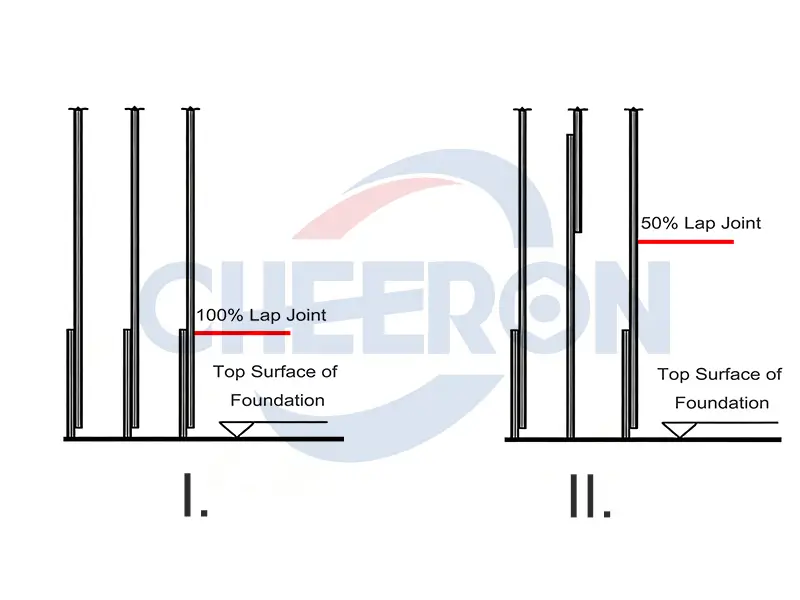
Different projects will have different requirements. The following are key influencing factors:
The thicker and stronger the rebar, the longer the required lap length;
The higher the concrete strength, the shorter the required lap length;
A 100% lap length within a cross-section is longer than a 50% lap length within a cross-section;
Rebar lap splicing is the most traditional connection method, simple to operate and low in cost, but it is only suitable for small-diameter rebars and non-critical load-bearing parts. It should be noted that because a relatively long overlap of the reinforcing bars is required to ensure partial transfer of stress, this method consumes more materials and results in lower connection strength.
Suitable for engineering scenarios involving small-diameter reinforcing bars, low seismic requirements, and limited budgets.
If the overlap length and position are not strictly controlled during construction, incomplete joint laps can easily occur, leading to load transfer failure and affecting structural safety.
So, which is better, rebar connector or rebar lapping?
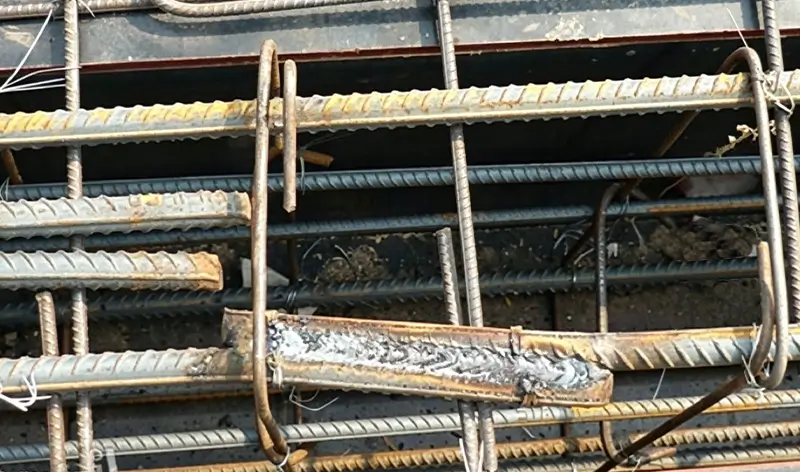
The rebar connection shown in the image is rebar welding.
Rebar welding is a connection method that directly welds rebars together using methods such as butt welding, lap welding, or electroslag welding.
It has advantages such as flexible operation, strong adaptability, and simple equipment, but its production efficiency is relatively low, and it requires high welding skills.
Resulting in good integrity and material savings.
Welded connections are mostly used in low-rise and multi-story shear wall structures, commonly used for beam-column joints.
There are no strict quality standards during construction, making it highly dependent on the skill level of workers, and welding quality is difficult to control.
Furthermore, welding consumes a significant amount of electricity and flux, requiring high equipment maintenance standards.
| Rebar Splices | Connection Strength | Advantages | Disadvantages | Application Scenarios |
| Coupler | high | high strength,wide applicability | price is slightly high | various engineering and construction situations |
| Lapping | Ordinary | simple to operate and low in cost | incomplete joint laps can easily occur | small-diameter reinforcing bars, low seismic requirements |
| Welding | Ordinary | Resulting in good integrity and material savings. | welding quality is difficult to control | used in low-rise and multi-story shear wall structures |