In contemporary reinforced concrete construction, the precision and reliability of reinforcement connections are fundamental to overall structural performance. A coupler threading machine plays a vital role by providing highly accurate threads on reinforcing bars that are ready for mechanical couplers to connect. This process ensures that rebars can be spliced efficiently and consistently on-site, contributing to the strength and integrity of beams, columns, walls, and other load-bearing elements in buildings, bridges, tunnels, and high-rise structures. The mechanical preparation of rebar ends with a coupler threading machine enables seamless integration into mechanical splice systems and supports complex construction requirements while maintaining alignment with modern construction methodologies.
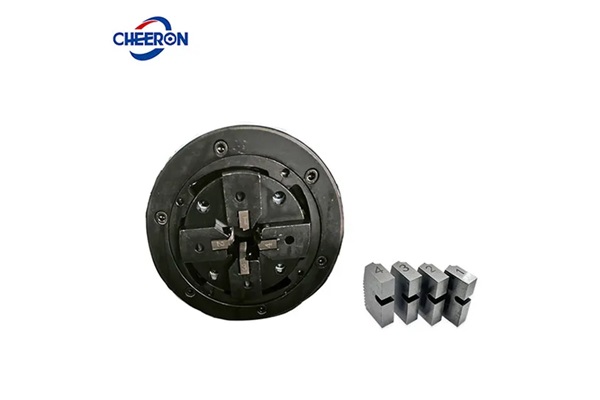
A coupler threading machine is designed to process straight threads on the ends of rebars, preparing them for connection with mechanical couplers by accurately cutting threads that match the requirements of threaded sleeves and connectors. Using cutting dies, rebars ranging from Φ12 to Φ50 can be effectively clamped, stripped, and threaded in one integrated workflow, making this tool a core element in reinforcing steel preparation on construction sites. The machine supports automatic mode operation, facilitating easier thread loading and consistent thread precision, which is essential for meeting engineering specifications and achieving a high pass rate for threaded rebars used in concrete structures. Its functionality extends to producing 60° or 75° angle threads, enabling adaptability to diverse project requirements where precise alignment of reinforcement is needed.
Feature | Coupler Threading Machine | Traditional Manual Threading / Simple Cutting |
Thread Precision | High precision suitable for mechanical coupler systems | Variable precision depending on method |
Operational Speed | Quick integrated clamping, peeling, and threading | Slow, often multiple tools required |
On-Site Flexibility | Designed for construction site mobility | Limited flexibility |
Adaptive Thread Types | Supports multiple thread angles | Usually limited |
This comparison highlights how a coupler threading machine like the one offered by CHEERON improves on older rebar preparation practices by delivering consistent quality and enhanced site flexibility, which are both crucial in modern reinforced concrete construction.
The utilization of a coupler threading machine significantly enhances construction workflows by enabling contractors and reinforcers to prepare rebar ends on-site with minimal interruption to the reintegration process. By streamlining the thread cutting process, crews can avoid delays associated with off-site threading or less precise manual methods. The machine facilitates efficient processing of straight threads compatible with mechanical couplers, supporting project continuity across different structural elements. This workflow integration is particularly valuable in large infrastructure projects, where maintaining a consistent pace of rebar preparation impacts overall construction timelines. Additionally, the mobility and ease of operation offered by such machines make them suitable for various sites, whether for high-rise buildings or extensive underground structures such as tunnels.
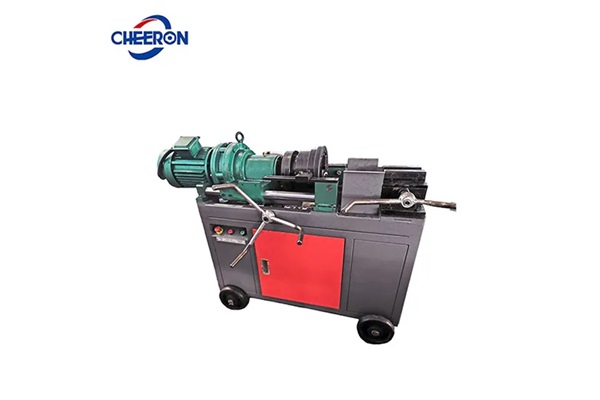
The coupler threading machine occupies a key position for reinforced concrete projects because it bridges the gap between raw reinforcing bar stock and the finished threaded ends required for mechanical coupler systems. In mechanical splice solutions, precise thread geometry is essential for ensuring that mechanical couplers achieve full structural performance when joining rebars. The machine's ability to produce threads with consistent quality enhances joint reliability and supports alignment with quality standards applied in reinforced concrete construction. Its practical adaptability for on-site use, automatic operation capabilities, and compatibility with a wide range of rebar sizes make it indispensable for modern construction where precision, productivity, and safety are paramount.
Understanding the coupler threading machine also involves recognizing the broader trend toward mechanical splicing and advanced reinforcement technologies in the concrete construction industry. Mechanical coupler systems represent the third generation of rebar joining methods, following welding and lapping, and require reliable thread preparation to perform effectively. Threaded mechanical splices, when paired with well-executed thread cutting via a specialized machine, offer improved load transfer and consistency compared to traditional methods. The integration of a coupler threading machine into construction processes reflects the industry's ongoing emphasis on quality control, productivity, and adaptability in reinforcement practices, enabling builders to meet structural performance expectations in demanding environments.