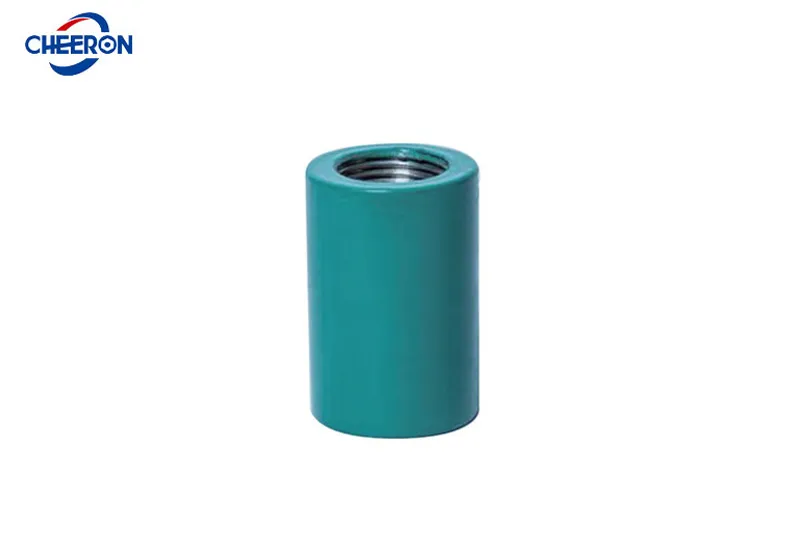
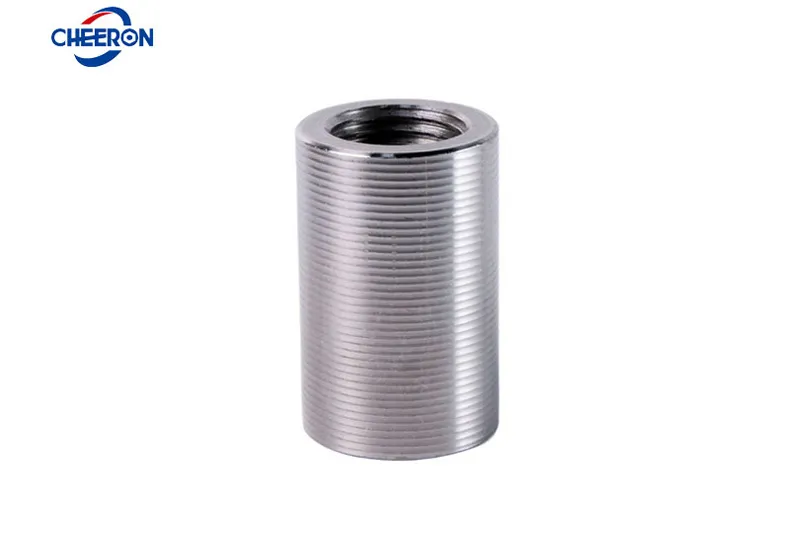
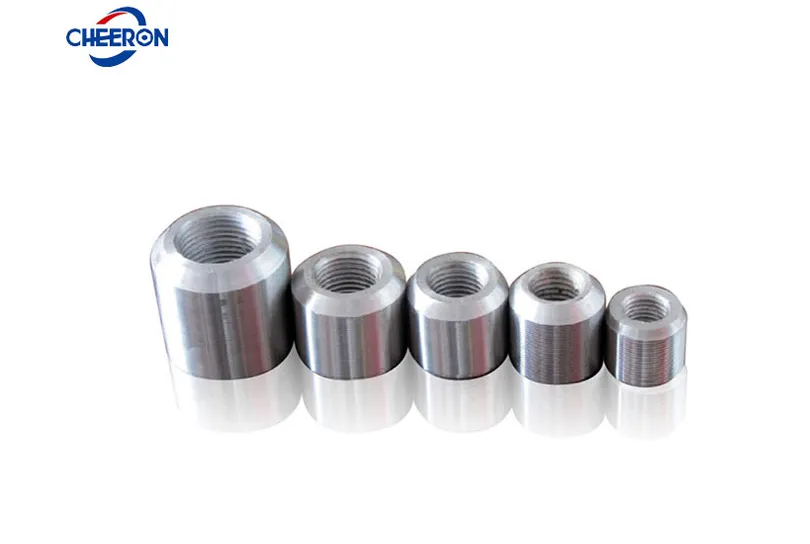
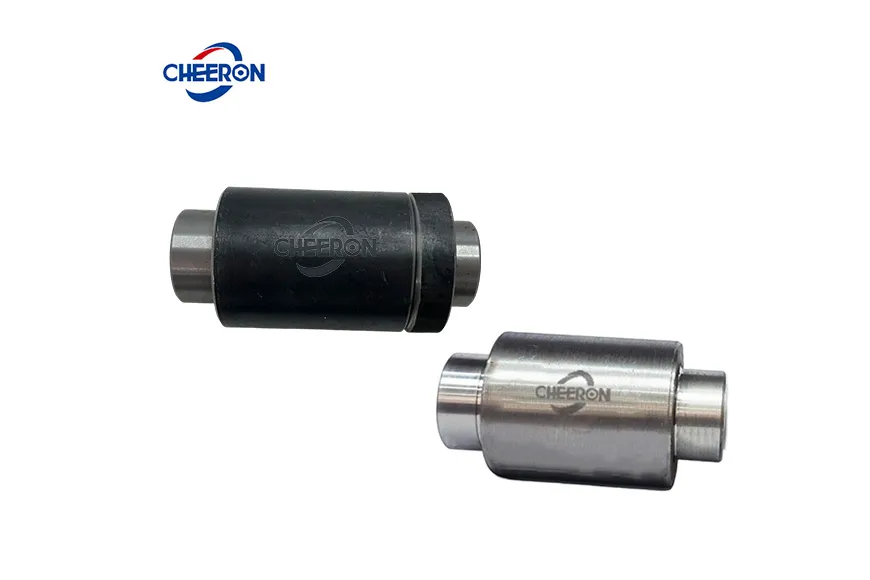
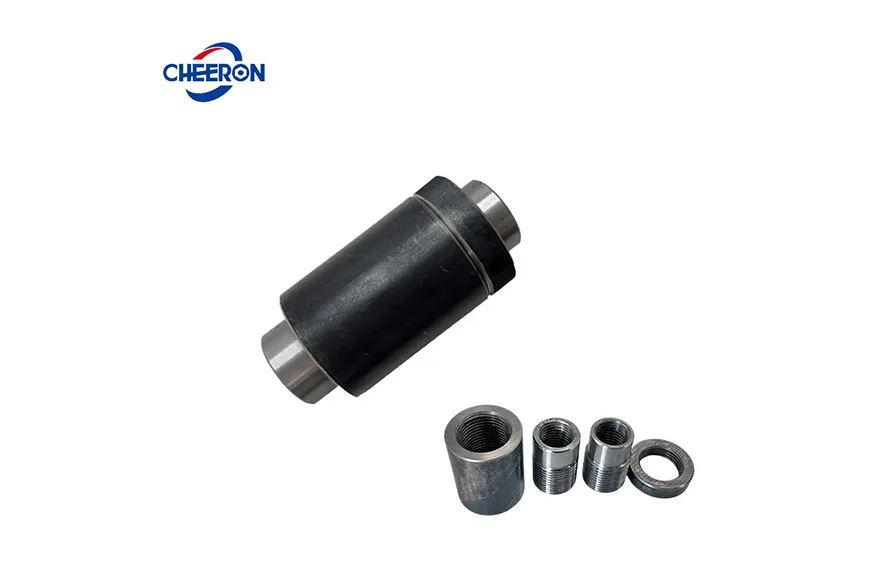
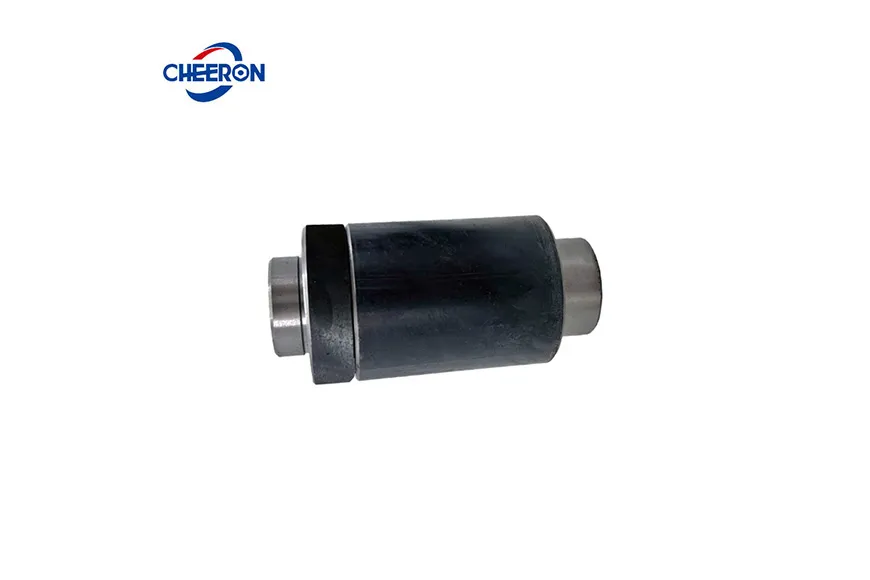
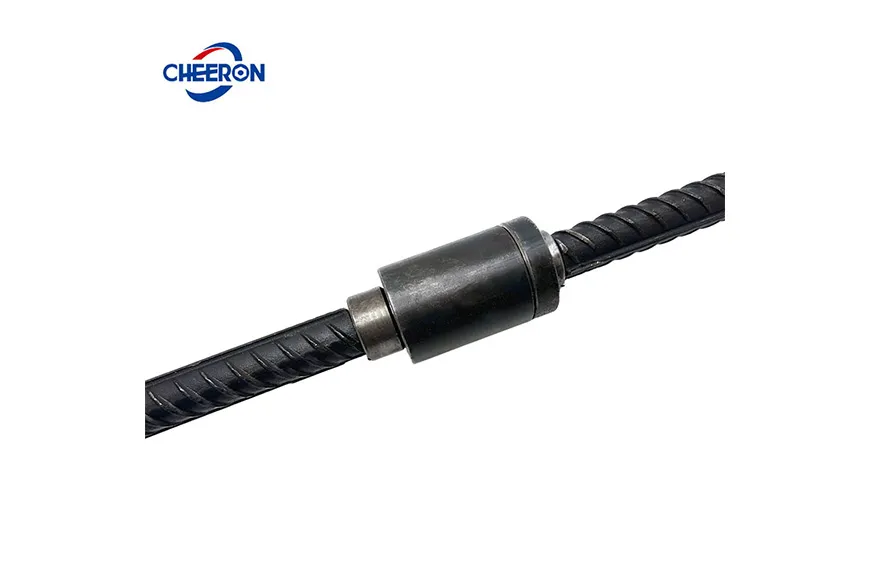
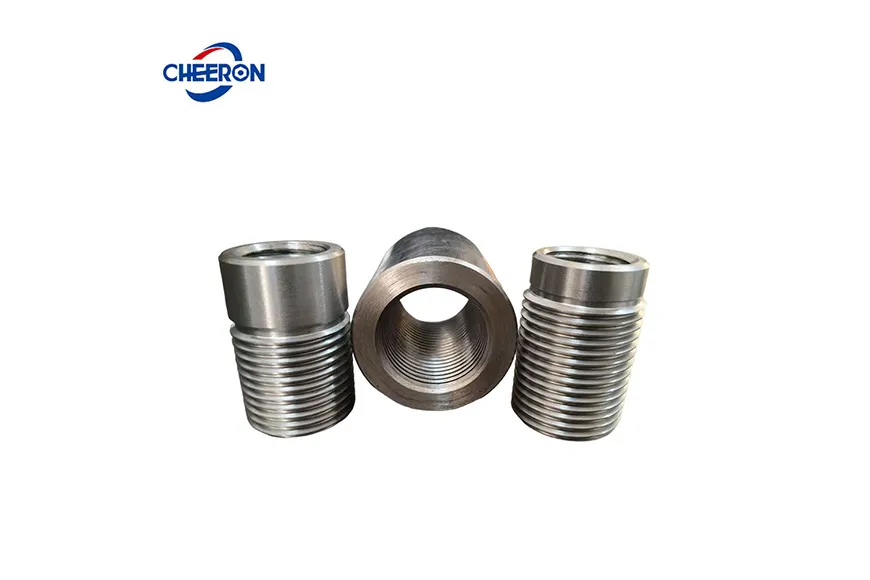
This split rebar coupler is composed of an inner screw coupler, an outer screw coupler and a lock nut, and it is a new type of mechanical connection form for steel bars. It is coupled through the internal and external threads of the coupler and forms an effective connection with the threads at the end of the reinforcing bar.
Compared with traditional mechanical connections, it can achieve "non-rotation of steel bars", which is particularly suitable for scenarios where steel bars are not convenient to rotate, such as steel bar cage connections, etc., to realize high-efficiency and high-quality construction of steel bar connections.
 | ||||
| Dimension | Length of Coupler | Length of Threaded Bar | Length of Internal Thread of Internal Sleeve | Length of Threaded Bar of Internal Sleeve |
| (mm) | (mm) | (mm) | (mm) | |
| 22 | 55 | 30~31 | 50 | 52~53 |
| 25 | 60 | 32~33 | 53 | 55~56 |
| 28 | 65 | 35~36 | 55 | 57~58 |
| 32 | 70 | 37~38 | 61 | 63~64 |
The position coupler system comprises inner thread sleeve*2, outer thread sleeve*1,and lock nut*1, forming mechanical splices through the coupler of internal threads with the rebar's external thread.

The joint quality is reliable. This method ensures a firm and reliable connection between the coupler and the rebar with threaded end.
Made of 45 carbon steel/ 40Cr steel, with high yield strength.
It is compatible with common ASTM A615 Grade 60 and Grade 80 bars.
ISO 9001 certified factory, quality assured.
It can effectively ensure that the exposed threads of the upper and lower main bars of the pile foundation steel cage meet the specification requirements.
Compared to traditional reinforcing cage welding, split rebar couplers benefit construction efficiency. On-site operation is convenient, and the installation time of the steel cage is shortened by 80%.
ISO 15835
CHEERON couplers conform to ISO standards for mechanical couplers for reinforced concrete – passing tensile and slip tests.
ACI Type 2 Rebar Coupler
Cheeron coupler conforms to ACI 318 type 2 mechanical splices standard.
a. First, thread the Internal Threaded Sleeves onto rebars.
b. Screw the lock nut onto the steel bar fitted with Sleeve 2.
c. Screw the external threaded sleeve onto the steel bar fitted with sleeve 2 until flush with the sleeve.
d. Reverse-thread the external threaded sleeve onto the rebar of Sleeve 1, then reverse-thread the locknut until the sleeve is securely locked onto the rebar.
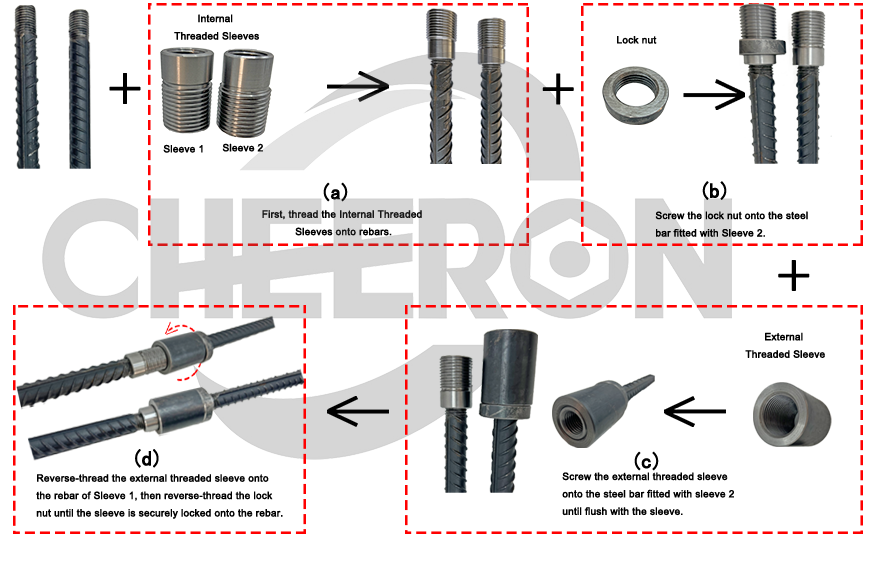
Two non-rotating steel bars can be connected in situ with the position sleeves. This method is particularly suitable for situations where two steel bars cannot rotate:
1. Reinforcing cage in cast-in-place piles: During pile foundation construction, the reinforcing bars in the cage can be connected without rotation;
2. Connection of precast components:mechanical splices of protruding reinforcing bars in precast shear wall edge members, as well as precast wall panels, precast beams;
3. High tension strength and ductility, suitable for mechanical splices of bars in railways and nuclear power plants, bridges, tunnels, etc.

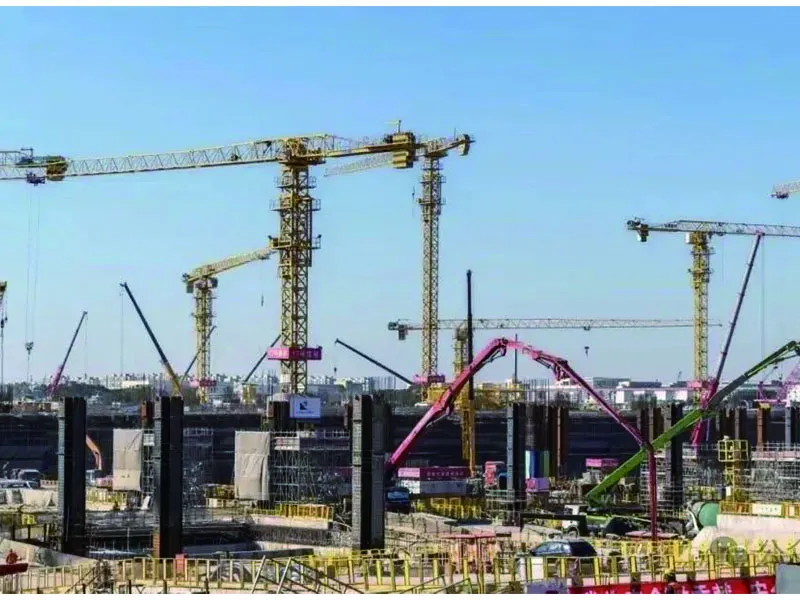
Split-type sleeves can be used to connect formed or pre-embedded non-rotatable reinforcing bars.

The split type can directly tighten the sleeve after the steel bars are fixed, which is suitable for the rapid connection after the hoisting of the steel cage of the column foundation.

In areas with dense steel bars, when welding or binding is difficult, split sleeves can be operated through narrow spaces.