Installing a weldable rebar coupler involves two separate connections: welding the coupler to a steel plate or structural steel, and screwing a pre-threaded reinforcing bar into its threaded end. Both connections must meet the approved design requirements for the assembly to transfer the specified forces.
Before work begins, confirm the coupler specification, steel material, weld detail and bar thread compatibility. Installation should follow the manufacturer's instructions, the approved welding procedure specification (WPS), and the project's inspection requirements.
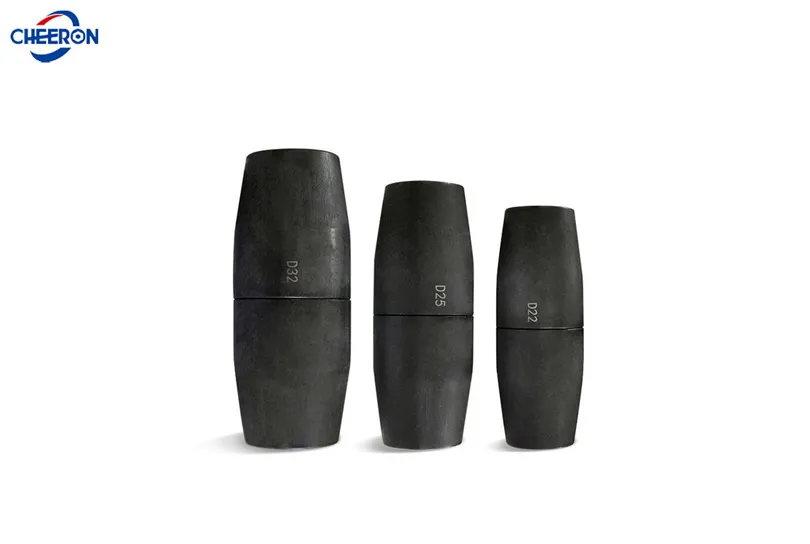
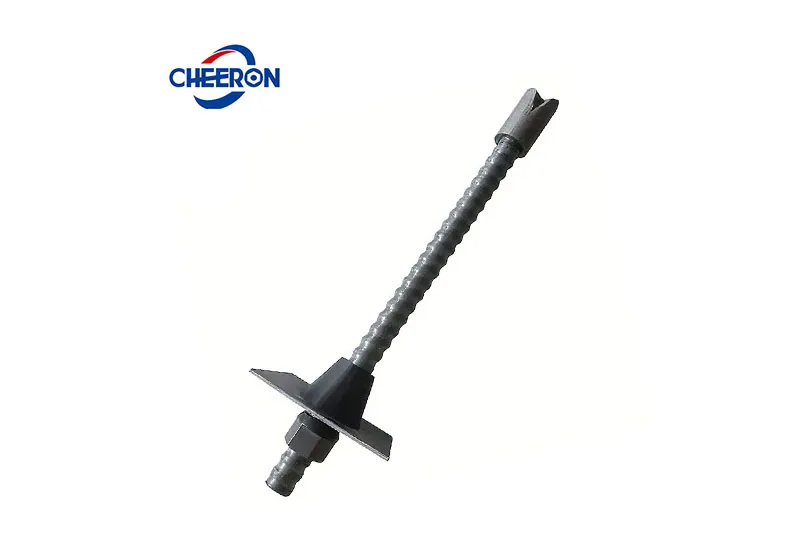
A weldable rebar coupler connects a threaded reinforcing bar to a steel plate or structural steel . One end contains an internal thread for the prepared bar end; the other end or designated exterior surface is designed for welding.
For the Cheeron product described here, the weld-prepared end is welded to the structural steel, and the pre-threaded reinforcing bar is screwed into the opposite end. The reinforcing bar is not welded inside the coupler.
Typical applications include reinforcement connections to embedded steel plates, steel beams or columns, and precast assemblies incorporating steel connection details. Suitability depends on the approved connection design, available welding access and required performance.
Welded rebar couplers provide a connection between reinforcement and structural steel where this arrangement is specified by the designer. Adequate access is needed for welding, inspection and tightening the threaded bar.

The installation process for a weldable coupler generally includes six steps:
Confirm the coupler model, bar thread specification, steel material and approved weld detail.
Prepare the coupler's welding surface and the corresponding area of the steel plate or steel column.
Position and secure the coupler at the location and orientation shown on the drawing.
Weld the coupler using the approved WPS, then allow cooling and complete the specified weld inspection.
Check the internal threads, screw in the prepared reinforcing bar, and tighten according to the manufacturer's requirements.
Verify the completed assembly and record acceptance before concrete placement.
Check the welded and threaded connections separately. Welding compatibility concerns the coupler and structural steel, while threaded compatibility concerns the prepared bar end and coupler thread. Both must match the approved assembly specification.
The welding procedure for weldable rebar couplers depends on the coupler design, steel grade, and project requirements. A typical process includes:
Before welding, clean the designated welding surfaces on the coupler and structural steel. Remove oil, moisture, rust, coatings and other contaminants to the extent required by the approved procedure.
Check the weld preparation, fit-up and joint dimensions against the drawing. Protect the coupler's internal threads from weld spatter and contamination. Do not alter the manufacturer's weld preparation without approval.
The coupler should be installed according to the manufacturer's instructions. Locate the coupler according to the approved drawing and maintain its specified orientation relative to the structural steel. Use suitable fixtures where needed to hold the position during welding.
Check the joint fit-up and access for completing the specified weld. The reinforcing bar will subsequently engage the coupler's internal thread; its thread engagement must be checked separately from the weld dimensions.
Use the welding process specified in the approved WPS and personnel qualified for the required work. The procedure should address the actual coupler material, supporting steel, joint configuration and welding position.
Follow its requirements for consumable selection, current, voltage, travel speed, preheat and interpass temperature. Where low-hydrogen consumables are specified, follow the applicable storage, conditioning and handling requirements. Monitor coupler position and distortion during welding. Do not use a generic preheat temperature or weld size for every coupler: these must come from the approved procedure and connection detail.
The governing welding standard must be identified in the project specification. AWS D1.1/D1.1M addresses structural steel welding, while AWS D1.4/D1.4M and ISO 17660 address reinforcing steel welding within their respective scopes.
For a coupler welded to a steel plate or structural steel , confirm the applicable requirements with the project's welding engineer. Do not assume that reinforcing steel welding rules apply solely because a reinforcing bar is connected to the assembly.
The coupler must be positioned so that the threaded bar follows the reinforcement layout shown on the approved drawing. Check the coupler location, axis orientation, concrete cover and clearance from adjacent reinforcement.
After welding, verify that distortion has not moved the coupler outside the specified tolerances. The bar should engage the thread correctly without being forced into position. Do not bend the bar or modify the connection to compensate for a misplaced coupler without approval.
Inspection ensures that the installed connection meets structural requirements. A complete inspection process usually includes visual inspection and, when required, additional testing.
Check the weld location, specified dimensions and accessible surfaces against the approved drawing and acceptance criteria. Look for visible cracks, undercut, surface porosity and other relevant surface indications. Verify the coupler position and orientation after welding, and check reinforcement spacing against the approved drawing. An acceptable external appearance alone does not establish that the weld is free from internal defects.
Use the examination method, extent and acceptance criteria specified in the inspection plan. Selection should account for the weld type, material, geometry and examination access. Magnetic particle testing or ultrasonic testing may be specified where suitable. These methods are not interchangeable, and neither should be presented as a universal requirement for every weldable coupler.
After the specified cooling and weld acceptance steps, inspect the internal threads for contamination or damage. Confirm that the bar-end thread matches the coupler, achieves the required engagement and is tightened using the manufacturer's specified method. Record any required torque checks, installation checks and corrective work before the connection is concealed.
Yes, but compatibility must be confirmed before installation. Different reinforcing bar grades may be used only where the complete connection has been specified or qualified for the required performance. Confirm the bar diameter, grade, thread preparation and relevant product documentation.
Because the bar is mechanically threaded into this coupler, its grade should not be used alone to determine the welding procedure. Welding compatibility must be checked for the coupler and the structural steel that are actually being welded.
| Installation Problem | What to Check |
| Bar does not engage the coupler correctly | Confirm thread specification and inspect for contamination, spatter or thread damage. Do not force engagement. |
| Coupler has moved during welding | Recheck position and orientation against the drawing and specified tolerances. |
| Required weld cannot be completed or inspected | Review access, joint preparation and the approved detail before proceeding. |
| Welding conditions differ from the WPS | Refer the change for review rather than adjusting the procedure informally. |
| Tightening or engagement cannot be verified | Apply the manufacturer's inspection method and record any required corrective action. |
A weldable coupler installation is complete only when both the weld to the structural steel and the threaded connection to the reinforcing bar have been accepted. Confirm the approved detail, follow the WPS, protect the threads and document the required checks before concrete placement.
No. The coupler is welded to the supporting steel, and the prepared reinforcing bar is screwed into its threaded end.
Cheeron's published installation sequence places welding before insertion and tightening of the threaded bar. Follow the instructions for the supplied model and the project's inspection sequence.
Inspect the thread and refer to the manufacturer's permitted cleaning or repair procedure. Do not force the bar into a damaged or obstructed thread.
No. Use the requirement specified for the supplied coupler and bar arrangement. Do not substitute a generic torque value.
Not automatically. This product connects a threaded reinforcing bar to structural steel. Any change from a conventional splice requires a connection detail approved by the designer.